tinned
adjective tinned
tɪnd
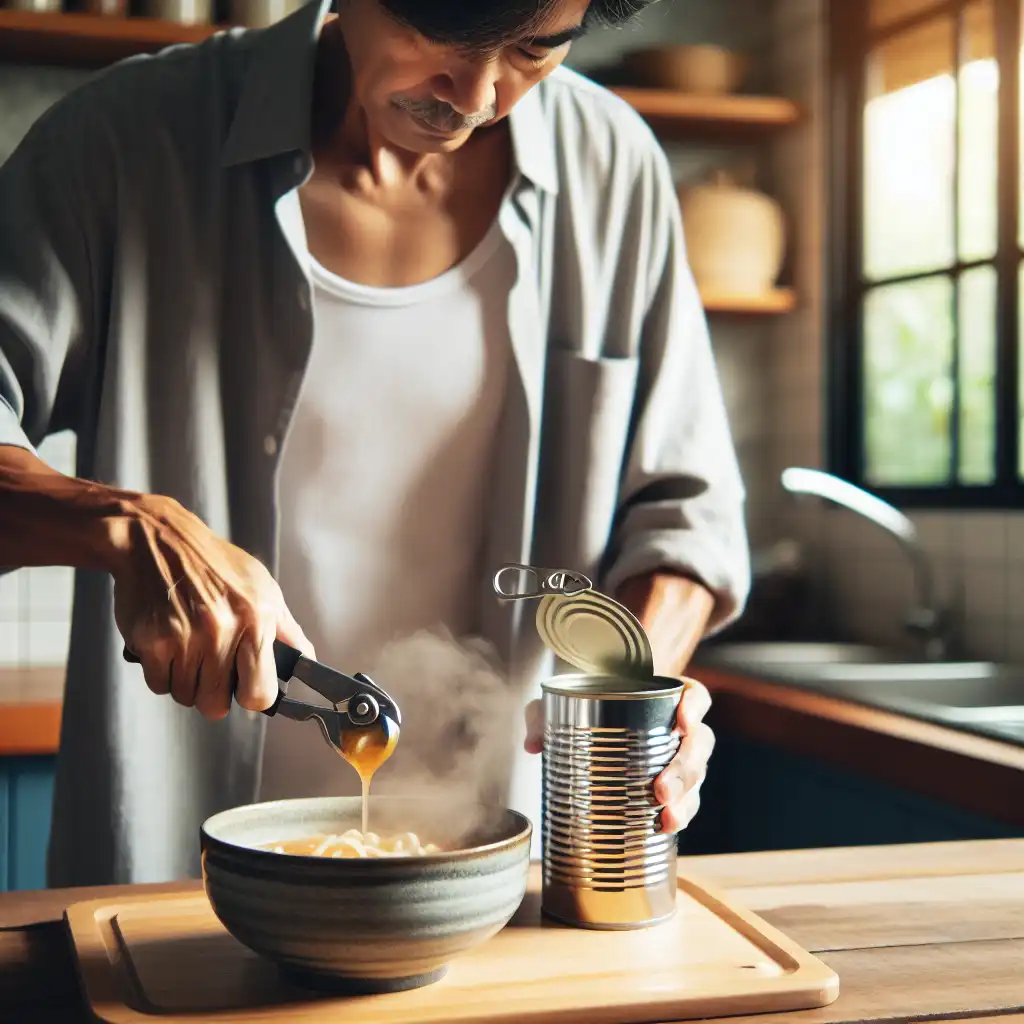
Something that is preserved in a metal container.
He opened a tinned soup for his dinner.
tinned
tɪnd
読み込み中…
tɪnd
Something that is preserved in a metal container.
He opened a tinned soup for his dinner.

tɪnd
Something that is coated with a thin layer of tin.
The tinned copper wire is resistant to corrosion.
音声を読み込めませんでした。しばらくしてからもう一度お試しください。
The word 'tinned' is commonly used to refer to food that has been preserved in a can or a tin. For example, tinned fruits, vegetables, fish, and meat are all popular items that can be found in supermarkets. When buying food in a can, you can say "I want to buy tinned corn" or "I prefer tinned soup over fresh soup." This word is useful when you are grocery shopping or talking about food that has been preserved for a longer shelf life.
Bottle refers to a container that is made of glass, plastic, or another material and has a narrow neck that can be sealed with a cap or cork.
Bottles are commonly used to store liquids like water, soda, and juice.
Bottle is applicable for containers made of glass or plastic for liquids, while tinned is applicable for metal containers for food preservation.
単語を開く: Bottle →Both canned and tinned refer to food that has been preserved and packed in metal containers. The difference between the two words is simply a matter of regional usage.
Canned is typically used in American English, while tinned is more commonly used in British English.
Both words can be applied to a variety of canned/tinned foods, such as fruits, vegetables, meats, and fish. The term "can" may also be used more widely to refer to any type of metal container, whereas "tin" refers specifically to a container made of tinplate.
In summary, whether you say canned or tinned depends on where you are in the world, but they both refer to the same thing: food that has been preserved in a metal container.
単語を開く: Canned →Conserve refers to preserving or protecting something, typically a natural resource or environment, in order to maintain its quality and integrity.
For example, we might conserve energy by turning off lights when we leave a room or conserve water by taking shorter showers.
Conserve is about protecting something, while tinned refers to food that has been preserved.
単語を開く: Conserve →Jar is a term used to describe food or other products that are stored in a glass or plastic container with a lid that screws on.
Examples of products that come in jars include peanut butter, pickles, and jams.
Both jar and tinned are used to store and preserve products, but different materials are used for the containers. Jars are typically used for foods that are more delicate or that require refrigeration after opening, while tins are used for foods that can be stored at room temperature for long periods of time.
単語を開く: Jar →Package refers to a container that can be made of various materials like plastic, paper, or metal. It usually contains a product to protect it from damage during transportation or storage.
For example, a bag of chips or a box of cereal is considered a package.
A package can be made of different materials and can be used to protect and transport various products. Tinned refers to food that has been preserved in a metal container covered with a layer of tin to prevent spoilage.
単語を開く: Package →Pickle refers to a type of food that has been preserved in a solution of vinegar, salt, and spices.
Pickles can be made from many different foods, but cucumbers are the most common.
Both words can be applicable to different types of foods, but pickle usually refers to a specific type of preservation method, while tinned refers to the container the food is stored in.
単語を開く: Pickle →Preserve means to treat or maintain something in order to protect it from harm or decay. For example, you might preserve food by canning it, freezing it, or drying it.
Tinned, on the other hand, refers specifically to food that has been packaged in a can. This is a form of preservation, but it is not the only way to preserve food.
Preserve is a broader term that refers to any method of keeping something in good condition, while tinned specifically refers to food that has been canned.
単語を開く: Preserve →Seal refers to the process of closing a container so that air cannot get inside. For example, when you seal a jar of pickles, you are making sure that no air can get in and spoil the food.
Seal is also used to refer to a stamp or marking that is placed on a document or package to prove that it has not been opened or tampered with.
Tinned refers to food that has been placed in a metal container and preserved by sealing the container with heat. This process is commonly used for fruits, vegetables, and meats.
Seal is used to close containers and ensure their contents remain airtight, while tinned refers specifically to foods preserved in metal containers.
単語を開く: Seal →Safari Live - Day 380 %\PIPE%...
YouTube で見る ↗We have an odd culinary relationship with tinned food. In higher society, rare and supposedly exquisite goods such as tinned baby octopus, foie gras and caviar come in beautifully crafted, artistically designed tins.
We may find in the long run that tinned food is a deadlier weapon than the machine-gun.
People should always have a good bottle of extra virgin olive oil, a packet of pasta, tinned tomatoes and a good cheese somewhere in their fridge.
If I had the choice between smoked salmon and tinned salmon, I'd have it tinned. With vinegar.
I think I've opened up my mind to all foods, except tinned tuna. I can't stand that. I will not go near it; the smell is unbearable.
I know it's not cat food, but what exactly is it that they put inside of tinned ravioli?
In 1969, we emigrated to Australia. It was a big change. The heat, the flies, and the completely different tinned meats. The shock was so great, I stopped reading books for nearly a year.
You can pretty much make anything with a base of tinned tomatoes. If I don't have tinned tomatoes in my cupboard, I start to panic - it's a genuine thing.
Tinned food can be cheaper than buying fresh stuff. Things like tinned carrots, tinned potatoes, mushy peas make a good base for a soup.