
front
noun front
frʌnt
The part of a building or object that faces forward or toward the direction it goes
The house has a big garden in the front.
front
frʌnt
Loading…
frʌnt
The part of a building or object that faces forward or toward the direction it goes
The house has a big garden in the front.
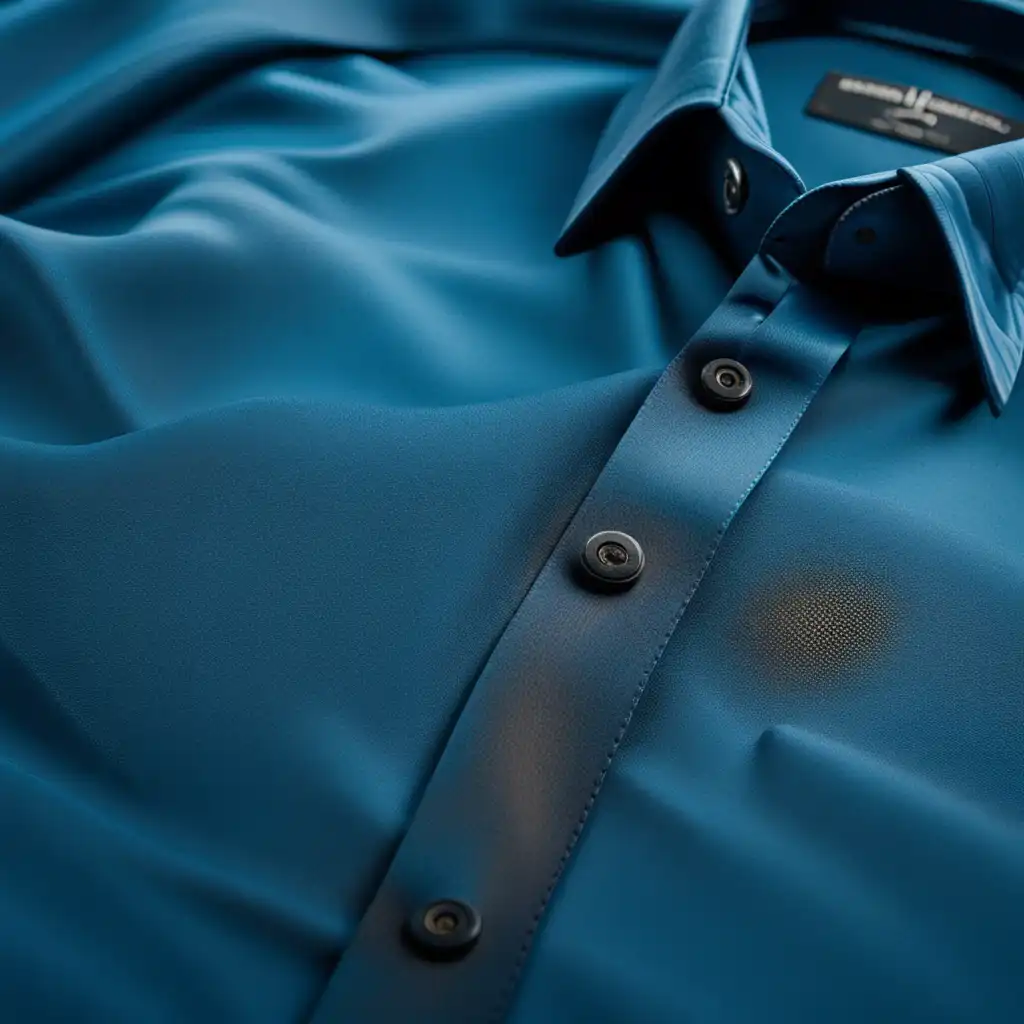
frʌnt
The side of something that is seen or used first
The front of the shirt has a stain.

frʌnt
A place where someone or something is most active or visible
He was on the front line during the war.

frʌnt
A group or organization serving as a cover for illegal or secret activity
The charity was a front for a criminal gang.

frʌnt
To be the leader or main representative of a group
She fronts a popular rock band.

frʌnt
Located at the front
We got front row seats at the concert.
Audio could not be loaded. Please try again later.
The word 'front' can be used when referring to the part of something that faces you or is at the beginning of something, such as the front of a building or the front seat of a car. It can also mean to be in a position of primary importance or prominence, such as being at the forefront of a new trend. In addition, it can be used to describe a place or area that is facing or exposed to something, such as the front line in a battle or the front of a storm. Overall, 'front' is a versatile word that can be used in many different contexts to describe the position or location of something.
Ahead means in front, further forward or in advance. It implies a distance between the current position and the position that is further ahead.
It often refers to time or progress. For example, "He ran ahead of me" or "She planned ahead for the party."
Ahead describes a position in a forward direction, either in time or space, while front refers to the orientation or appearance of something facing forward.
Open word: Ahead →Anterior refers to the front part of something, especially the body. For example, the anterior side of a person's body would be their front side.
Anterior is a specific term used in medical contexts to describe the front part of the body, while front is a more general term that can be used in any context to describe the front of something.
Open word: Anterior →Exterior refers to the outside of a building or object, while front refers specifically to the part of the exterior that faces the direction of the main entrance.
For example, if you were describing the outside of a house, the exterior would include all sides of the house (front, back, sides), while the front would refer specifically to the side of the house where the main door is located and which faces the street.
Exterior is a more general term that refers to the whole outside of something, while front is a more specific term that refers to one particular side of the exterior.
Open word: Exterior →Face refers to the front part of a person's head, including their eyes, nose, and mouth.
It can also refer to the expression on someone's face.
Front refers to the side of something that is facing forward, such as the front of a building or the front of a car.
It can also refer to the area or position that is facing forward or ahead.
Face is applicable when referring to a person's head or expression, while front is applicable when referring to the forward-facing side of an object or position.
Open word: Face →First implies an order or sequence, while the word front refers to the position of something relative to another thing.
For example, when talking about a race, the first person to finish is the winner. In this case, first refers to the order in which the participants completed the race.
First is used to talk about an order or sequence, while front is used to talk about positions relative to one another.
Open word: First →Fore refers to something that is located in front of a particular object or position, while front is the side or part of something that faces forward or is most visible.
For example, if you are on a ship, the fore of the ship would refer to the front end of the ship, while the front of the ship would refer to the side facing forward.
In a sentence, you could say "The crew was gathered on the fore deck of the ship" or "The ship's name was painted on the front of the vessel."
Fore is used more as a directional term (referring to the location of something relative to another object), while front is used more as a descriptive term (referring to the visible or prominent side of something).
Open word: Fore →Lead typically refers to a person or thing that is in charge or in control of a situation or task. For example, a team leader, a lead actor in a play, or a lead guitarist in a band.
Both words can be used in different contexts and can overlap in meaning, but front usually pertains to spatial positioning while lead generally pertains to a leadership or authoritative role.
Open word: Lead →Obverse usually refers to the front side of a coin or medal. It is the side that usually bears the image of the head of a person, a national emblem or other symbol.
However, obverse is a more specific term that is usually used in relation to coins and medals.
Open word: Obverse →Principal typically refers to the most important or influential person or thing in a group or situation. For example, the principal of a school, the principal dancer in a ballet, the principal melody in a song.
So, while front can refer to a physical location or position, principal tends to focus more on importance or prominence.
Open word: Principal →Say you're standing in front of a door ready to pull it open. Your brain and muscles are perfectly poised to help you achieve this goal. First your brain sends a signal to motor neurons inside your arm. When they receive this message they fire, causing muscles to contract and relax,
Watch on YouTube ↗My passion lies with whatever I'm doing at the time... I only see what is front of me.
The more the prey struggles the more the ants engage. Right across the raid front, prey of all sizes are driven from their hiding places.
Watch on YouTube ↗It is part of my life, being in front of the camera all the time. It's not something that's new to me.
It was in front of the whole class and I felt dreadful. But it's what I wanted and as soon as I left school, I applied to the fire service and I was accepted. You know I was thinking about that guy recently, just a few minutes ago when you were speaking about this teacher, because six months ago I saved his life."
Watch on YouTube ↗I try and help my team-mates as best I can, and I lead from the front, on and off the field.
front of us and then they project back so you don't get back the feedback that you only would expect it could be sadness it could be anger it could be love it could be affection we've been very surprised that the remarkable
Watch on YouTube ↗I don't spend most of my life in front of the media.
I grabbed this guy's leg and I bit him on the inside of the thigh just as hard as I could but he was wearing these big baggy pants and all I got was fabric and I cracked my front teeth and as I was trying to bite him his friend just kept kicking me in the head in the back repeatedly until finally he said give me
Watch on YouTube ↗That's pretty important to me - to make sure I'm leading from the front.
These curves help us stay upright and absorb some of the stress from activities like walking and jumping. If they are aligned properly, when you're standing up, you should be able to draw a straight line from a point just in front of your shoulders, to behind your hip, to the front of your knee,
Watch on YouTube ↗I was still afraid to sing in front of people before 'Glee.
it's very yang. Toothpicks are yin compared with a telephone pole. The back of a person is more yang than the front. The top of a person is the yang end. Taoism teaches that there is a power in the universe.
Watch on YouTube ↗NPR changed my life; I don't even front.
Your senses show you the world as it is. They aren't deceiving you but sometimes they do. You might mistake a person far away for someone else, or you're sure you're about to catch a flyball, and it hits the ground in front of you. But come on right here and now, you know what's right in front of you is real.
Watch on YouTube ↗It is important that when you play at home in front of your own fans, not to lose and to always try and win, to always give your all.
But many people develop refractive errors, either during childhood as their eyes are growing, or in later life as their eyes age. Imperfections in the cornea and lens cause refracted light to be focused in front of or behind the retina,
Watch on YouTube ↗When you are playing in front of your own crowd, you want them to support you.
Among its other uses, this ability allows an organism to seek out shade and hide from predators. Over the millenia, as such light cups grew deeper in some organisms, the opening at the front grew smaller.
Watch on YouTube ↗I can go in front of thousands of people on stage and not be afraid, but when there's just a few people, that scares me.