cud
noun cud
kʌd
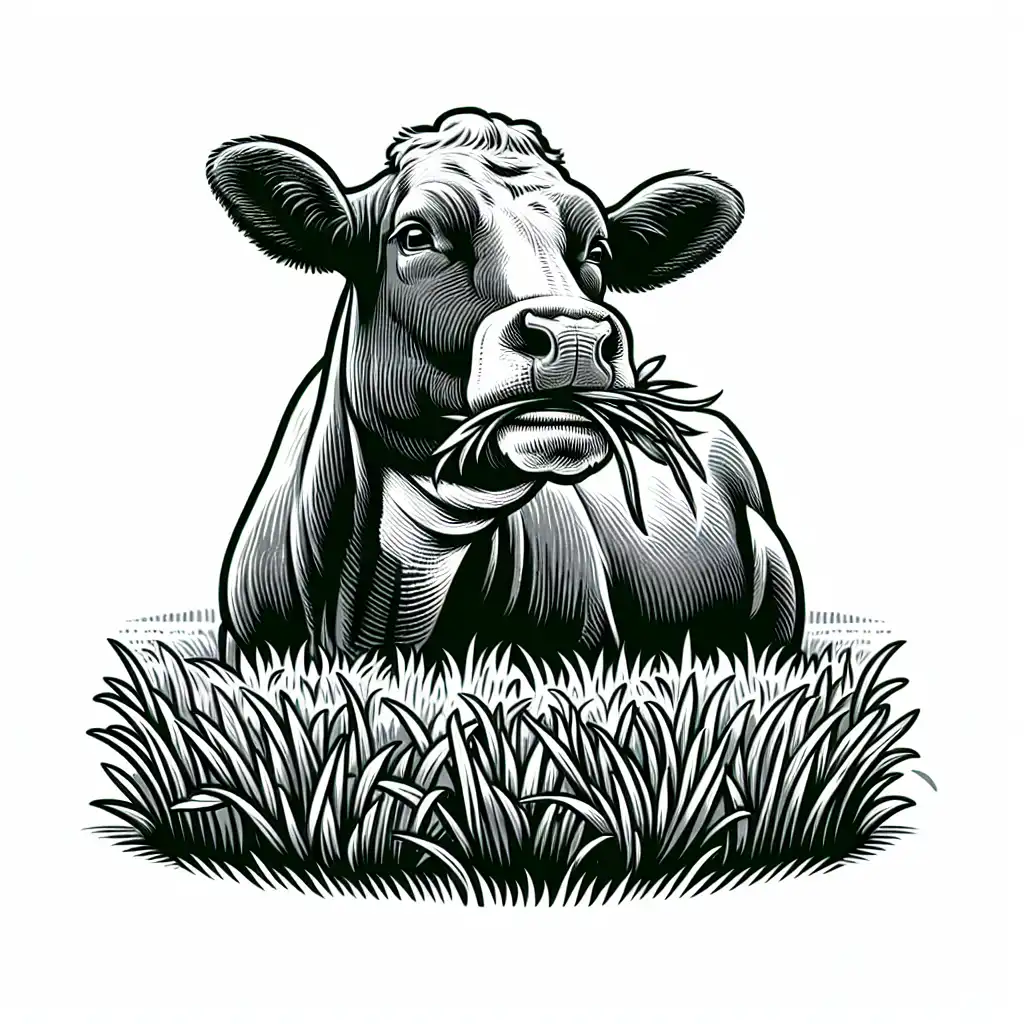
A lump of partly digested food that some animals bring up from their stomach to chew again.
Ruminants like cows and sheep chew their cud to further break down plant fibers.
cud
kʌd
불러오는 중…
kʌd
A lump of partly digested food that some animals bring up from their stomach to chew again.
Ruminants like cows and sheep chew their cud to further break down plant fibers.

kʌd
Something to be considered carefully.
The thought of moving abroad is a big cud to chew.
오디오를 불러오지 못했어요. 잠시 후 다시 시도해 주세요.
The word "cud" refers to the food that certain animals, such as cows, eat, but then regurgitate and chew again to further break down before swallowing. It is often used in discussions about animal digestion or when talking about cows specifically. For example, you might say "The cow chewed her cud slowly" to describe how a cow was eating.
Both bolus and cud refer to food that an animal has eaten and partially digested, but there is a slight difference between the two.
A bolus is a small ball-like mixture of food and saliva that a mammal forms with its tongue and teeth to aid in swallowing.
So while both terms refer to partially digested food, bolus is specific to the mouth and swallowing process, while cud refers to the regurgitation and re-chewing process of ruminants.
단어 열기: Bolus →The words chaw and cud are related to chewing. Chaw refers to the act of chewing, while cud refers to the food that has been partly digested and is brought back up to be chewed again.
For example, a cow will chew its food (chaw) and regurgitate it back up to re-chew and swallow (cud). In human culture, chewing tobacco is often referred to as a chaw, while cud is not typically used.
Chaw is applicable when referring to the act of chewing, while cud is applicable when referring to the partially digested food that is re-chewed.
단어 열기: Chaw →Consideration means careful thought and weighing of options or factors before making a decision. It is applicable in situations where someone needs to make a decision, and they take the time to think about all the options before choosing one.
Consideration involves careful thought and decision-making, while cud refers to a specific part of an animal's digestive process.
단어 열기: Consideration →Contemplate means to think deeply and carefully about something. It is applicable in situations where you need to reflect on something, possibly to gain a deeper understanding or to make a decision.
단어 열기: Contemplate →Mash refers to food that has been crushed, beaten or mashed into a soft or smooth consistency, often using a utensil such as a fork or potato masher.
Cud is applicable in the context of animals that chew their food multiple times before swallowing, whereas mash is applicable in the context of preparing food for human consumption, such as mashed potatoes or mashed bananas for a baby.
단어 열기: Mash →Meditate refers to a mental activity in which an individual focuses their attention and clears their mind in order to achieve a state of relaxation or spiritual awareness.
The word cud is specific to the digestion of animals, while meditate is specific to the mental activity of humans when seeking relaxation or spiritual enlightenment.
단어 열기: Meditate →Reflection refers to a thoughtful consideration of one's experiences or ideas. It is applicable in the context of personal growth and development.
Cud relates to animal biology and reflection relates to personal introspection.
단어 열기: Reflection →Ruminate is a broader term that can refer to the act of a ruminant animal (such as a cow) chewing its cud, but it can also refer to the act of deep thought or reflection by a human.
Ruminate can be used both for animals that chew their food twice and for humans who are deep in thought.
단어 열기: Ruminate →The Kangaroo is the...
YouTube에서 보기 ↗Nature's Oddest Looking...
YouTube에서 보기 ↗