
deterrence
noun deterrence
dɪˈtɜːrəns
The act of making someone decide not to do something, or preventing something from happening.
Strict rules and high fines act as a deterrence to potential law breakers.
deterrence
dɪˈtɜːrəns
Chargement…
dɪˈtɜːrəns
The act of making someone decide not to do something, or preventing something from happening.
Strict rules and high fines act as a deterrence to potential law breakers.

dɪˈtɜːrəns
In law, the use of punishment as a threat to deter people from offending.
The court's verdict would act as a deterrence to others who might consider similar actions.
dɪˈtɜːrəns
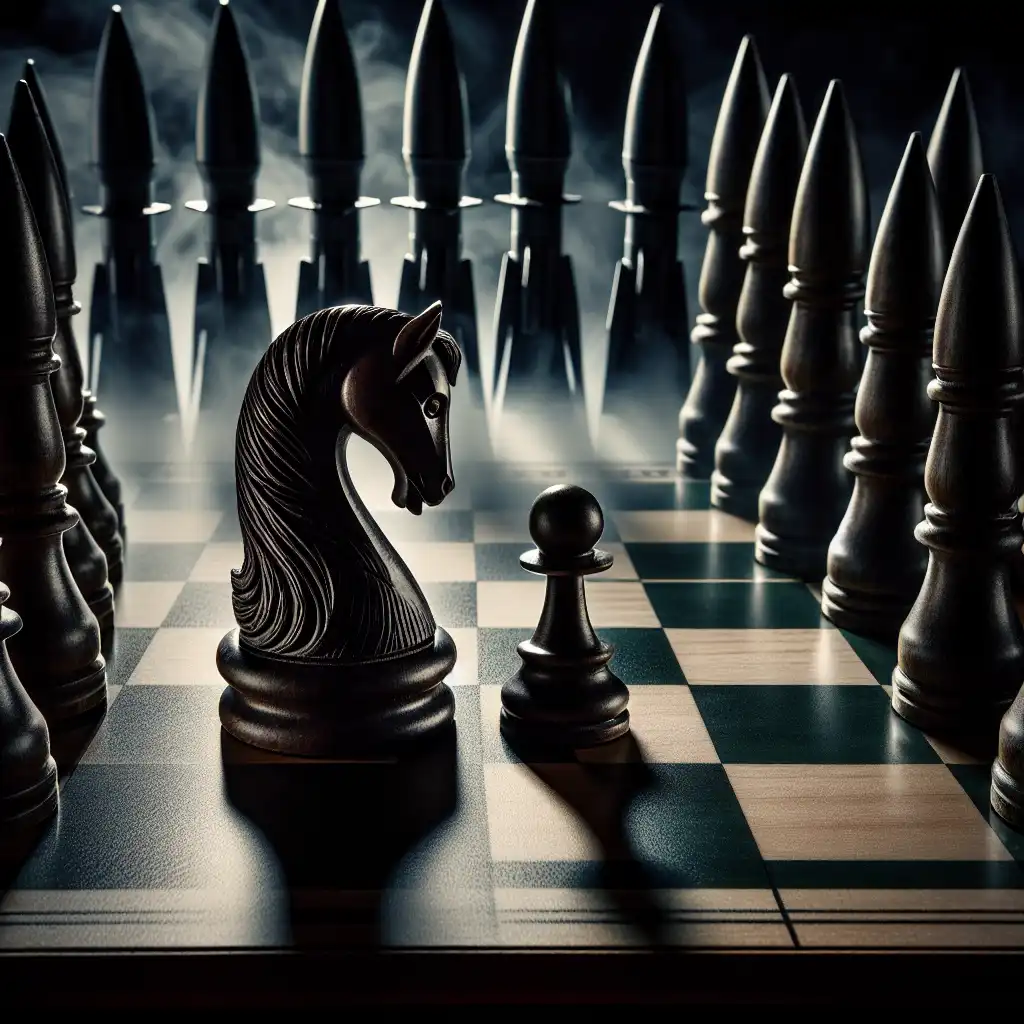
In military strategy, the idea of making a potential enemy afraid to attack by promising to fight back strongly.
The possession of nuclear weapons for deterrence has been a strategy of many countries.
Impossible de charger l’audio. Réessayez plus tard.
The word "deterrence" means using threats or warnings to prevent someone from doing something bad. For example, a country might have a strong military to deter other countries from attacking them. In everyday life, parents might use deterrence to keep their children from misbehaving by threatening to take away privileges or give out punishment. Essentially, deterrence is a way of discouraging bad behavior or actions by showing there will be consequences.
A barrier is something physical that prevents movement or access. For example, a fence can be a barrier to keep people or animals out of a certain area.
A barrier can be helpful in situations where a physical object is needed to block or limit access.
In general, barriers are geared more for physical objects, whereas deterrence is more geared toward ideas or behaviors.
Ouvrir le mot: Barrier →Deterrence and hindrance both mean to prevent something from happening, but they are used in different situations. Deterrence is used to prevent bad behavior by scaring someone with the threat of punishment.
For example, if a country has a strong military, it can deter other countries from attacking them. Hindrance is used to prevent something by making it more difficult or inconvenient.
For example, a fence around a pool can hinder a child from getting in and drowning. Deterrence uses fear to prevent something while hindrance uses physical barriers or obstacles to prevent something.
Ouvrir le mot: Hindrance →Intimidation means using threats or causing fear to make someone do something or refrain from doing something.
On the other hand, intimidation is applicable in situations where a bully wants to make someone do something they don't want to do, like giving up their lunch money.
Deterrence is about preventing someone from doing something by making them understand the consequences, while intimidation is about getting someone to do something by creating fear.
Ouvrir le mot: Intimidate →An obstacle is something that stands in the way of progress or success.
It can be a physical object or a challenge that needs to be overcome. For instance, a construction company might face obstacles such as difficult terrain, weather conditions, or zoning restrictions when building a new road.
Obstacles try to stop or slow down an action already in progress.
A deterrent is used to prevent wrongdoing, while an obstacle needs to be overcome to achieve a goal.
Ouvrir le mot: Obstacle →Prevention is about actively stopping something from happening before it even starts. For example, installing locks on doors to prevent burglars from entering is a form of prevention.
Deterrence tries to discourage bad behavior, while prevention tries to stop it before it even starts.
Ouvrir le mot: Prevention →Prohibition is an outright ban or prohibition on doing something. It's like saying, "This thing is not allowed, period." Prohibition is applicable in situations where something is considered harmful or dangerous and needs to be avoided altogether, like drugs, alcohol, or certain types of behavior.
Deterrence aims to discourage someone from doing something wrong by showing them the potential consequences, while prohibition outright bans certain actions or behaviors altogether.
Ouvrir le mot: Prohibition →Repression is the act of using force or control to stop or prevent something from happening.
It is often used to suppress or stop a rebellion or protest. For example, a government may use repression to quell a rebellion by using military force to stop the rebellion from spreading.
Deterrence is used to prevent something from happening while repression is used to stop something that is already happening.
Deterrence is generally more applicable in individual cases while repression is more applicable in broader societal and political situations.
Ouvrir le mot: Repression →It is often used in the context of punishing someone for committing a crime to discourage others from doing the same. Restraint means holding back or controlling oneself from doing something.
Restraint is applicable in situations where one needs to hold back from acting impulsively or in situations where conflict needs to be avoided.
Ouvrir le mot: Restraint →The surprising decline...
Voir sur YouTube ↗When you have a regime that would be happier in the afterlife than in this life, this is not a regime that is subject to classic theories of deterrence.
Jason De León: Decoding...
Voir sur YouTube ↗The only peace that can be made with a dictator is once that must be based on deterrence. For today, the dictator may be your friend, but tomorrow he will need you as an enemy.
Even in the most peaceful communities, an appetite for violence shows up in dreams, fantasies, sports, play, literature, movies and television. And, so long as we don't transform into angels, violence and the threat of violence - as in punishment and deterrence - is needed to rein in our worst instincts.
Of course it can be said of jails, too, that they try - by punishing the troublesome - to deter others. No doubt, in certain instances this deterrence actually works. But generally speaking it fails conspicuously.
When you talk about peace through strength, what you're talking about is the concept of deterrence.
Japan's alliance with the U.S. will only grow in importance amid the increasingly difficult security situation surrounding our country, thus I think it is necessary to keep the marines in Okinawa, a geographically strategic location from the standpoint of maintaining deterrence.
The present basic philosophy is nuclear deterrence.
We have got thousands of nuclear weapons in order to achieve deterrence.
NATO's deterrence has always been adequate, and I'm not worried about the physical security of my country. Not at all.
The purpose of nuclear weapons is to deter. The mission of deterrence to make all parties in possession of nuclear weapons never, ever use them.