puppetry
noun puppetry
ˈpʌpɪtri
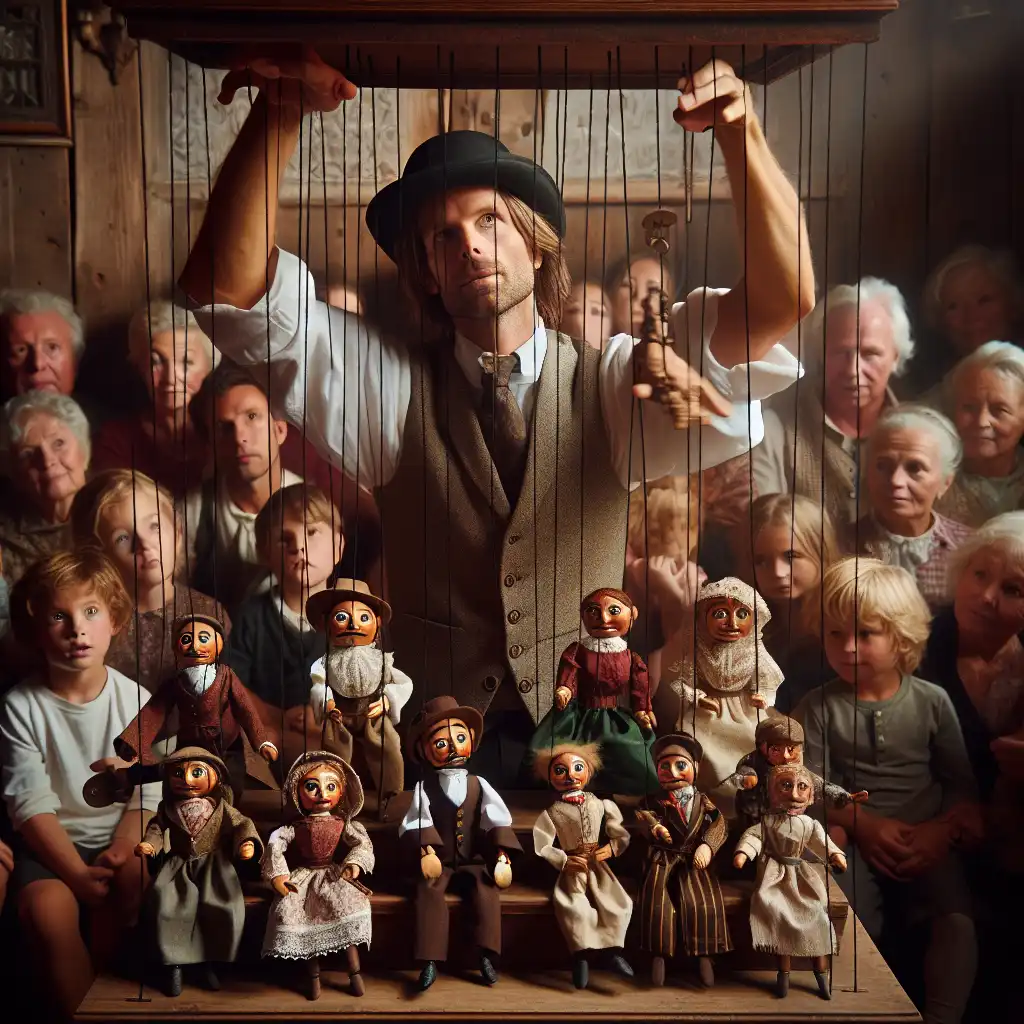
The art of making and moving puppets for performance and entertainment
She has a deep interest in puppetry and wants to make it her career.
puppetry
ˈpʌpɪtri
불러오는 중…
ˈpʌpɪtri
The art of making and moving puppets for performance and entertainment
She has a deep interest in puppetry and wants to make it her career.
ˈpʌpɪtri
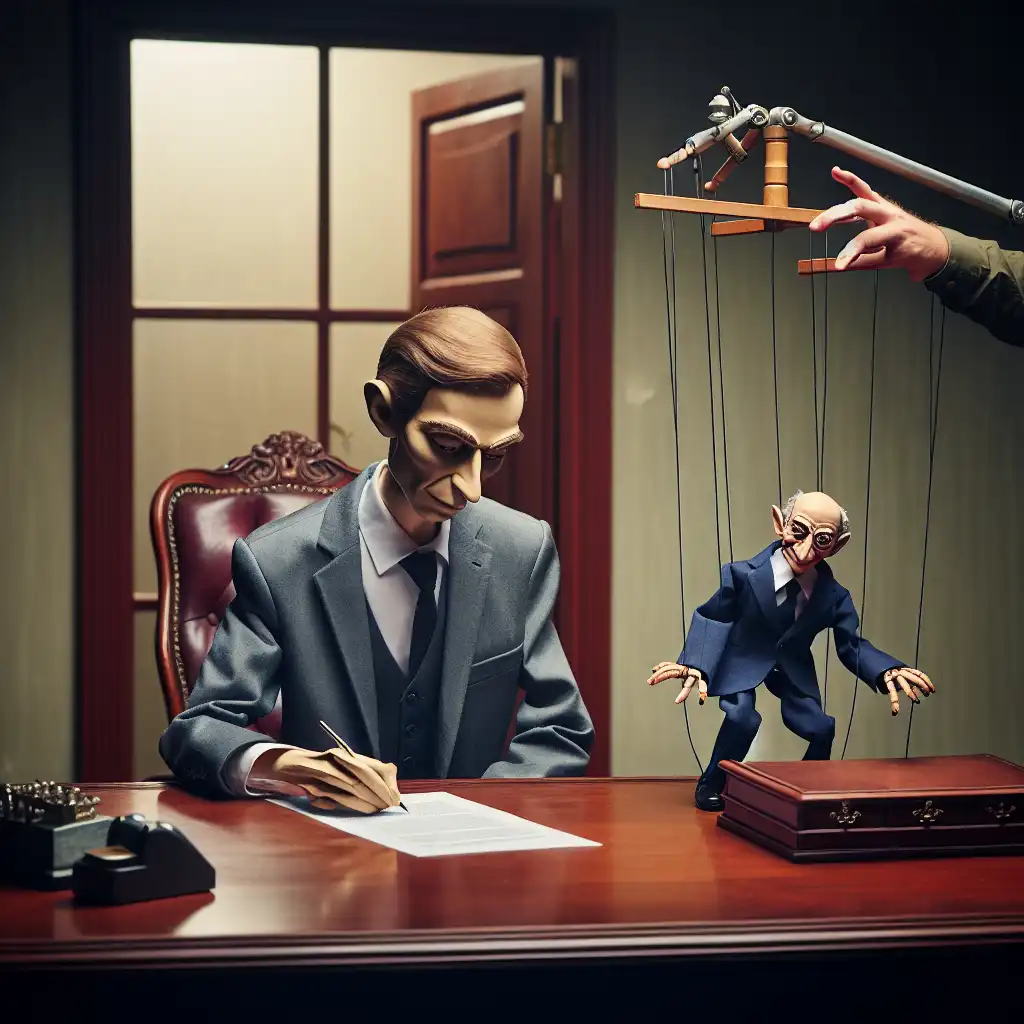
The action of controlling someone else's actions or decisions, similar to how a puppeteer controls a puppet
The report accused the administration of puppetry, with decisions being made behind closed doors.
오디오를 불러오지 못했어요. 잠시 후 다시 시도해 주세요.
Puppetry is the art of performing with puppets. Puppets are dolls or figures that are often shaped like people or animals and are used in plays or shows to tell a story. Puppetry can be used in various settings, such as in theater performances, educational programs, television shows, and movies. It is a form of entertainment that has been around for a long time and continues to be popular today.
Act refers to a performance done by human actors, where they use their body and voice to portray characters and tell a story.
Acting is typically used in theater, film, and television productions, where actors bring characters to life through their performances.
In summary, acting involves human performers while puppetry involves the use of puppets.
단어 열기: Act →Control means having the power or authority to direct or manage something or someone. It implies a sense of responsibility and decision-making power.
Puppetry refers to the art of manipulating puppets or marionettes to create the illusion of life or animation. Puppetry involves controlling the movements and actions of a puppet from behind the scenes, often for the purpose of entertainment.
Control is applicable in situations where there is a need for guidance, leadership, or oversight.
Control is about directing and managing, while puppetry is about manipulating and entertaining.
단어 열기: Control →Exhibition refers to a display of something, such as artwork or artifacts.
Exhibition refers to a display of something while puppetry refers to the art of using puppets to entertain or tell stories.
단어 열기: Exhibition →Manipulate means to control or influence someone or something in a clever or sneaky way.
In simpler terms, manipulate means to control something or somebody in a cunning way, while puppetry refers to controlling puppets for entertainment purposes.
단어 열기: Manipulate →Marionette and puppetry are both forms of theater involving the use of puppets, but there are some differences.
A marionette is a type of puppet that is controlled by strings or wires. The strings are attached to different parts of the puppet's body, and when they are pulled or released, the puppet can move or perform different actions.
Marionettes are usually larger and more complex than other types of puppets, and require a skilled puppeteer to operate them.
Puppetry is a general term for any type of theater that involves the use of puppets. This can include marionettes, but it can also include hand puppets, shadow puppets, and other types of puppets that are controlled by different means.
In summary, marionettes are a specific type of puppet that is controlled by strings, while puppetry is a broader term for any type of theater that involves puppets.
Marionettes are often used in more traditional and formal performances, while puppetry can be used in a wide variety of settings and genres.
단어 열기: Marionette →Performance refers to any type of entertainment or presentation that is done in front of an audience, such as music, theater, dance, or sports.
Both performance and puppetry can be applicable in many different settings, such as theater, television, film, and live events.
단어 열기: Performance →Play refers to any form of activity or entertainment that involves participation, often for amusement or exercise.
It can include physical play, such as sports or games, as well as theater performances and films.
In summary, while play can refer to a wide range of activities, puppetry specifically refers to the use of puppets in entertainment or storytelling.
단어 열기: Play →Puppetry refers to the art of using puppets to tell a story or perform a show. Showmanship refers to the ability to entertain and engage an audience through a performance.
Showmanship is applicable in any type of performance, including puppetry, where the performer needs to captivate and entertain the audience through their actions, voice, and presentation.
In essence, puppetry is a form of performance art that relies on the use of puppet characters, while showmanship is a skill that any type of performer can use to engage and entertain their audience.
단어 열기: Showmanship →Life lessons from a...
YouTube에서 보기 ↗Puppet camp truly redefined my preconceptions of puppetry... I'll never forget learning that before a puppet can speak... he has to inhale. It's those details that make the characters truly come to life.
Bunker Roy: Learning...
YouTube에서 보기 ↗The journalism school helped me develop writing skills, and I had been enjoying cartooning from a very young age. My interest in puppetry, however, came much later.
Learning from a barefoot...
YouTube에서 보기 ↗The joy of puppetry is that it is very simple and low-fi, which I love.
I make napkins talk in restaurants, socks talk on car journeys. There is an awful lot of puppetry going on in the house.
Sometimes we think of a creature like a person in a suit, but then you have limitations of two eyes and two legs - they have to see and breathe. I got more into puppetry because it offered more possibilities.
I really like doing puppetry; I'm not sure if it will find its way into 'Big Bang,' but it always does seem to find its way into a lot of things.
But with The Dark Crystal, instead of puppetry we're trying to go toward a sense of realism - toward a reality of creatures that are actually alive and we're mixing up puppetry and all kinds of other techniques.
I directed the play 'Amadeus' with puppets way back in the day for theater. I also studied puppetry at the Eugene and Neil Center with a lot of the 'Sesame Street' people, so I do have a little bit of a history with puppetry.