joist
noun joist
dʒɔɪst
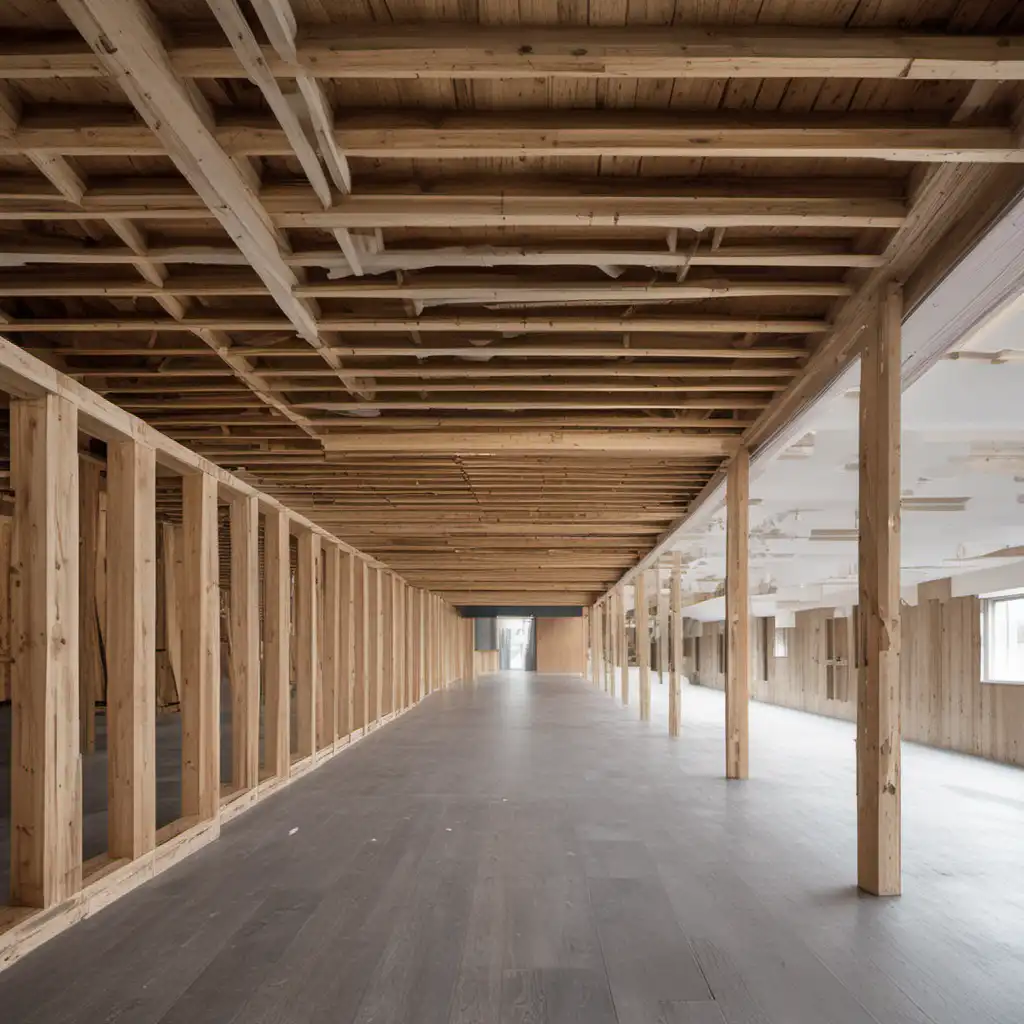
A long piece of wood, metal, or concrete that supports a floor, ceiling, or roof of a building.
The joists on the ceiling of the basement were exposed.
joist
dʒɔɪst
Chargement…
dʒɔɪst
A long piece of wood, metal, or concrete that supports a floor, ceiling, or roof of a building.
The joists on the ceiling of the basement were exposed.

dʒɔɪst
To provide a floor or ceiling with joists.
The construction workers are planning to joist the basement ceiling tomorrow.
Impossible de charger l’audio. Réessayez plus tard.
A joist is a long piece of wood or metal that is used to support a floor or a ceiling. It is usually horizontal and is laid across the beams or walls of a building. Joists are used in houses, buildings, and other structures to provide support and stability. For example, the floor of a room might be made up of several joists that run perpendicular to each other and support the weight of the flooring and everything on it.
A beam is a long and sturdy piece of wood or metal that supports the weight of a building or structure. It is also used to transfer the weight of the building or loads on it to the foundation or supports below.
Beams are often used horizontally to support the roof, ceiling, or floors in a building.
It is typically placed perpendicularly between two beams to support the load of the structure or floor above.
The main difference is that a beam is a horizontal support structure while a joist is a vertical support structure. Beams are larger and longer, while joists are smaller and shorter.
Beams are used for supporting the weight of the walls, roof, and floors of a building, while joists are typically used for supporting the floor or ceiling structure within a room or space.
Ouvrir le mot: Beam →A brace is a support used to strengthen and stabilize a structure.
In summary, braces are used to provide diagonal support to a structure, while joists are used to provide horizontal support to a floor or ceiling.
Ouvrir le mot: Brace →A framework is a structure or a set of rules that guide a process or system. For example, in software development, a framework is a set of tools and guidelines that developers use to create applications.
In construction, a framework can refer to the basic structure of a building.
A framework is a set of rules or a structure that guides a process, while a joist is a structural element used to support the weight of a building's floors, ceiling or roof.
Ouvrir le mot: Framework →A girder is a large, horizontal beam that is used to support other beams or structures. It's typically used to help distribute weight over long distances.
So in general, people use girders to support larger, heavier structures over longer distances, while they use joists to support floors and ceilings over shorter distances.
Ouvrir le mot: Girder →A plank is a flat piece of timber or plank-like material, typically made of wood, plastic, or composite material. Planks are usually used for flooring, decking, or siding on buildings.
In simple terms, joists support a building's structure while planks provide a flat surface for walking or covering the joists.
Joists are used mainly in the construction industry, while planks are used in both construction and residential settings.
Ouvrir le mot: Plank →A rafter is a structural element that runs diagonally from the ridge of the roof to the eaves. Rafters are used to support the roof sheeting, typically made of plywood or metal, and to resist forces such as wind, rain and snow loads.
In summary: joists support floors and ceilings, while rafters support the roof of a building.
Ouvrir le mot: Rafter →A joist is a horizontal beam used for supporting the structure of a building, such as a floor or ceiling.
It is typically made of wood, steel or concrete and is used to provide support to the structure.
A joist is specifically used to support a framework for a home or building.
A support can refer to any form of assistance that offers help or holds something up.
It can be a physical object, like a post or column, that provides support to a structure, or it can be a person who offers emotional or financial support.
A support can be used in any application where something needs to be held up or stabilized.
The main difference between a joist and a support is that a joist is specifically used for supporting the structure of a building, while a support can refer to any form of assistance that offers help or holds something up.
Ouvrir le mot: Support →Joists are commonly used in residential construction and are typically smaller than timbers.
A timber is a larger, heavy piece of wood, typically used for framing, support beams, or other large-scale construction projects.
Timber is often used in industrial and commercial applications where greater strength and durability are required.
To summarize, joists are smaller, horizontal pieces of wood used to support floors or ceilings, while timber is larger and used for more heavy-duty construction projects like framing or support beams.
Ouvrir le mot: Timber →A truss is a structural framework made of connected triangles.
In simpler terms, a joist is a support beam for a floor or ceiling, while a truss is a support framework for a large structure like a roof.
Ouvrir le mot: Truss →