bulrush
noun bulrush
ˈbʊlrʌʃ
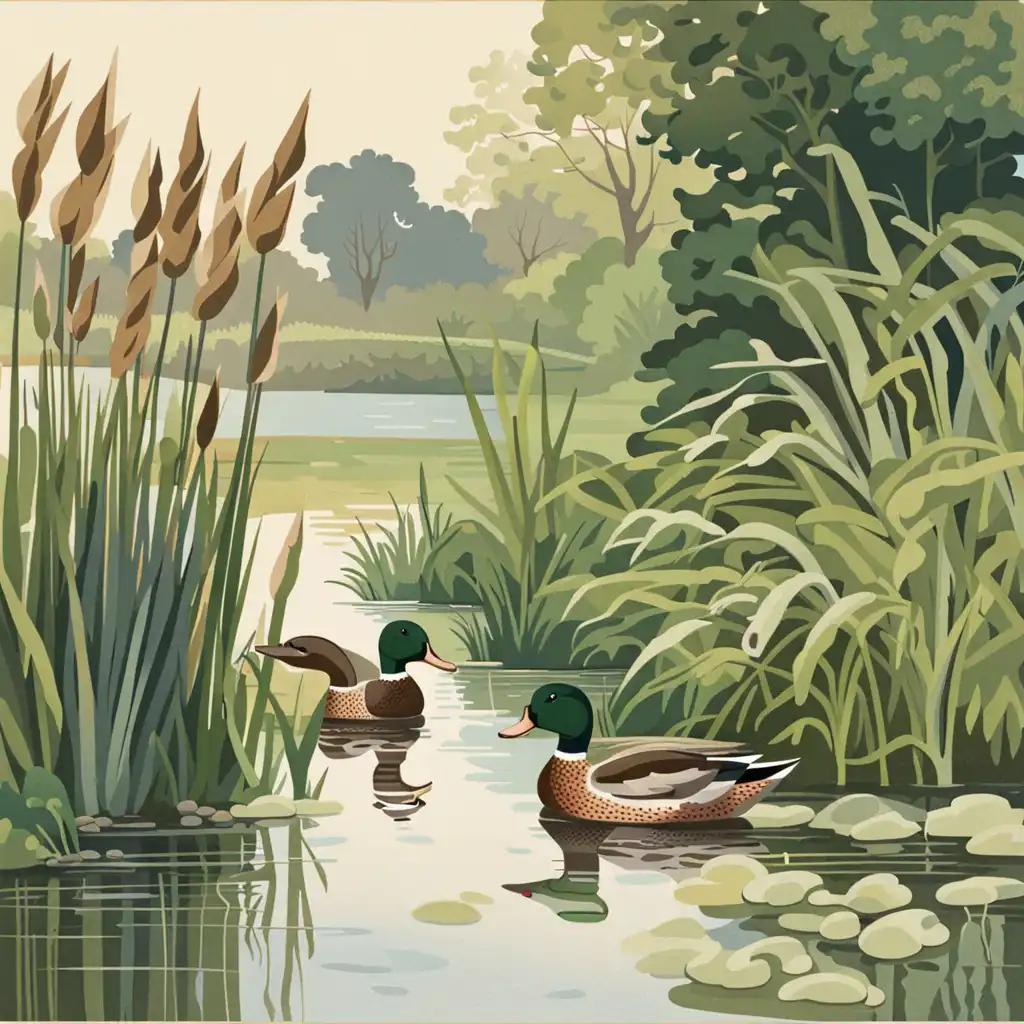
A tall plant with long, thin leaves found near the water.
A group of ducks were nestled amongst the bulrushes by the river bank.
bulrush
ˈbʊlrʌʃ
加载中…
ˈbʊlrʌʃ
A tall plant with long, thin leaves found near the water.
A group of ducks were nestled amongst the bulrushes by the river bank.
音频无法加载,请稍后再试。
The word 'bulrush' refers to a tall plant with a long stem that grows in wet soil or near the water. It is usually found in marshes or near ponds or lakes. The plant has a brownish head that looks like a small cattail. The word 'bulrush' can be used to describe this plant or to refer to a group of similar plants. It can also be used in poetry or in literature to create a sense of natural beauty or peacefulness.
Bulrush and papyrus are both plants used for similar purposes, but they have some differences.
Papyrus is a tall, reed-like plant that grows in wetlands and along rivers. It has triangular stems with a feathery head at the top.
Papyrus was used by ancient Egyptians to make paper, which was used for writing and painting. The plant was also used to make boats, sandals, and other items.
Today, papyrus is still used for paper-making and as a decorative plant in gardens and water features.
Bulrush is a plant used for weaving and water treatment, while papyrus is a plant used for paper-making and decoration.
打开单词: Papyrus →Bulrush and reed are both types of tall, thin plants that grow near water.
Reeds are plants that belong to the family Poaceae. They have long, narrow leaves that grow from the stem, and they produce clusters of flowers at the top of the stem.
Reeds are often found growing in marshes, wetlands, or along the edges of bodies of water. They are sometimes used for making thatching, weaving, or musical instruments.
In summary, while both bulrushes and reeds are similar in appearance and habitat, bulrushes are specific plants of the genus Typha and are often used for weaving crafts, while reeds belong to the family Poaceae and are often used for thatching, weaving, or making musical instruments.
打开单词: Reed →Bulrush and sedge are both types of wetland plants commonly found in marshy areas, but they have some differences.
Sedge refers to a group of plants with grass-like leaves that grow in wetland areas. Unlike bulrushes, sedges have triangular stems and usually form clumps rather than stands.
They produce small, inconspicuous flowers that are often hidden among the leaves. Sedges are important for stabilizing soil and preventing erosion in wetlands, and they also provide habitat for various wildlife species.
Some sedge species are edible and have historical uses for food and medicine.
In summary, bulrushes are tall and slender with cylindrical stems and flower heads, while sedges have grass-like leaves with triangular stems and inconspicuous flowers.
打开单词: Sedge →