Audio could not be loaded. Please try again later.
How to use
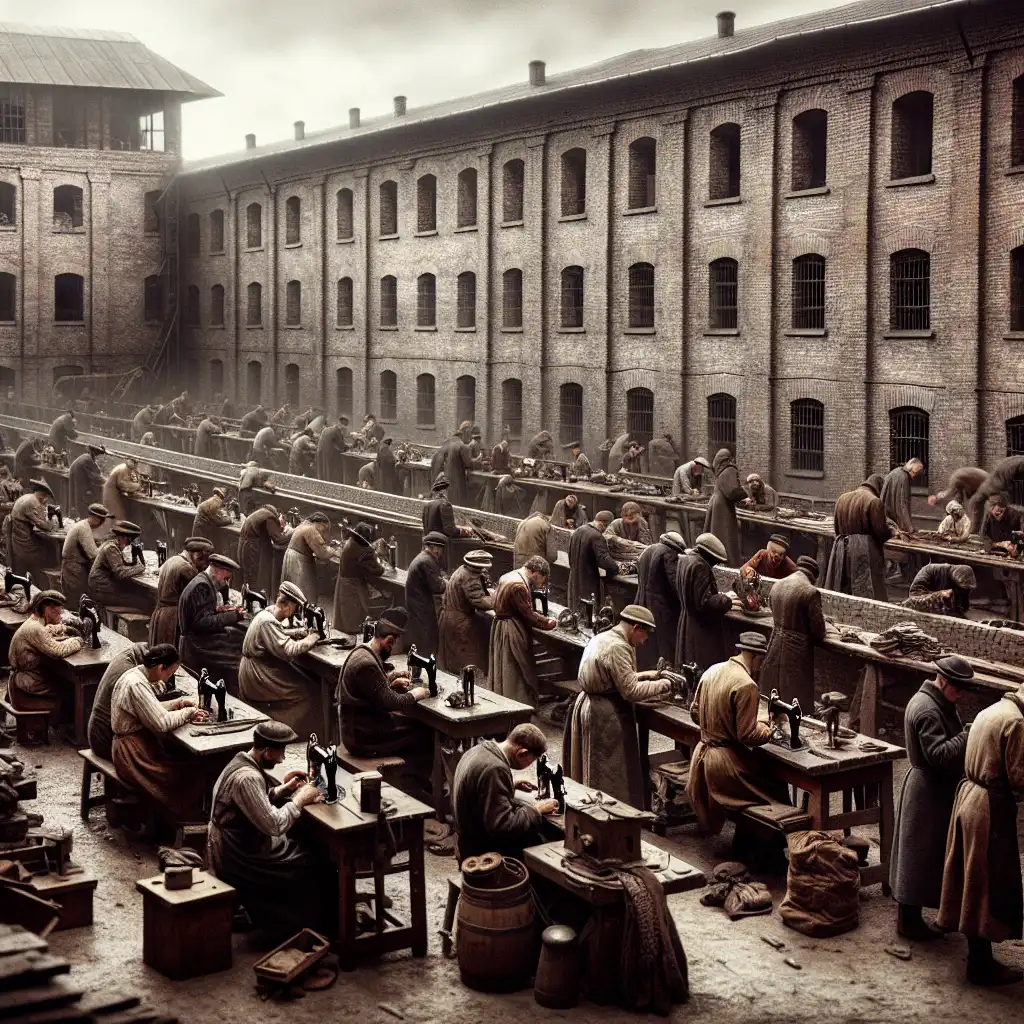
A workhouse was a place in England where poor people who couldn't afford to support themselves would have to go and work hard in exchange for food and a place to sleep. Workhouses existed in the past and were often places of hardship and suffering for those who had to live there. Today, the word 'workhouse' is not commonly used and may have negative connotations, so it is not recommended to use it in most contexts.
An almshouse is a type of residence for people who cannot afford to live on their own. These people are usually elderly, disabled or ill.
They are provided with a place to live, as well as basic amenities such as food and medical care. Almshouses are typically maintained by charities or religious organizations.
The main difference between the two is that almshouses are focused on providing support to people who are unable to take care of themselves due to age or health issues, while workhouses focus on providing support to people who are unable to provide for themselves financially.
In general, almshouses are considered to be more humane and supportive than workhouses, which were often seen as places of punishment.
An asylum is a place where people with mental illnesses or disabilities can live and receive medical treatment and care.
While both institutions may have provided assistance to those in need, they served very different purposes. Asylums are focused on providing medical treatment and care, while workhouses are focused on providing employment and housing for those who are unable to support themselves.
A hospice is a place where people who are terminally ill go to receive comfort and care in their final days. It aims to provide a peaceful and comfortable environment for the patients and offers palliative care to manage their symptoms and improve their quality of life.
A hospice is a place of care for terminally ill patients, while a workhouse was a type of institution for poor and destitute people in the past.
A poorhouse was a place where poor people who had no family to take care of them could stay and be supported by the government.
These were often seen as a last resort for people who couldn't find other work, and the conditions were often similar to those of a poorhouse.
A poorhouse was for people who were too old, sick, or weak to work, while a workhouse was for people who were able-bodied but struggling to find employment.
A reformatory is a place where young people go to be rehabilitated and changed into better citizens. It is a type of juvenile detention center where kids who have committed crimes can learn from their mistakes and be given the necessary support to change their ways.
A reformatory is a rehabilitation center for young offenders, whereas a workhouse is a place where people without means work in exchange for food and shelter.
A shelter is a place where people can go to find a safe and temporary place to stay, usually for free. It is designed to provide basic necessities such as food, clothing, and a bed for people who are homeless, fleeing domestic violence, or facing other immediate crises.
Shelters are often run by non-profits, charities, or government agencies.
A workhouse is a historical term for a place where poor people were sent to work in exchange for food and shelter. Workhouses were often run by the government and were seen as a way to provide support to those in need while also preventing them from becoming a burden on society.
A shelter is a temporary refuge for those in need, while a workhouse was historically a place where poor people could work in exchange for support.
Lawyers enjoy a little mystery, you know. Why, if everybody came forward and told the truth, the whole truth, and nothing but the truth straight out, we should all retire to the workhouse.
It was among farmers and potato diggers and old men in workhouses and beggars at my own door that I found what was beyond these and yet farther beyond that drawingroom poet of my childhood in the expression of love, and grief, and the pain of parting, that are the disclosure of the individual soul.
Portsmouth has the honor, I believe, of establishing the first recorded pauper workhouse - though not in connection with her poets, as might naturally be supposed.
I collect things called 'samplers' which are Victorian pieces of needlework usually done by children in a workhouse to show that they have a skill which can be used in service, stitching household linen or that kind of thing. I think they're very humble and very beautiful.