
citizen
noun citizen
ˈsɪtɪzn
A person who legally belongs to a country and has the rights and protection of that country
As a citizen of the United States, he was entitled to vote.
citizen
ˈsɪtɪzn
불러오는 중…
ˈsɪtɪzn
A person who legally belongs to a country and has the rights and protection of that country
As a citizen of the United States, he was entitled to vote.

ˈsɪtɪzn
A person who lives in a certain place, town, or city
The citizens of Paris are known for their love of art and culture.
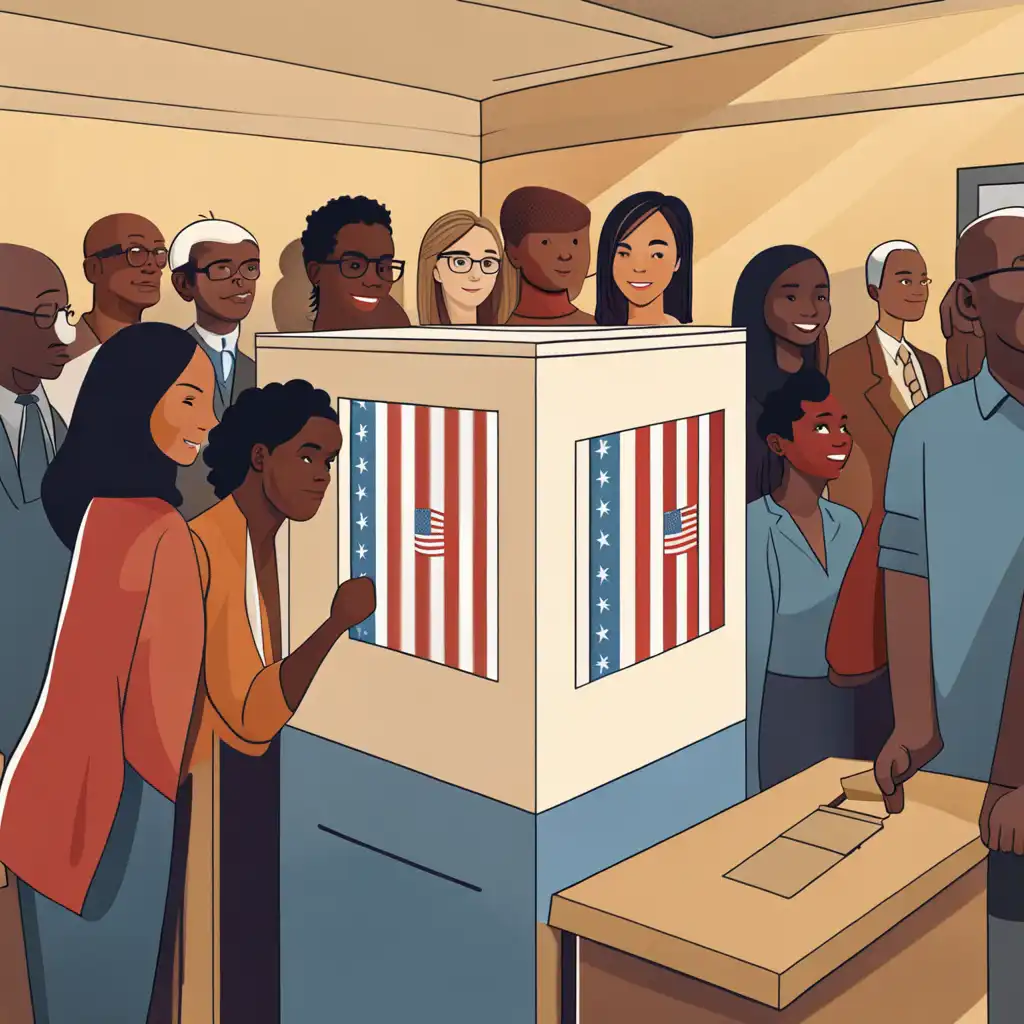
ˈsɪtɪzn
A participant in a democracy, particularly a democracy involving active participation of the population
Every citizen needs to play their part in a democracy.
오디오를 불러오지 못했어요. 잠시 후 다시 시도해 주세요.
The word "citizen" is used to talk about someone who is a legal member of a country. This means they have certain rights and responsibilities in that country, like voting and paying taxes. So, if you are talking about someone who belongs to a country, you would use the word "citizen." For example, "Lila is a citizen of Brazil, so she can vote in their elections."
A denizen is a person who lives in a particular place but is not a citizen there. Denizens may still have legal rights, such as the right to work or own property, but they do not have the full rights and responsibilities of a citizen.
Citizen is a more common term and refers specifically to a legal status within a country, while denizen is a bit more uncommon and refers more broadly to someone who lives in a particular place.
단어 열기: Denizen →An inhabitant is simply a person who lives in a particular place, regardless of their legal status or citizenship.
For example, someone living in a foreign country may be an inhabitant of that country, but not necessarily a citizen.
Citizen refers to legal membership in a country, while inhabitant simply refers to someone who lives in a particular place.
단어 열기: Inhabitant →Member can refer to someone who belongs to any kind of group, organization, or community, regardless of their nationality or citizenship status.
For example, a student can be a member of a sports team or a club at school, or a person can be a member of a professional organization or a religious congregation.
Citizen is a legal term associated with a country, while a member is a broader term that can apply to any kind of group or organization.
단어 열기: Member →National refers to a person who is a member of a particular nation or ethnic group, regardless of their legal status in a country.
For example, a person may identify as an American national due to their cultural or ethnic background, but they may not be a citizen of the United States if they are not a legal resident.
Citizen relates to legal status and rights, while national relates to cultural or ethnic identity.
단어 열기: National →Native refers to a person or thing that originates or belongs to a particular place.
Native can describe a person who was born in a particular place or has ancestral ties to it.
A citizen is someone who has legal rights and responsibilities in a country, while native simply refers to a person's origin or ancestral ties to a specific place.
단어 열기: Native →A resident is someone who lives in a specific place, such as a city or a country, but they may not necessarily have the same legal rights as a citizen.
Residents may include people who are not citizens but who are living in a particular place for a temporary period of time, such as students or temporary workers.
단어 열기: Resident →Subject typically refers to a person who is under the authority and rule of a monarch or ruler. Subjects do not have the same rights and freedoms as citizens and are more likely to be governed by the ruler's will rather than the rule of law.
Citizen refers to a person who belongs to a country and has legal rights and responsibilities, while subject refers to a person who is under the authority and rule of a monarch or ruler.
Citizens have more rights and freedoms than subjects.
단어 열기: Subject →A voter is a citizen who has registered themselves to vote during elections.
Voter registration is applicable only to citizens who are over the age of 18 and wish to participate in the country's democratic process by electing their political leaders.
Once a citizen registers themselves as a voter, they are eligible to cast their ballot during elections.
To summarize, citizenship is a legal status that denotes a person's belonging to a particular country, while voter registration is a choice that citizens make to exercise their right to vote during elections.
단어 열기: Voter →Are your purposes pro-social or anti-social? This question isn't about strategy. It's about character and that's another set of lessons. But remember Power plus character equals a great citizen, and you have the power to be one.
YouTube에서 보기 ↗You must be afraid, my son. That is how one becomes an honest citizen.
a democratic republic is the rarest form of government on earth. Democracies are fragile. Democracies can fail. And what citizens do or fail to do in a moment of crisis
YouTube에서 보기 ↗Governments regard their own citizens as their main enemy, and they have to be - protect themselves. That's why you have state secret laws. Citizens are not supposed to know what their government is doing to them.
backyards what we want to do is really crowdsource this take this into the world of citizen science so it's not just a few scientists tracking a handful of animals but hundreds of volunteers tracking hopefully thousands of cats and we generally advocate that people keep their cats indoors but if you do let
YouTube에서 보기 ↗I have a feeling that I make a very good friend, and I'm a good mother, and a good sister, and a good citizen. I am involved in life itself - all of it. And I have a lot of energy and a lot of nerve.
happens nonetheless and so when the police get a tip-off that from a caring citizen that cows are being transported to slaughter they catch them and they bring them here to this safe place I
YouTube에서 보기 ↗To all general purposes we have uniformly been one people, each individual citizen everywhere enjoying the same national rights, privileges, and protection.
that with this bill we have a path forward and the third is the realization that the voices of ordinary citizens can still change the world to be honest with you it's really scary for me to be on the stage right now and share with you
YouTube에서 보기 ↗The message from national security experts and citizens around the world is clear: The only way to eliminate the global nuclear danger is to eliminate all nuclear weapons.
turning every citizen into a potential reporter. But if everyone is a reporter nobody is, and different sources may disagree, not only opinions but on the facts themselves. So how do you get the truth or something close? One of the best ways is to get the original news
YouTube에서 보기 ↗I consider myself a legal citizen of the world.
that vastly different regimes claim to embody it. At the same time some share Plato's skepticism about the wisdom of crowds. Many modern democracies reconcile this conflict by having citizens elect those they consider qualified to legislate on their behalf.
YouTube에서 보기 ↗I consider myself a free man and a citizen of the world.
All politics is about contrasts. Few of us think about civic life in the abstract. We think about things in relief compared to something else. Powerful citizens set the terms of that contrast. This doesn't mean being uncivil.
YouTube에서 보기 ↗I'm just a citizen of the world.
the role of Claudette as an up-stander, it teaches us important lessons that challenge us today. What does it mean to be a participant? A responsible citizen in a democracy?
YouTube에서 보기 ↗I am a citizen of the world, or no world at all!
Financial stability is a byproduct of a proper lifestyle. A financially sound incarcerated person can become a taxpaying citizen, and a financially sound taxpaying citizen can remain one. This allows us to create a bridge between those people who we
YouTube에서 보기 ↗I am a citizen of the world.