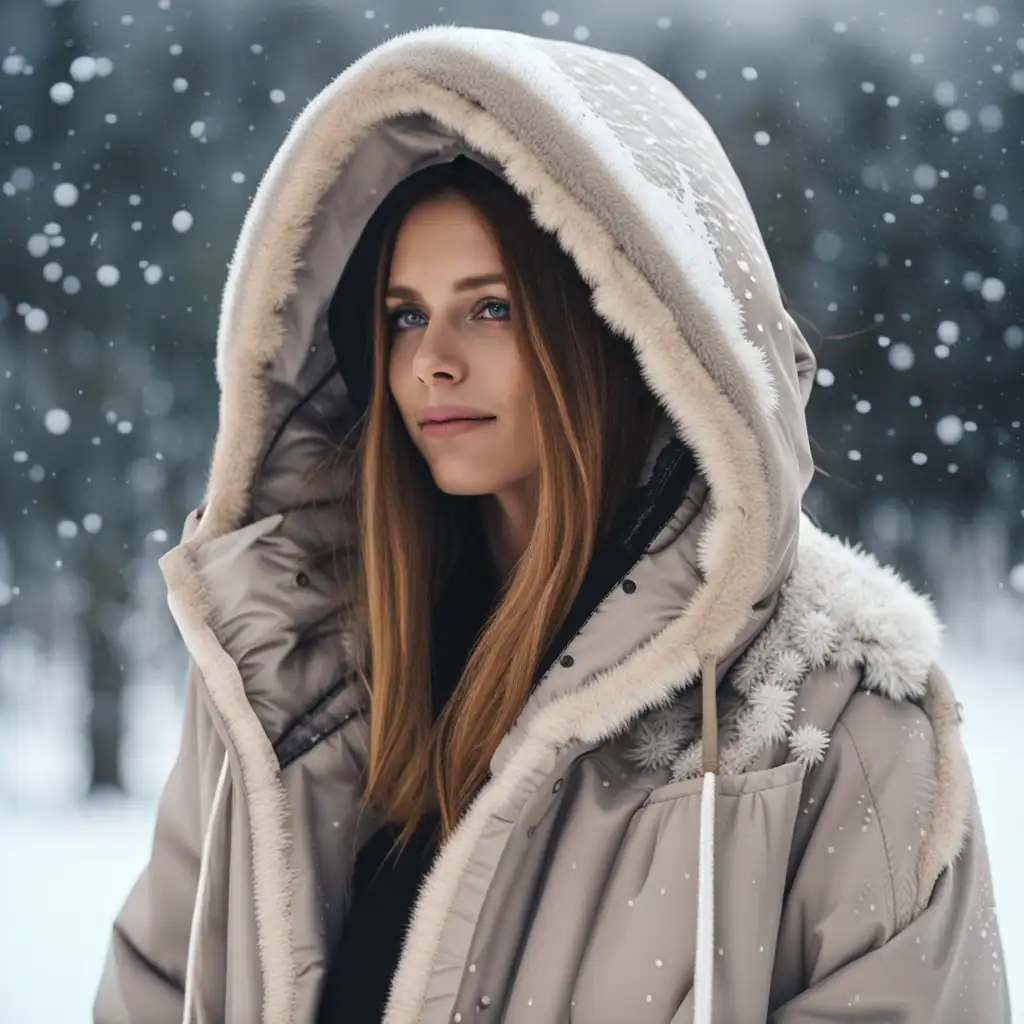
parka
noun parka
ˈpɑːrkə
A large jacket with a hood to protect against cold weather, often filled with warm material like fur or synthetic fiber.
She put on her parka before heading out into the snow.
parka
ˈpɑːrkə
Loading…
ˈpɑːrkə
A large jacket with a hood to protect against cold weather, often filled with warm material like fur or synthetic fiber.
She put on her parka before heading out into the snow.
Audio could not be loaded. Please try again later.
A parka is a type of coat that is designed to be worn during cold and wet weather. It typically has a large hood and is made from a waterproof or water-resistant material. Parkas are often used in places where the weather is very cold or rainy, such as in the Arctic or during the winter season in many parts of the world. They are commonly worn by people who enjoy outdoor activities like camping, skiing, or hiking, as well as by people who need to work outside in harsh weather conditions, such as construction workers or farmers.
A coat is a general term for an outer clothing item that covers the upper body and arms.
A parka is a specific type of coat that typically has a hood, is longer than a standard coat, and is often made with thicker, more weather-resistant materials.
A coat is a general term for a variety of outer clothing options while a parka is a specific type of coat designed for harsh weather conditions.
Open word: Coat →A jacket is a type of outerwear that has sleeves and usually ends at the waist or hips.
A jacket is shorter and made of lighter material, while a parka is longer and made of heavier material, suitable for colder weather.
Open word: Jacket →Outerwear is a general term used to refer to any clothing worn outside, like coats, jackets, and sweaters. Parka is a specific type of outerwear that is usually long, has a hood, and is often made with warm material like fur or down.
Parkas are more suitable for cold weather, while outerwear can refer to any clothing worn outside regardless of the weather.
Open word: Outerwear →The Call of Everest %\PIPE%...
Watch on YouTube ↗My dad would come to pick me up from high school in a beaver-skin cap, big gloves, his parka and everything. It was so funny to see him show up - his beard all frozen from being out with the dogs.
Thomas Hellum: The...
Watch on YouTube ↗I think, as most of us do, I put such high expectations on myself that this spills over onto other people. And not everyone is wired this way. Some people can shrug expectations off their shoulders like a cardigan, remaining cool and breezy. Others wear them like a parka with a stuck zipper, hot and stifling.
A classic fishtail parka, anorak, mackintosh, windbreaker, pea coat, or jean jacket will get you through every season.
When I started out in fashion, everything had to be very structured and tight and controlling, and now I'm getting to a point where I think - I could wear a great big parka, that could be quite fabulous. I haven't always got to show off my size, show off my shape. It's a turning point for me.
You could say I'm a mod, but with a small 'm'; I don't wear a parka, but I do question what I wear and what I listen to, which is what it's all about.
The clothes are different: pre-dog, I used to be very finicky and self-conscious about how I looked; now I schlep around in the worst clothing - big heavy boots, baggy old sweaters, a hooded down parka from L.L. Bean that makes me look like an astronaut.
I'm 5-foot-5, and I'll wear a big parka and put the hood up, and nobody gives me a second glance.
Seasonal change in Los Angeles is often a very subtle thing. It's not as if we finally stop having to shovel the snow out of our driveways and can put our parkas back in the closet.
Look at Inuit clothing. Their stuff still works better than Cabela's. I've made my own parkas, mukluks, footgear, and it is good to 60 degrees below zero. All I did was copy the patterns that came down from the Inuits.
In New York, you get lots of trade. Rad Hourani gave me a cool hooded parka.