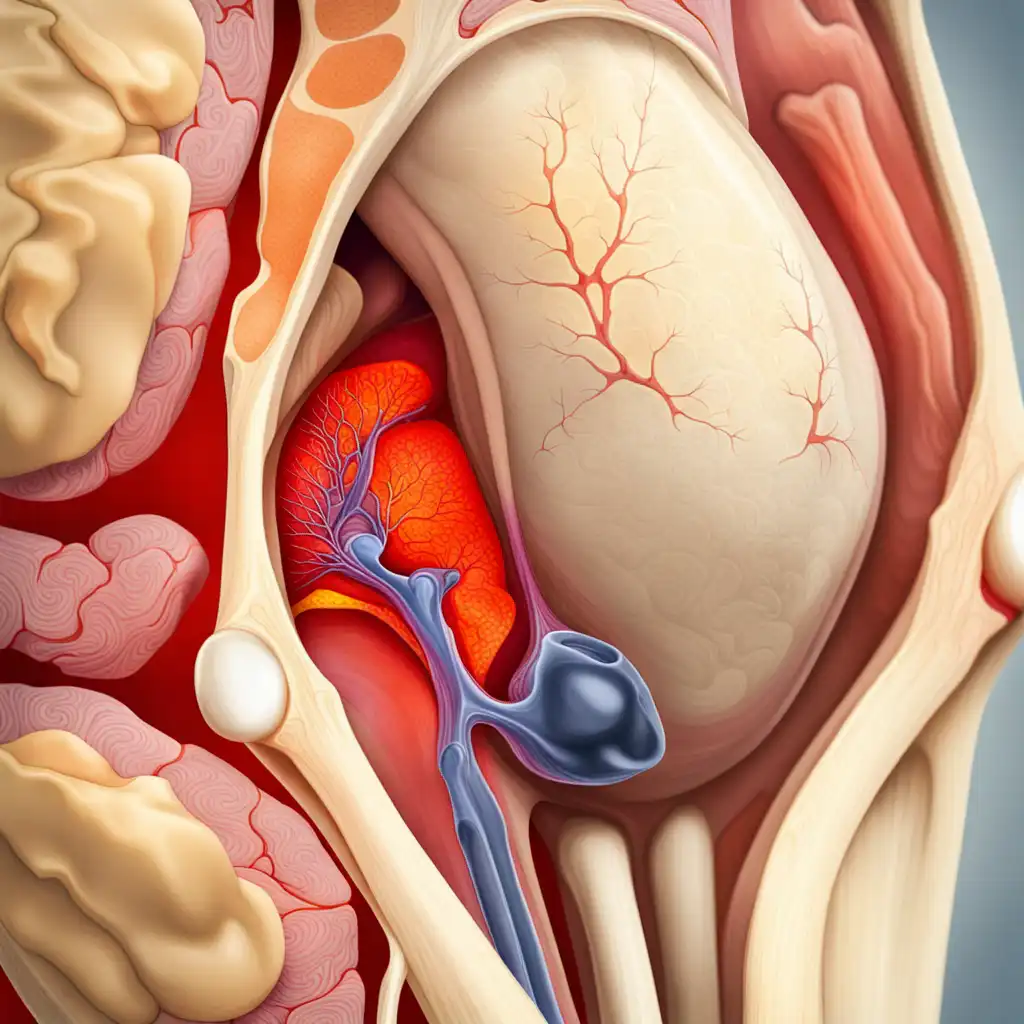
bursa
noun bursa
ˈbɜːrsə
A small fluid-filled sac in the body, serving to reduce friction between internal body parts.
The swelling in his knee was due to an inflamed bursa.
bursa
ˈbɜːrsə
加载中…
ˈbɜːrsə
A small fluid-filled sac in the body, serving to reduce friction between internal body parts.
The swelling in his knee was due to an inflamed bursa.

ˈbɜːrsə
A city in northwestern Turkey, capital of the Bursa Province.
The historical city of Bursa is known for its cultural and architectural richness.
音频无法加载,请稍后再试。
The word 'bursa' refers to a small sac in the body that is filled with fluid and helps to cushion and decrease friction between bones, tendons, and muscles. It is typically used in medical or anatomical contexts, such as when describing injuries or diseases related to these structures. For example, if someone has a swollen knee due to inflammation of the bursa, a doctor might say they have bursitis. It is important for healthcare professionals and individuals with certain conditions to know about bursae and their function in the body.
The bladder is an organ that stores urine in the body and is part of the urinary system. It is located in the lower abdomen.
Bursae are present throughout the body, including in the knees, shoulders, and elbows. Bladder is applicable to the urinary system and bursa is applicable to the musculoskeletal system.
打开单词: Bladder →Bursa and cavity are both words used to describe spaces in the body, but they have different applications.
A cavity is a hollow space within a structure. In the body, cavities refer to spaces that are surrounded by bones or other structures.
For example, the chest cavity contains the heart and lungs, while the abdominal cavity contains the stomach, liver, and other organs.
Overall, bursae and cavities serve different purposes in the body. Bursae act as cushions to prevent friction and pressure, while cavities contain and protect vital organs.
打开单词: Cavity →A pouch is a small bag-like container or pocket.
Pouches can be made of different materials and be used for different purposes, such as holding small objects or storing items.
For example, a kangaroo has a pouch where it carries its young, and a backpack can be considered as a type of pouch used to carry items while travelling or hiking.
In summary, while both bursae and pouches are small containers, a bursa is a fluid-filled sac that functions to reduce friction between bones and tendons, while a pouch is a bag-like container used for storing or carrying items.
打开单词: Pouch →Bursa and sac are both anatomical structures that are found in the body.
A bursa is a small fluid-filled sac that acts as a cushion between bones, tendons and muscles in places where there is a lot of friction.
A sac is a structure that can hold various types of substances, such as fluids or gases.
It is often used to store things, such as food or waste, in organisms. An example of a sac in the human body is the urinary bladder, which is a sac that stores urine until it is ready to be expelled from the body.
The main difference between a bursa and a sac is their function and location in the body.
A bursa is a cushioning structure found near joints, while a sac is a structure that stores substances in the body.
打开单词: Sac →Both bursa and sack refer to a container of sorts, but bursa typically refers to a small, fluid-filled sac that provides cushioning between bones, muscles, and tendons.
Sack is a more general term for any type of bag or pouch-shaped container, whether it's made of cloth, paper, or plastic.
Sacks are usually used to store or transport materials, such as crops or goods in a grocery store.
Bursa is a specific type of sac that serves a particular function in the body, while sack is a more general term for any container that holds something.
打开单词: Sack →