eulogy
noun eulogy
ˈjuːlədʒi
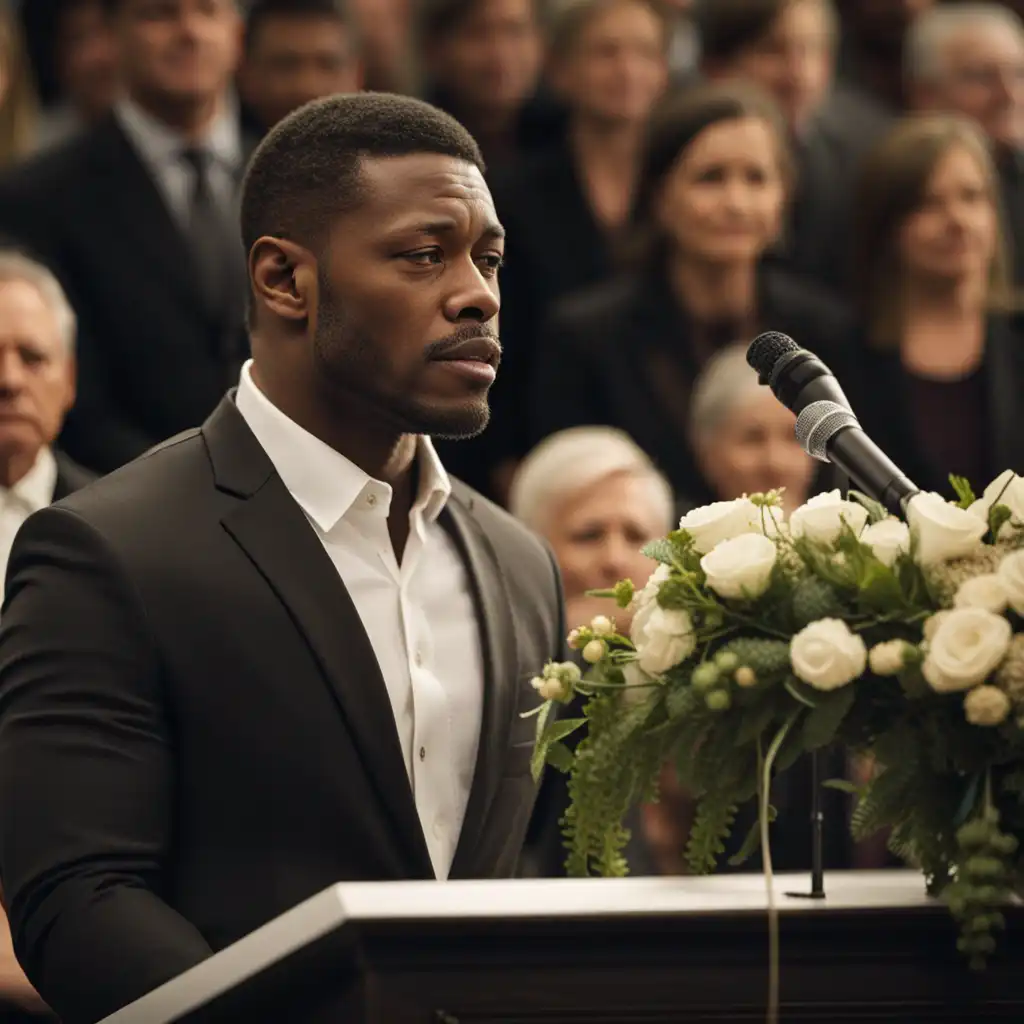
A speech or piece of writing that praises someone or something highly, typically someone who has just died
He gave a moving eulogy at his father's funeral.
eulogy
ˈjuːlədʒi
Chargement…
ˈjuːlədʒi
A speech or piece of writing that praises someone or something highly, typically someone who has just died
He gave a moving eulogy at his father's funeral.
Impossible de charger l’audio. Réessayez plus tard.
A eulogy is a speech or written tribute given in honor of someone who has recently passed away. It is usually delivered at their funeral or memorial service, and is meant to celebrate their life and accomplishments, as well as provide comfort and closure for those who are mourning their loss. Eulogies can be given by family members, friends, or even colleagues, and they often include personal anecdotes and memories of the deceased.
Commendation refers to the act of praising or acknowledging someone's good work or behavior, often in a formal or official context.
So while both words involve praising someone, commendations are given in a broader range of contexts, while eulogies are specifically focused on honoring the memory of someone who has passed away.
Ouvrir le mot: Commendation →Both encomium and eulogy are words used to describe a speech or piece of writing that praises someone or something.
However, encomium specifically refers to a formal expression of praise for something, such as an institution, a concept, or a work of art.
For example, a film critic might write an encomium about the beauty and influence of classic Hollywood films.
In summary, while both words involve expressing praise, encomium is generally used for things that are still in existence while eulogies are used specifically for celebrating people's lives posthumously.
Ouvrir le mot: Encomium →Homage is a demonstration of respect or honor towards someone or something.
It can take many forms, such as a gift, a gesture, or a public expression of admiration. Homage is not specific to someone who has died, but can be given to living individuals, iconic figures, or even cultural traditions.
A eulogy is a specific type of tribute given to a person who has passed away, while homage is a more general expression of respect and admiration that can be given in various contexts.
Ouvrir le mot: Homage →Panegyric is a speech or piece of writing that praises someone or something in a more general sense.
It can describe a tribute to a living person, a group or organization, or even an idea or concept. Panegyrics tend to be more formal in nature and often highlight achievements or accomplishments.
A eulogy is specifically about someone who has passed away and focuses on their individual character and accomplishments, while a panegyric is a broader tribute that can be given to anyone or anything and is more formal in nature.
Ouvrir le mot: Panegyric →Praise on the other hand, is a general term that refers to expressing admiration or approval for someone or something.
While both words involve speaking positively about someone or something, eulogies are specific to commemorating a person who has passed away, while praise can be given in many different circumstances.
Ouvrir le mot: Praise →A eulogy is a speech given at a funeral or a memorial service after someone has died. It's meant to honor the person who has passed away and usually gives tribute to their life story, achievements, personality, and what they meant to others.
A tribute is a statement or action that shows respect, honor, or admiration for someone or something. This can be done while the person is still alive or after they have passed away.
For example, you might pay a tribute to a great athlete, a historical figure, a teacher, or a parent who has inspired you in some way.
A eulogy is a specific kind of tribute given at a funeral or memorial service, while a tribute can be given at any time and place.
Ouvrir le mot: Tribute →i wrote a book called dilly love on hooves which is the story of the love that she brought into our life i was diagnosed with stage four endometrial cancer and as i reread through my writing i realized that that was my eulogy
Voir sur YouTube ↗Some people hate funerals. I find them comforting. They hit the pause button on life and remind us that it has an end. Every eulogy reminds me to deepen my dash, that place on the tombstone between our birth and our death.
that get mentioned in the eulogy, which are who are you in your depth, what is the nature of your relationships, are you bold loving dependable consistency? And most of us including me would say that the eulogy virtues are the more important of the virtues. But at least in my case are they the ones that
Voir sur YouTube ↗The eulogy virtues are the ones that are talked about at your funeral - whether you were kind, brave, honest or faithful. Were you capable of deep love? I want to foster eulogy virtues when I'm in a yoga class or meditation session or any spiritual gathering. Especially if I'm lying in corpse pose. It just makes sense.
I had a sort of classic moment when a friend of mine rang up and said she'd just been to a funeral, and in the middle of the eulogy, this kid had taken out the phone and had a whole proper text conversation - while everyone was weeping!
One way to evaluate your own reputation is to think about what would be said of you at your eulogy.
Shakespeare has been praised in English more than anything mortal except poetry itself. Fame exhausts thought in his eulogy.
Eulogy. Praise of a person who has either the advantages of wealth and power, or the consideration to be dead.
No eulogy is due to him who simply does his duty and nothing more.
I'm always relieved when someone is delivering a eulogy and I realize I'm listening to it.
Satire lies about literary men while they live and eulogy lies about them when they die.
A radio show recently did a beautiful eulogy of me.