cannonade
noun cannonade
ˌkænəˈneɪd
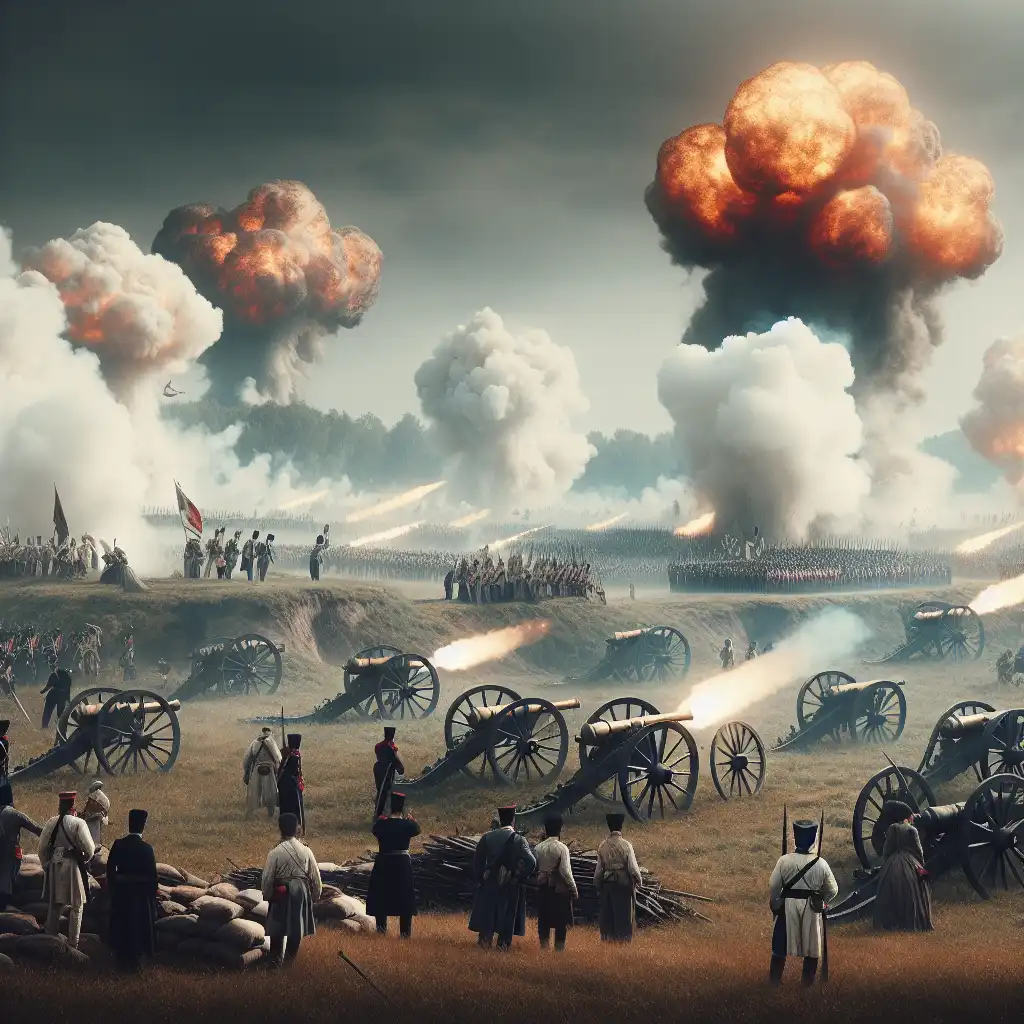
A continuous firing of artillery. It's like a long, loud series of explosions from cannons.
The soldiers braced themselves for the impending cannonade.
cannonade
ˌkænəˈneɪd
読み込み中…
ˌkænəˈneɪd
A continuous firing of artillery. It's like a long, loud series of explosions from cannons.
The soldiers braced themselves for the impending cannonade.
ˌkænəˈneɪd
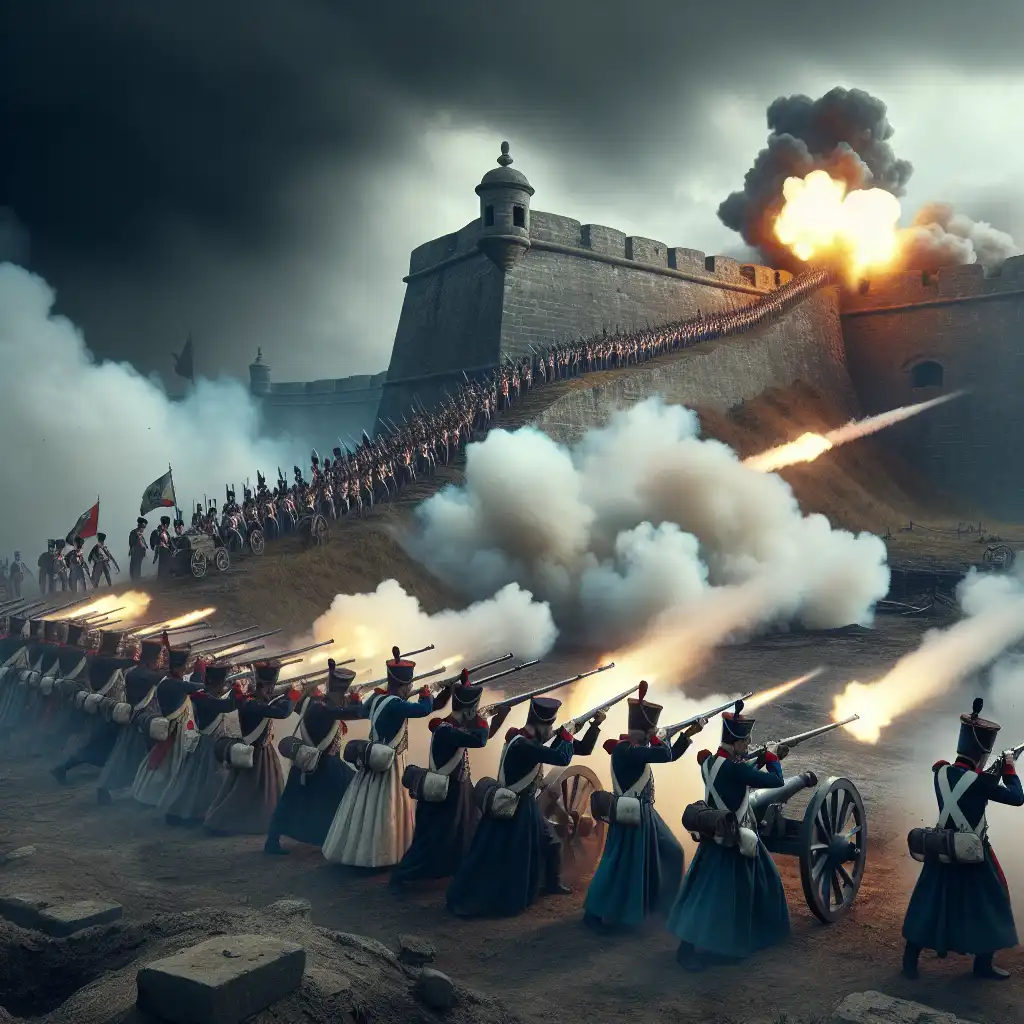
To fire many cannons at the same time, over a continuous period.
The army began to cannonade the fort in an attempt to break the enemy's defenses.
音声を読み込めませんでした。しばらくしてからもう一度お試しください。
'Cannonade' is used to describe a loud, continuous firing of artillery or guns. It can be used in both a literal sense, such as during a battle or military conflict, or in a figurative sense, to describe a continuous barrage of criticism or attack. For example, "the soldiers endured a fierce cannonade from the enemy troops" or "the politician was met with a cannonade of questions from the press."
Assault refers to a sudden and violent attack on a person or a place, often with the intention to harm or conquer.
In simpler terms, assault is an attack on a person or a place, whereas cannonade is an attack with artillery or gunfire.
Assault is more associated with physical violence, while cannonade is more associated with warfare.
単語を開く: Assault →An attack refers to a violent and forceful attempt to take control of a place or a person.
In simpler terms, an attack is a direct and aggressive attempt to take control, while a cannonade is a sustained and strategic bombardment from a distance.
An attack can involve a cannonade, but a cannonade cannot be considered an attack unless it is accompanied by a direct attempt to take control.
単語を開く: Attack →However, barrage usually refers to a bombardment of artillery or gunfire that happens continuously over a wide area or for a long period of time, while cannonade specifically refers to a series of cannon shots that are fired rapidly and loudly.
In simpler terms, you might use barrage to describe a sustained aerial attack during a war, while cannonade might be used to describe the sound of cannons firing in a historical battle reenactment.
単語を開く: Barrage →Both bombard and cannonade refer to attacking an enemy with heavy artillery or gunfire.
Bombard typically refers to a sustained attack with artillery, often involving the firing of large shells or bombs.
This word can also describe a figurative assault, such as bombarding someone with questions or criticism.
Both words can be used interchangeably in some situations, but bombard is more commonly used in everyday language, while cannonade is more likely to be used in a historical or military context.
単語を開く: Bombard →However, cannonade usually refers to the firing of large cannons or artillery pieces, while fusillade typically refers to the rapid firing of smaller, handheld guns, such as rifles or pistols.
Cannonade may be used to describe a strategic attack in a military battle, while fusillade is used more often in situations such as firing squads or police encounters.
単語を開く: Fusillade →Both cannonade and onslaught refer to a vigorous attack, but cannonade specifically refers to a sustained bombardment with heavy artillery or cannon fire while onslaught can refer to any type of forceful attack or assault.
For example, a cannonade might be used to describe a military attack involving a lot of heavy firepower, while onslaught might be used to describe a physical or verbal attack that is forceful and relentless.
単語を開く: Onslaught →Salvo describes a sudden and simultaneous firing of a group of weapons, such as guns, missiles or fireworks.
Cannonade describes a continuous firing of cannons, while salvo describes a sudden burst of firing from multiple weapons.
単語を開く: Salvo →Both cannonade and volley refer to the firing of weapons, but there is a slight difference in their usage.
Volley refers to a rapid and simultaneous firing of a group of weapons, such as muskets or rifles.
For example, during a battle, soldiers may fire a volley of muskets at the enemy to create a wall of bullets.
Cannonade describes a continuous and powerful firing of cannons, while volley describes a rapid and simultaneous firing of a group of weapons.
単語を開く: Volley →