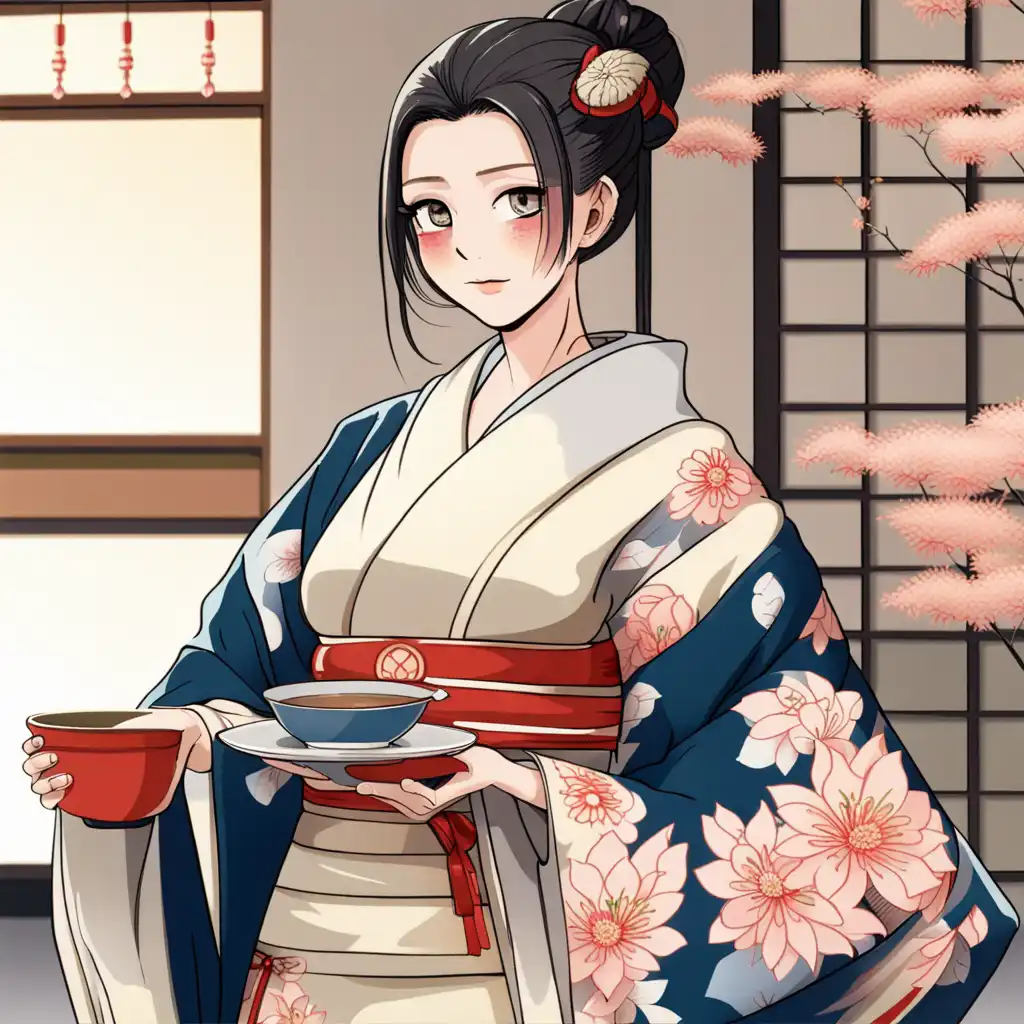
kimono
noun kimono
kɪˈməʊnəʊ
A traditional Japanese garment, a long robe with wide sleeves, tied with a sash.
She wore a colorful kimono during the tea ceremony.
kimono
kɪˈməʊnəʊ
加载中…
kɪˈməʊnəʊ
A traditional Japanese garment, a long robe with wide sleeves, tied with a sash.
She wore a colorful kimono during the tea ceremony.

kɪˈməʊnəʊ
A type of long, loose robe with wide sleeves, initially from Japan but now worn elsewhere too.
She picked a floral print kimono for her beach vacation.
音频无法加载,请稍后再试。
A kimono is a traditional Japanese garment that is worn on special occasions or for ceremonies. It is a long, loose robe with wide sleeves, tied at the waist with a sash called an obi. In Japan, it is commonly worn by women, men, and children. The word "kimono" is often used in English to refer to this specific type of clothing. It is important to note that while the kimono is a unique and significant part of Japanese culture, it is not typically worn as daily attire in modern times.
Attire refers to clothing in general, while kimono is a specific type of traditional Japanese garment.
Attire can describe any clothing someone is wearing, such as a shirt and jeans or a formal dress.
So, while you might wear attire to school every day, a kimono would be more appropriate for a formal event like a wedding or tea ceremony.
打开单词: Attire →Clothe means to dress or provide someone with garments.
It can apply to any type of clothing, from t-shirts and jeans to suits and dresses.
Clothe refers to dressing in general, while kimono is a specific type of clothing.
打开单词: Clothe →A costume is clothing worn to transform oneself into a different character or role, usually for entertainment purposes like Halloween or theatrical performances.
While costumes are made for fun and entertainment, Kimonos have cultural significance and are mostly worn in Japan.
打开单词: Costume →A dress is a garment consisting of a skirt and a bodice.
A dress is a more general term for a garment while a kimono is a specific type of traditional Japanese garment with a distinct style and cultural significance.
Dresses are worn in a variety of settings, while kimonos are typically reserved for special occasions in Japan.
打开单词: Dress →Garment refers to any article of clothing, such as shirts, pants, dresses, and more. It is a broad term that can apply to clothing of any style or culture.
Kimono is a traditional Japanese garment that is typically made out of silk and worn for special occasions like weddings, festivals, and tea ceremonies.
Garment is a general term for any type of clothing, while kimono refers specifically to a traditional Japanese garment.
打开单词: Garment →A gown is a formal dress that is worn for special occasions, such as weddings or proms.
A gown is a formal dress for special occasions, while a kimono is a traditional Japanese garment worn for special occasions or as everyday clothing.
打开单词: Gown →Kimono specifically refers to a traditional Japanese garment that is worn for formal occasions or as a cultural icon. Outfit refers to any combination of clothing items that someone wears together to make a complete look.
Kimono is applicable when referring to the Japanese garment specifically, while outfit is applicable when talking about any combination of clothing items, regardless of cultural or traditional context.
打开单词: Outfit →A robe is a more general term that can refer to any loose-fitting garment worn at home or while lounging.
Robes can be made of a variety of materials, including cotton or polyester, and come in different styles such as full-length or knee-length.
A kimono is a formal, traditional Japanese garment worn for special occasions, while a robe is a more casual, loose-fitting garment worn at home or for comfort.
打开单词: Robe →Everything around you...
在 YouTube 上观看 ↗Women who wear kimonos, when the fight, they have to keep their knees together, and when they use a sword, they have to move the sleeves otherwise it gets caught.
What Happens When an...
在 YouTube 上观看 ↗In real life, a lot of people at that level will have their kimonos made especially for them.
We are totally open kimono with regulators.
The wrap dress is the most traditional form of dressing: It's like a robe, it's like a kimono, it's like a toga. It doesn't have buttons or zippers. What made it different was that it was jersey; therefore, it was close to the body and it was a print.
It would be great if people could guess right off that I am Japanese-Finnish-American. But then I'd have to be wearing a kimono and pulling a reindeer.
I love kimonos because you can just throw them on over anything. Ever since I got my first kimono from Lane Bryant in high school and thought, 'This is amazing; I can wear it with everything!
The first time I made any money, I was 27. I went to Bergdorf's looking like a proper guttersnipe and bought a pair of Louboutins. I'd wear them and an old ink-stained kimono and make my drawings and feel indomitable.
Paul Poiret did wonderful things because he was so influenced by motifs, but Vionnet really understood the kimono and took the geometric idea to construct her clothes - and that brought such freedom into European clothes in the 1920s.
I remember the Silver Jubilee clearly because we had a fancy dress street party in Sheffield. I dressed up as a Japanese girl with a too-big red kimono - cultural appropriation hadn't been invented in 1977. I was six.
Colorful garments - ball gowns, kimonos, evening pajamas - made from yards upon yards of iridescent silk or velvet. I own an unjustifiable number of such outfits and jump at the chance to wear them. Against the etiquette about which I am otherwise all too conscious, I frequently, and unrepentantly, overdress for the occasion.