molecular
adjective molecular
məˈlekjələr
Relating to molecules
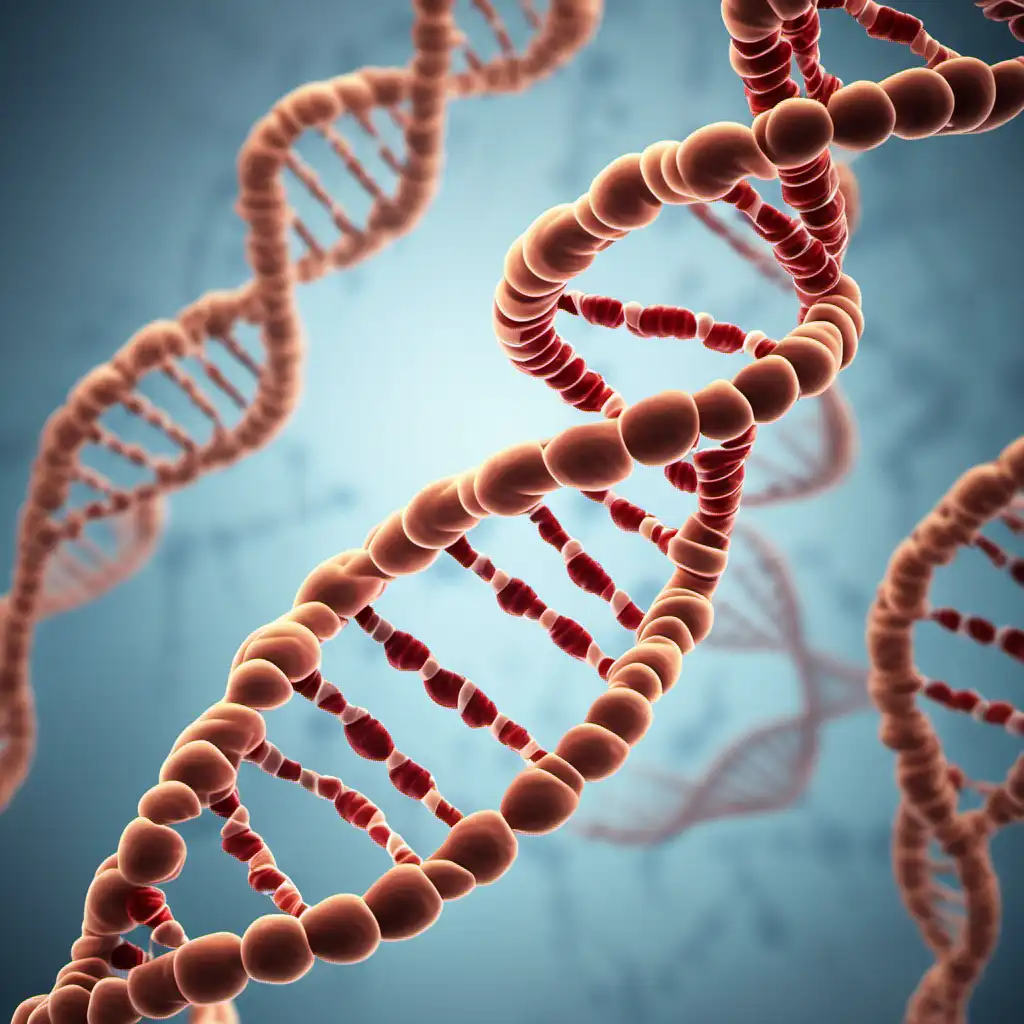
The molecular structure of the DNA molecule is a double helix.
molecular
məˈlekjələr
加载中…
məˈlekjələr
Relating to molecules
The molecular structure of the DNA molecule is a double helix.
məˈlekjələr
Smallest possible amount that can exist independently
They are doing research at the molecular level to understand the disease better.
məˈlekjələr
Including or using the study of molecules
She's studying molecular genetics at college.
音频无法加载,请稍后再试。
The word 'molecular' is used to describe things that are made up of very small particles called molecules. These molecules come together to form larger things like substances, compounds, and even living organisms. Examples of things that can be described as molecular include DNA, proteins, and gases like oxygen and carbon dioxide. This word is often used in scientific contexts, especially in biology, chemistry, and physics.
Atomic refers to a single atom, which is the smallest unit of an element that still has the chemical properties of that element. For example, a hydrogen atom is atomic.
The term atomic is applicable when talking about the properties of individual atoms, such as their size and behavior in chemical reactions.
In simpler terms, atomic refers to one thing (an atom) while molecular refers to a group of things (atoms bonded together).
打开单词: Atomic →Chemical refers to a substance made up of atoms that are chemically combined. Chemicals are different from each other because they have different elements and different arrangements of those elements.
Molecular refers to the smallest unit of a substance that has all the properties of that substance. Molecules are made up of atoms that are chemically bonded together in a specific way.
In summary, chemicals are a broader term used to describe any substance made up of atoms that are chemically combined, whereas molecules specifically refer to the smallest unit of a substance that retains all the properties of that substance.
打开单词: Chemical →Elemental refers to a single element or pure substance, such as gold or oxygen. Molecular refers to a combination of two or more different elements or substances, such as water (made up of hydrogen and oxygen).
Elemental can describe the basic building blocks of matter, whereas molecular describes the combination of these building blocks.
Elemental is applicable in the context of chemistry and physics, while molecular is applicable in chemistry and biology, where the combination of different molecular structures make up different biological structures.
打开单词: Elemental →Holistic refers to looking at something as a whole or considering multiple factors that affect it. It is applicable in fields like medicine or psychology, where practitioners consider a person's physical, emotional, and social well-being as a whole.
Holistic is about considering the big picture, while molecular is about looking at the tiny details.
打开单词: Holistic →Molecular is used to refer to the small building blocks that make up a substance, such as atoms or molecules. Structural refers to the arrangement of these building blocks, either within a molecule or in a larger structure.
For example, you might use the term 'molecular biology' to refer to the study of the structure and function of molecules like DNA and RNA, while 'structural engineering' might describe the field that designs and analyzes the load-bearing components of buildings, bridges, and other constructions.
Molecular tends to refer to individual units, while structural looks at how those units come together to form larger, more complex systems.
打开单词: Structural →adjusting their molecular and cellular characteristics to survive under stress. When they're bombarded by radiation or chemotherapy, some cancer cells can effectively switch on protective shields against whatever's attacking them by changing their gene expression.
在 YouTube 上观看 ↗I was a close observer of the developments in molecular biology.
But the experiment is not the end of the story, because you still have to transmit that knowledge to other people. I have a Ph.D in molecular biology. I still barely understand what most scientists are talking about. So as my friend was trying to explain that experiment, it seemed like the more he said,
在 YouTube 上观看 ↗I wanted to rewrite the code of life, to make new molecular machines that would solve human problems.
limit on the smallest size of life single-cell life needs to be big enough to accommodate all the molecular machinery of life and that size ultimately depends on the basic laws of physics it depends on the size of molecules which depends on the size of
在 YouTube 上观看 ↗A molecular gastronomist is really just someone who explores the world of science and food.
miles or more an area roughly twice the size of manhattan to find enough prey to sustain itself but prosing is used to solving complicated problems he was working on a phd in molecular ecology before deciding to become a wildlife photographer
在 YouTube 上观看 ↗The really big difference is that what you make with a molecular machine can be completely precise, down to the tiniest degree of detail that can exist in the world.
life is really good at this so there's a bunch of people biologists who study molting and who studies the shedding of skin it's timed degradation here's John Warner and he's making polymers again plastics were the raw materials the building blocks have little molecular
在 YouTube 上观看 ↗Owing to the difficulty of dealing with substances of high molecular weight we are still a long way from having determined the chemical characteristics and the constitution of proteins, which are regarded as the principal con-stituents of living organisms.
And research into cryonics hopes to achieve the same by freezing dying people and reviving them later when newer technology is able to help them. See if the cells are frozen there's very little molecular movement, and diffusion practically stops.
在 YouTube 上观看 ↗New molecular methods that add or modify genes can protect plants from diseases and pests and improve crops in ways that are both more environmentally benign and beyond the capability of older methods.
on a very very very small scale, the molecular level. To give you a sense of this scale, in one glass of water, there are more molecules than known stars in the universe. Now all of these molecules are in constant motion,
在 YouTube 上观看 ↗The idea would be in my mind - and I know it sounds strange - is that the most important advances in medicine would be made not by new knowledge in molecular biology, because that's exceeding what we can even use. It'll be made by mathematicians, physicists, computer scientists, figuring out a way to get all that information together.
In chemistry energetics deals with the attractive and repulsive forces between particles at the molecular level. This scale is so small that there are more water molecules in a single glass than there are known stars in the universe. And all of these trillions of molecules are
在 YouTube 上观看 ↗Much of my work in biology has been driven by my early training in chemistry. When studying a new chemical compound, the first and most important thing is to determine its detailed molecular structure.
and pretend that your molecular self can plunge deep down into the water column. In these colder depths, the comparative lack of solar warmth makes water molecules sluggish, meaning they can sit quite still at high concentrations. No jostling here. But seeking relief
在 YouTube 上观看 ↗Molecular chirality plays a key role in science and technology. In particular, life depends on molecular chirality in that many biological functions are inherently dissymmetric.
and speed up. These hotter faster-moving molecules emit infrared radiation in all directions, including back to Earth warming it. Does all this molecular motion ever stop? You might think that would happen at absolute zero, the coldest possible temperature.
在 YouTube 上观看 ↗What I was concerned with was life: what are the major features that are common to all living organisms that subtly define life. So I looked at the whole problem as a chemist, as a biochemist, and as a molecular biologist.