bevel
noun bevel
ˈbevl
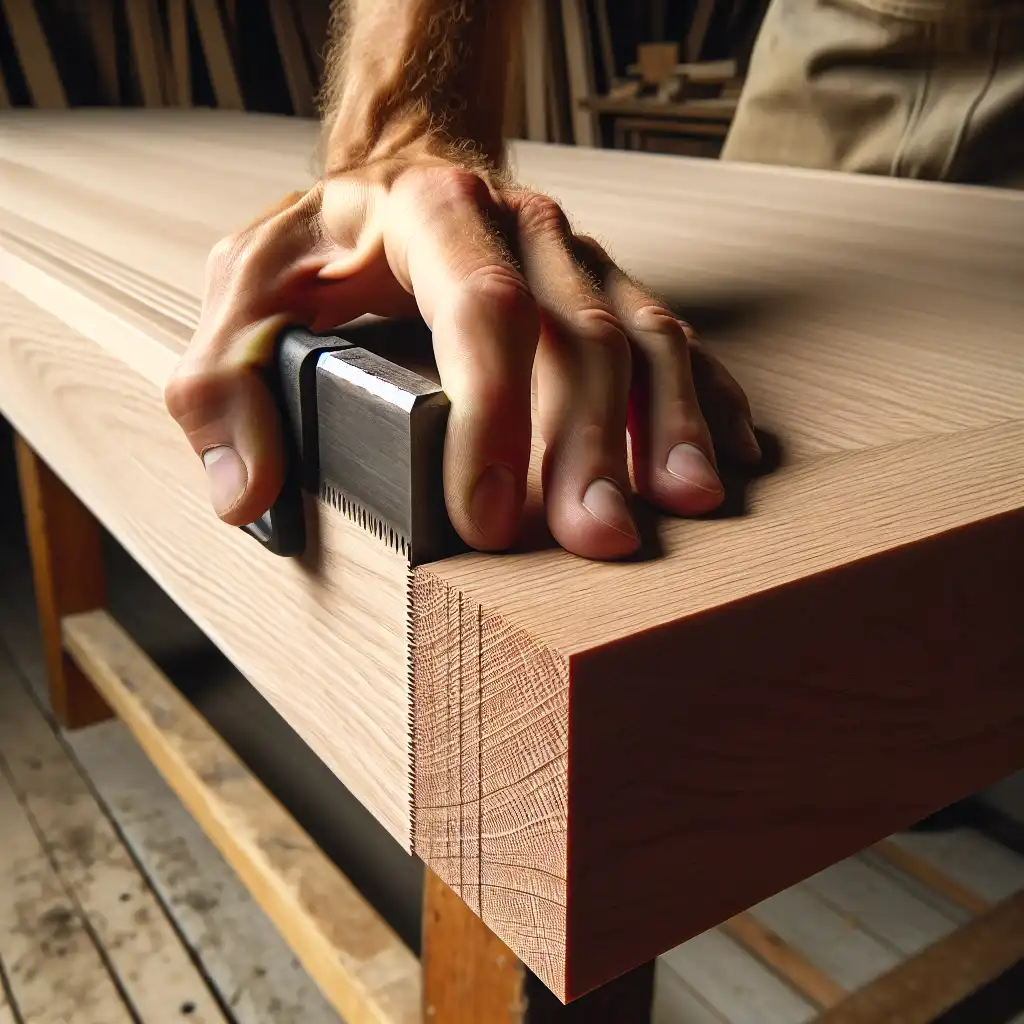
An edge that is not a perfect right angle, but is cut at an angle other than 90 degrees
The carpenter cut a bevel into the edge of the wooden desk.
bevel
ˈbevl
Loading…
ˈbevl
An edge that is not a perfect right angle, but is cut at an angle other than 90 degrees
The carpenter cut a bevel into the edge of the wooden desk.

ˈbevl
To cut or shape to a bevel
He had to bevel the corners of the woodworking project to make them fit properly.
Audio could not be loaded. Please try again later.
The word 'bevel' is usually used when talking about shapes with slanted or angled edges. For example, if you have a piece of wood or a board that has a slanted edge, you could say that it has a beveled edge. You might also use the word when talking about tools like a chisel, which can be used to create beveled edges on wood or other materials. In general, bevel is a term used to describe an angled or sloping edge or surface, and is mostly used in the context of construction, woodworking or metalworking.
An angle refers to the space between two lines that meet at a point.
A bevel refers to the sloping edge or surface on a piece of material or object. It is created by cutting or grinding the edge or surface at an angle other than a right angle.
An angle is a measurement of the space between two lines, while a bevel is a cut or sloping edge on a material or object.
Angles are used in geometry and measurements, while bevels are used in construction, woodworking, and other trades to create smooth and precise edges.
Open word: Angle →Both bevel and chamfer are terms used to describe the same basic concept, which is trimming or cutting a piece of material at an angle.
A chamfer usually refers to an angled cut that is meant to be more functional than decorative. Chamfers are usually used to create a beveled edge that can help to prevent a sharp corner from accidentally damaging something or causing injury.
Chamfers are often used in manufacturing and construction, where they can be found on everything from machinery parts to building corners.
The main difference between the two terms is that bevels are more often used for decorative purposes, while chamfers are more often used for functional purposes.
Open word: Chamfer →Diagonal refers to a line or direction that is at an angle to something else.
Bevel refers to an angled edge, while diagonal refers to an angled line or direction. Bevel is applicable in woodworking and metalworking, while diagonal is applicable in geometry and general directional concepts.
Open word: Diagonal →Incline refers to a gradual slope or slant, usually referring to a surface that is not completely flat. For example, a hiking trail might incline as it reaches higher into the mountains.
Bevel is more related to shaping edges or surfaces, while incline is more related to the slope or angle of a larger surface or area.
Open word: Incline →Oblique refers to something that is slanted or not perpendicular to a given line or surface. It means that something is not straight or aligned with something else.
Bevel is a specific kind of angled edge created intentionally for a particular purpose, while oblique refers to any slanted or sloping orientation regardless of intention.
Open word: Oblique →Slant refers to a slope or angle that is not perpendicular or straight.
Bevel describes a specific type of cut or angle while slant describes a more general slope or tilt.
Open word: Slant →A slope refers to the incline or decline of a surface, such as the angle of a hill or the slant of a roof.
Slopes can be steep or gradual and are often used in landscaping or construction to direct water flow or create visual interest.
To summarize: bevels are angled cuts or edges on a surface, while slopes refer to the incline or decline of a surface. Bevels are often used for joining or decorating, while slopes are used in construction and landscaping.
Open word: Slope →Tilt refers to the act of leaning or inclining a surface or object away from its original position. This term is commonly used in electronics, photography, or gaming to describe the movement of a screen, camera, or joystick.
Bevel describes the process of cutting or shaping a material, while tilt describes the movement or inclination of a surface or object.
Open word: Tilt →Everyone has different things they like in terms of board setup. The grind of the board and how it's waxed - you want to make sure that the speed of the board is right for the conditions of the halfpipe. And then there's the edges and the bevel of the edge.