
trammel
noun trammel
ˈtræml
A restriction or limit to someone's freedom or ability
The trammels of a formal education can sometimes hinder creative thinking
trammel
ˈtræml
Loading…
ˈtræml
A restriction or limit to someone's freedom or ability
The trammels of a formal education can sometimes hinder creative thinking

ˈtræml
A net for catching birds or fish
The fishermen were readying their trammels for the morning catch
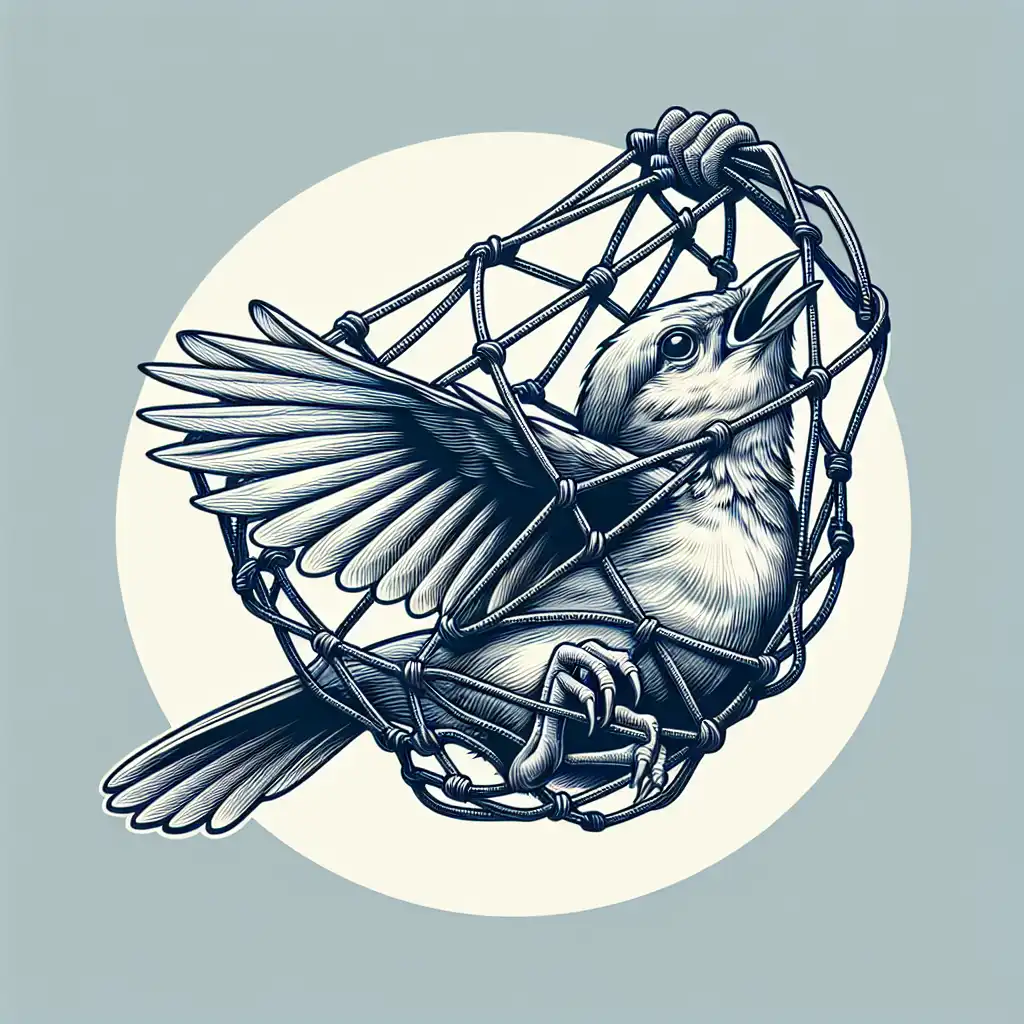
ˈtræml
Catch or entangle someone or something in a trammel
The young bird was trammelled in the net

ˈtræml
Restrict or limit someone's freedom or ability
She felt trammelled by her strict upbringing
Audio could not be loaded. Please try again later.
Trammel means something that restricts or limits your actions or movement. It is usually used in situations where you feel like you are held back from doing what you want to do. For example, you can use it like, "My fear of failure was a trammel to my success." Another example can be, "The rules and regulations were a trammel to my creativity." Therefore, you can use the word trammel when you want to express that something restricts or limits your actions or movement.
Bind refers to the action of tying or fastening something together, while the word trammel refers to the action of hindering or restricting something.
For example, when you bind a book, you use glue or stitching to hold the pages together. When you bind something like a rope or cord, you tie it tightly to make sure it doesn't come loose.
Bind refers to physically securing something together, while trammel refers to hindering or restricting something in a more abstract way.
Open word: Bind →Confine means to limit or restrict movement or activity, while trammel means to impede or hinder progress or movement. Confine is typically used to indicate a physical limitation, such as being confined to a certain area or space.
Both words can describe limitations on freedom or progress, but confine refers more to literal physical restriction, while trammel refers to something that obstructs progress or hinders movement.
Open word: Confine →Constraint refers to something that limits or restricts your ability to do something. For example, if your parents have set a curfew for you, that is a constraint on your ability to stay out late.
Constraint refers to something that limits what you can do, while trammel refers to something that gets in your way and slows you down.
Open word: Constraint →The words fetter and trammel both mean to restrict or restrain, but there is a slight difference in their usage. Fetter specifically refers to a physical restraint like handcuffs or chains, while trammel refers to a situation where you are held back by rules or circumstances that limit your ability to move forward.
For example, a prisoner might be fettered in chains, while a person trying to start a business might encounter trammels like government regulations or lack of funding.
Open word: Fetter →Hinder and trammel are similar words in that they both mean to impede or obstruct, but there are slight differences in how they are applied.
Hinder is a more general term that can be used in a variety of situations to refer to anything that is getting in the way of progress or success.
For example, a student might say that a difficult class is hindering their ability to maintain good grades. Or, a runner might feel hindered by a sore ankle that slows them down during a race.
Hinder is a more general term that applies to a variety of situations, while trammel specifically refers to legal or financial limitations on someone's actions.
Open word: Hinder →Both impede and trammel mean to hinder or obstruct.
However, impede usually describes something that slows down or prevents progress in a general way. Trammel often implies more specific limits or restrictions on what can be done.
For example, a traffic jam might impede your progress on the highway, but a lack of resources or regulations might trammel your ability to start a business.
Open word: Impede →Restrict means to limit something or prevent it from being done, whereas trammel means to hinder or impede progress or movement.
For example, you might restrict access to a certain area by putting up a gate or a fence, or by making certain rules. On the other hand, something might be trammelled by a physical obstacle like a fallen tree blocking a road, or it might be trammelled by bureaucracy, like a government agency slowing down a project with excessive paperwork.
Restrict is used more often to refer to intentional limitations or control, while trammel tends to have more of a connotation of unexpected obstacles or barriers.
Open word: Restrict →Both shackle and trammel are used to limit movement or restrict freedom, but they are used in different contexts.
A shackle is a device that is used to restrain or confine someone or something.
A shackle can be used to secure a prisoner or to chain an animal.
In summary, shackles are used to physically restrain or confine someone or something, while trammels are used to restrict movement or limit progress in a particular direction.
Open word: Shackle →