voiceless
adjective voiceless
ˈvɔɪsləs
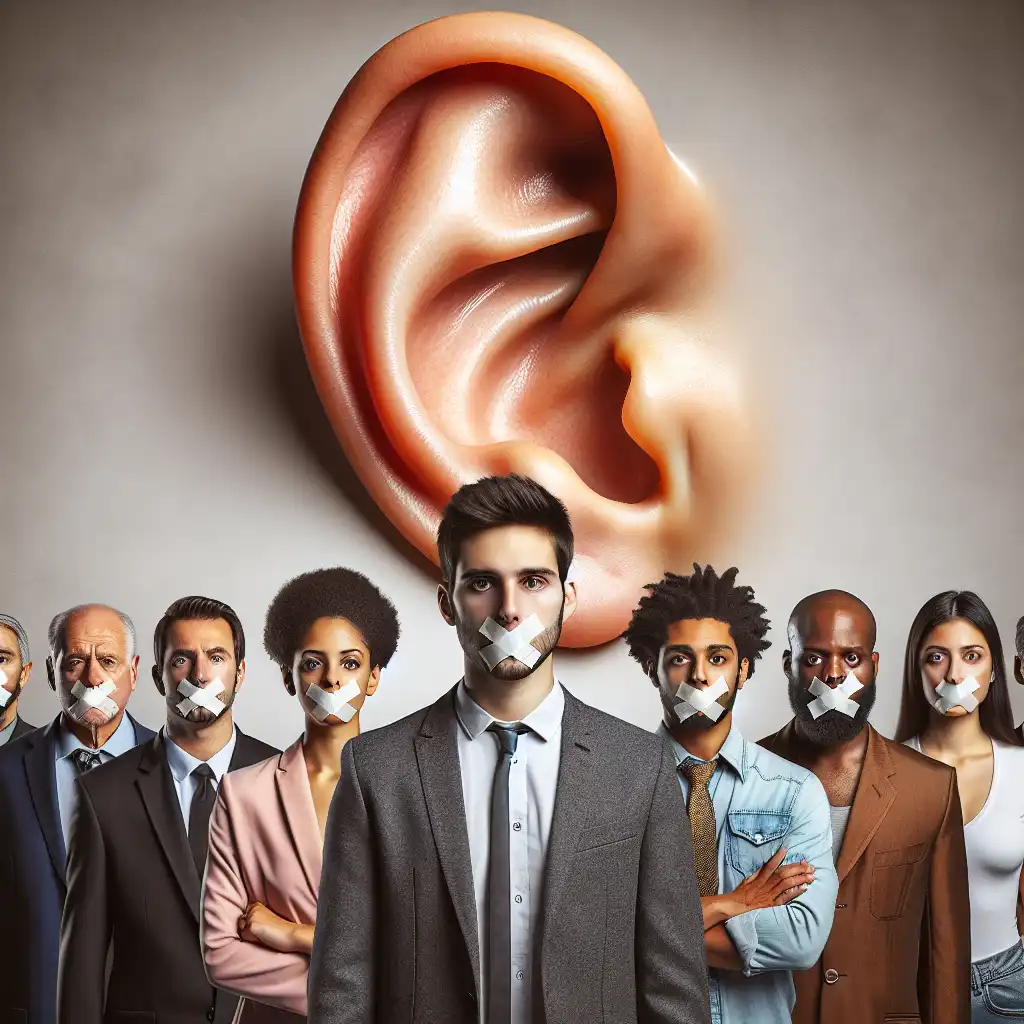
Not able to speak or express yourself in words.
He came from a voiceless community which has struggled for years to be heard.
voiceless
ˈvɔɪsləs
Loading…
ˈvɔɪsləs
Not able to speak or express yourself in words.
He came from a voiceless community which has struggled for years to be heard.

ˈvɔɪsləs
In linguistics, a voiceless sound is made by closing off the vocal cords, not producing any vibration.
'P' is a voiceless consonant because you don't use your vocal cords to make its sound.
ˈvɔɪsləs
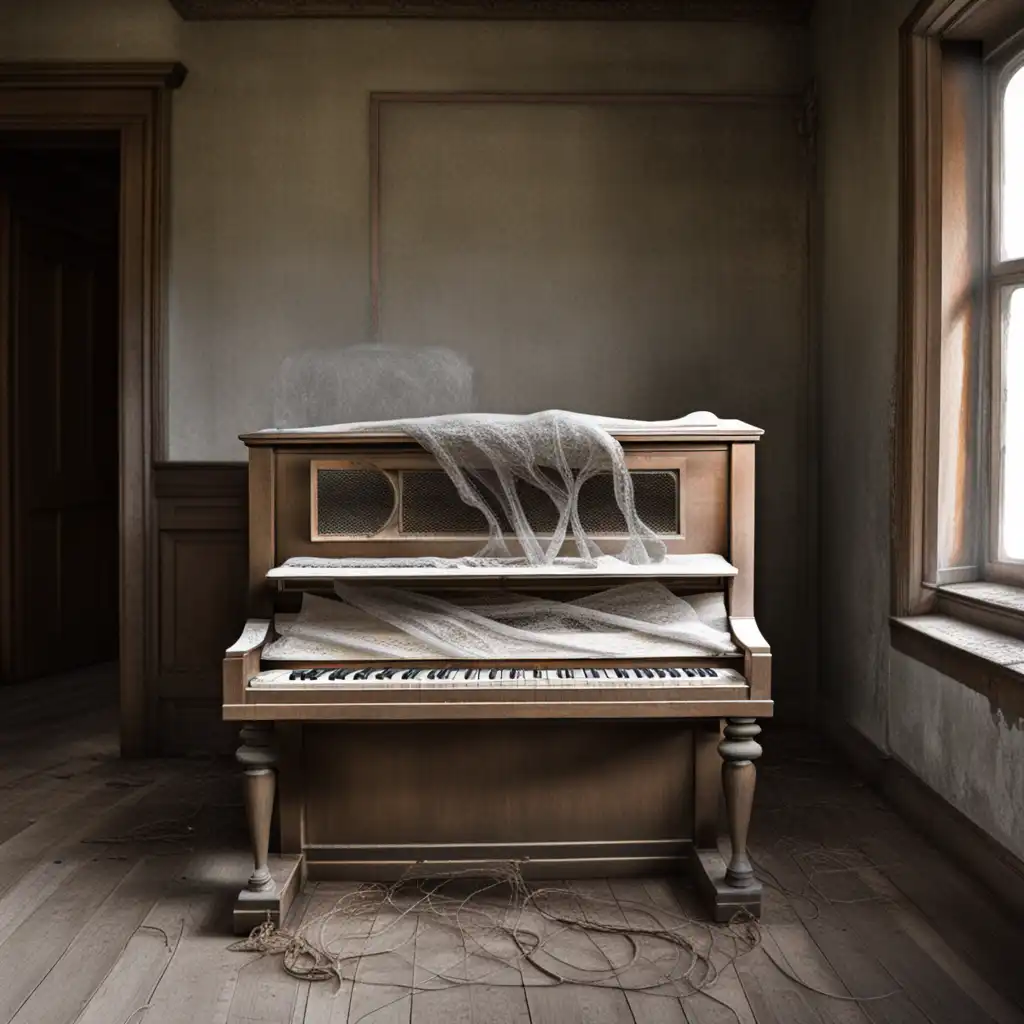
Something or someone unable to make noise or sound
The piano was voiceless, as it hadn't been played for years
Audio could not be loaded. Please try again later.
The word 'voiceless' is used to describe certain sounds in the English language that do not involve using your vocal cords. For example, the sounds 's', 't', and 'f' are voiceless sounds because they only involve using your mouth and breath to make the sound, and not your voice. It is important for English learners to understand these distinctions because pronouncing words correctly can help with communication and understanding.
Articulate means to speak or express oneself clearly and effectively.
Articulate is applicable in situations where effective communication is important, while voiceless is applicable in situations where someone is unable to speak or express themselves through speech.
Open word: Articulate →Mute usually refers to a person or thing that is physically unable to speak, such as someone who is deaf and cannot use their voice to communicate.
Mute is about the inability to use one's voice, while voiceless is about sounds that don't require the use of the vocal cords.
You would use mute to describe a person who cannot speak, and voiceless to describe a speech sound.
Open word: Mute →Silent describes something that makes no sound or noise. For example, a silent room is a room where nobody is speaking or making any noise.
Silent can describe a person who is not speaking or making any noise, while voiceless can describe a sound or a letter pronounced without the use of the vocal cords.
Open word: Silent →Sound refers to any noise that is made by the human voice or any object that can be heard. Voiceless refers to a sound that is made without the vocal cords vibrating.
For example, the "s" sound in "sat" is voiceless because it is made without vibration of the vocal cords, while the "z" sound in "zap" is voiced because the vocal cords vibrate to produce the sound.
In terms of language and speech, the distinction between voiced and voiceless is important because it helps to distinguish between different sounds and can change the meaning of a word.
For example, the "p" sound in "pet" versus the "b" sound in "bet" are voiceless and voiced respectively, and they change the meaning of the word.
Sound refers to any noise that can be heard, while voiceless refers to a specific type of sound that is made without the vocal cords vibrating, and understanding the distinction between the two is important for understanding and producing different sounds in language and speech.
Open word: Sound →Speak refers to using one's voice to produce sound and communicate words, while voiceless refers to sounds made without the use of the voice, such as whispering or using an instrument.
Speak is applicable in situations where verbal communication is needed, such as talking to someone or giving a presentation.
Open word: Speak →Speechless means unable to speak because of strong emotions or shock, while the word voiceless means without a voice or the ability to speak.
Speechless is applicable when someone is temporarily unable to speak due to intense emotions such as joy, surprise or grief.
Open word: Speechless →Taciturn describes a person who is quiet by nature and doesn't speak a lot. It implies that the person may have thoughts and opinions but chooses to keep them to themselves.
So, '\textbf{taciturn}' refers to someone who is naturally quiet and doesn't speak much, while '\textbf{voiceless}' refers to someone who is unable to speak, either temporarily or permanently.
Open word: Taciturn →Word, on the other hand, refers to a unit of language that has meaning and can be spoken or written. It is applicable in any context related to communication.
Voiceless describes a specific type of sound, while word describes a unit of language.
Open word: Word →Chimps have feelings and...
Watch on YouTube ↗From the beginning of my time as Secretary-General, I have sought to advance a practical, action-oriented vision of the U.N. as the voice of the voiceless and the defender of the defenceless.
Who is God? %\PIPE% A Pastor,...
Watch on YouTube ↗The thing that's wonderful about social media is that we are able to give a voice to the voiceless and to help educate each other. I benefit from it as much as I provide those lessons.
What we learned from 5...
Watch on YouTube ↗I'm grateful that, after an early life of being silenced, sometimes violently, I grew up to have a voice, circumstances that will always bind me to the rights of the voiceless.
Music gives voice to the...
Watch on YouTube ↗How poor this world would be without its graves, without the memories of its mighty dead. Only the voiceless speak forever.
3 questions to ask...
Watch on YouTube ↗Our obligation to fight pollution traces the roots of its persuasion to that same moral mountaintop from which my father lent his voice to the voiceless. The pursuit of civil equality in health helped build our environmental laws.
Let's put birth control...
Watch on YouTube ↗Words hold tremendous power, and if we don't reclaim our language and start seeing people instead of 'militants,' drone victims instead of 'bug splats,' or natural splendor instead of 'green infrastructure,' then the voiceless are destined to be silenced forever.
Michael Anti: Behind the...
Watch on YouTube ↗It's very important that we give a voice to the voiceless in terms of media; because media is a global phenom and it portrays you dependent upon what controls you have and the writers are doing great work.
Why museums are...
Watch on YouTube ↗America wins when the voiceless have a seat at the table, when the vulnerable are protected, and when working families have the same political clout as the wealthy.
Janine di Giovanni: What...
Watch on YouTube ↗Some people call it the 'Al Jazeera spirit' - courage, re-thinking authority, giving a voice to the voiceless. We have never been favored by the authority. The human being is the center of our editorial policy. We are not a TV station that rushes after stars, big names, press conferences, hand-shake journalism.
Let's put birth control...
Watch on YouTube ↗The mere fact of an American being present could help save the lives of innocent people. That's why I believe in the importance of bearing witness, to become a voice for the voiceless.