
byzantine
adjective byzantine
ˈbɪzəntiːn
Having a complex and elaborate structure
The corporate hierarchy is byzantine in nature and difficult to navigate.
byzantine
ˈbɪzəntiːn
लोड हो रहा है…
ˈbɪzəntiːn
Having a complex and elaborate structure
The corporate hierarchy is byzantine in nature and difficult to navigate.

ˈbɪzəntiːn
Connected to or involving the Eastern Orthodox Church or the old Byzantine Empire
The church has some beautiful byzantine mosaics that attract tourists.
ˈbɪzəntiːn
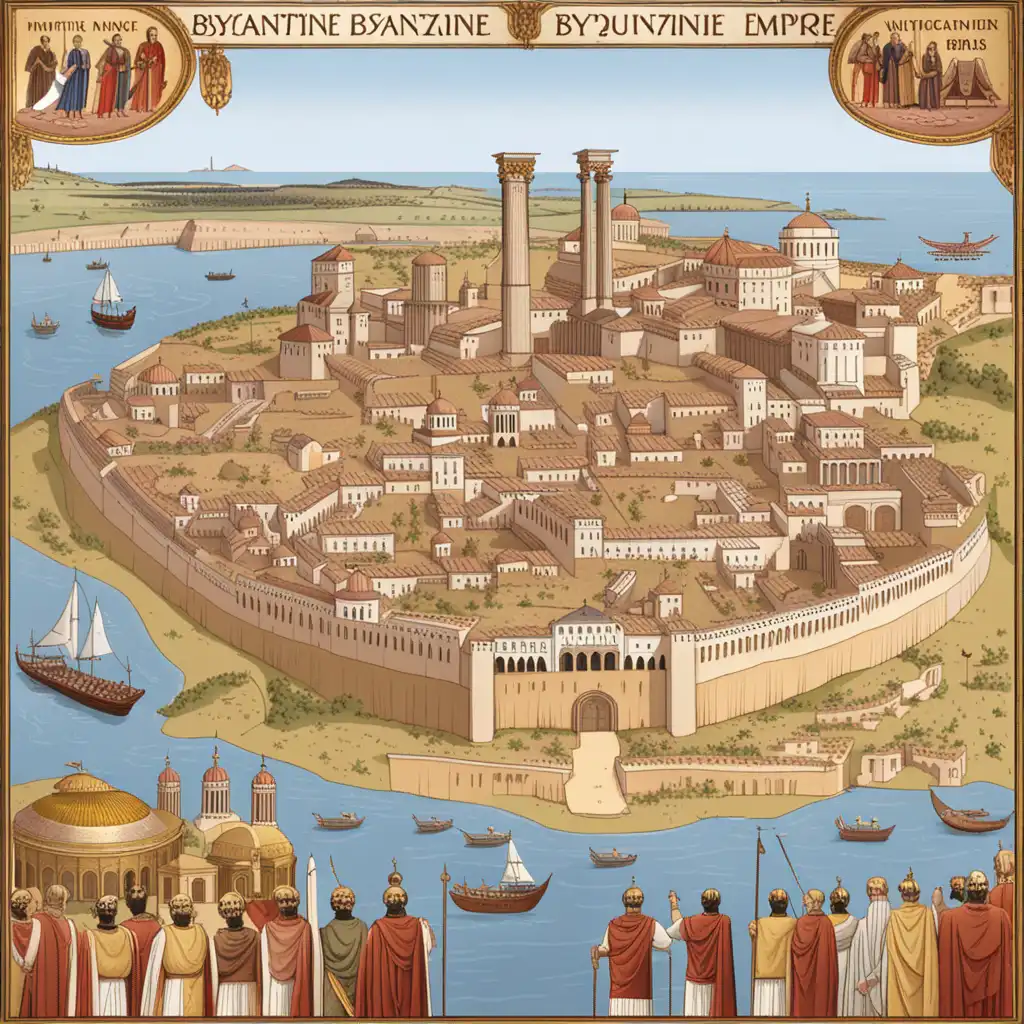
The Eastern Roman Empire, after the fall of the Western Roman Empire in AD 476
The Byzantine Empire managed to last for over a thousand years.

ˈbɪzəntiːn
Having beautifully detailed artwork or decoration based on designs from the old Byzantine Empire
The byzantine patterns on the clothing are exceptionally intricate.
ऑडियो लोड नहीं हो सका। कृपया बाद में फिर कोशिश करें।
The word 'byzantine' comes from the name of a city called Byzantium, which was a very complicated and difficult city to navigate. "Byzantine" is used to describe something that is very complicated, confusing, or difficult to understand. For example, you could say "the company's byzantine policies made it hard for employees to understand what they were supposed to do." It can also be used to describe something that is very intricate or detailed, like "the artist's painting was a beautiful example of byzantine art."
Byzantine and complex both refer to things that are difficult to understand or explain, but they have different connotations.
Complex, on the other hand, simply means that something has multiple components and is not easily explained. It may imply a sense of challenge or difficulty but not necessarily excessiveness or confusion.
Both words can be applied to various situations, but byzantine is typically used to describe complicated political or administrative systems or organizations, while complex can be applied to a broader range of fields, from scientific theories to emotions and relationships.
शब्द खोलें: Complex →Byzantine means excessively complicated or convoluted, often involving devious or intricate political maneuvering.
It is usually used in the context of politics or bureaucracy. Complicate simply means to make something more complex or difficult.
It can be used in any context where something becomes more intricate or difficult to solve. Byzantine refers to something that is excessively complex due to deviousness or bureaucracy, while complicate refers to something that has become more complex or difficult.
शब्द खोलें: Complicate →It is often associated with bureaucratic or administrative processes that are convoluted and hard to navigate.
Convoluted describes something that is complicated and twisted in a way that makes it difficult to follow or understand.
It is often associated with situations or ideas that are confusing or unclear, such as convoluted plot lines in movies or books.
So, while both words can describe complexity, byzantine is more often used to describe complex systems and processes, while convoluted is more often used to describe confusing or tangled ideas or situations.
शब्द खोलें: Convoluted →Cryptic refers to something that is mysterious or puzzling, often involving hidden meanings or codes.
Byzantine refers to complexity and confusion, while cryptic refers to mystery and puzzles.
शब्द खोलें: Cryptic →Byzantine means excessively complex and difficult to understand, while elaborate means detailed and intricate. Byzantine is applicable when something is overly complicated and convoluted, often to the point of being confusing or frustrating.
Elaborate is applicable when something is highly detailed and intricate, showcasing a great level of skill and attention to detail.
In simpler terms, something can be elaborate without being Byzantine, but something Byzantine is almost always elaborate.
शब्द खोलें: Elaborate →Enigmatic refers to something mysterious or difficult to understand.
So, while byzantine refers to something that is excessively complicated or intricate, enigmatic refers to something that is puzzling or mysterious.
शब्द खोलें: Enigmatic →Intricate refers to something that is complex and detailed, but is still understandable and can be appreciated for its beauty or craftsmanship.
In summary, while both words refer to complexity, byzantine has a negative connotation and implies unnecessary complication, while intricate has a generally positive connotation and implies a high degree of skill and craftsmanship.
शब्द खोलें: Intricate →Byzantine refers to something that is complex, intricate, and difficult to understand, while secretive refers to something that is hidden or kept secret.
Secretive is applicable when describing a person or group that keeps information hidden or confidential. For example, a company that guards its trade secrets closely can be described as secretive.
Byzantine describes something complicated and difficult to understand, while secretive describes something hidden or kept confidential.
शब्द खोलें: Secretive →Obviously what you faced in trying to do something as substantial as this project -- and this is only one of four that you've designed to surround the site -- you must have run up against the incredibly byzantine, entrenched bureaucracy and powers that be
YouTube पर देखें ↗In 2006, I appeared before a House subcommittee considering real estate reform. It was like visiting the capital for the 'Hunger Games' as an outsider in a glamorous and byzantine fairy tale: I couldn't believe how beautiful all the congressional aides were, and I never understood the system of bells and alarms warning legislators to vote.
Byzantine sailing ship was perfectly preserved no other ancient ship had ever been found in this pristine condition so it was an unprecedented find
YouTube पर देखें ↗