rabies
noun rabies
ˈreɪbiːz
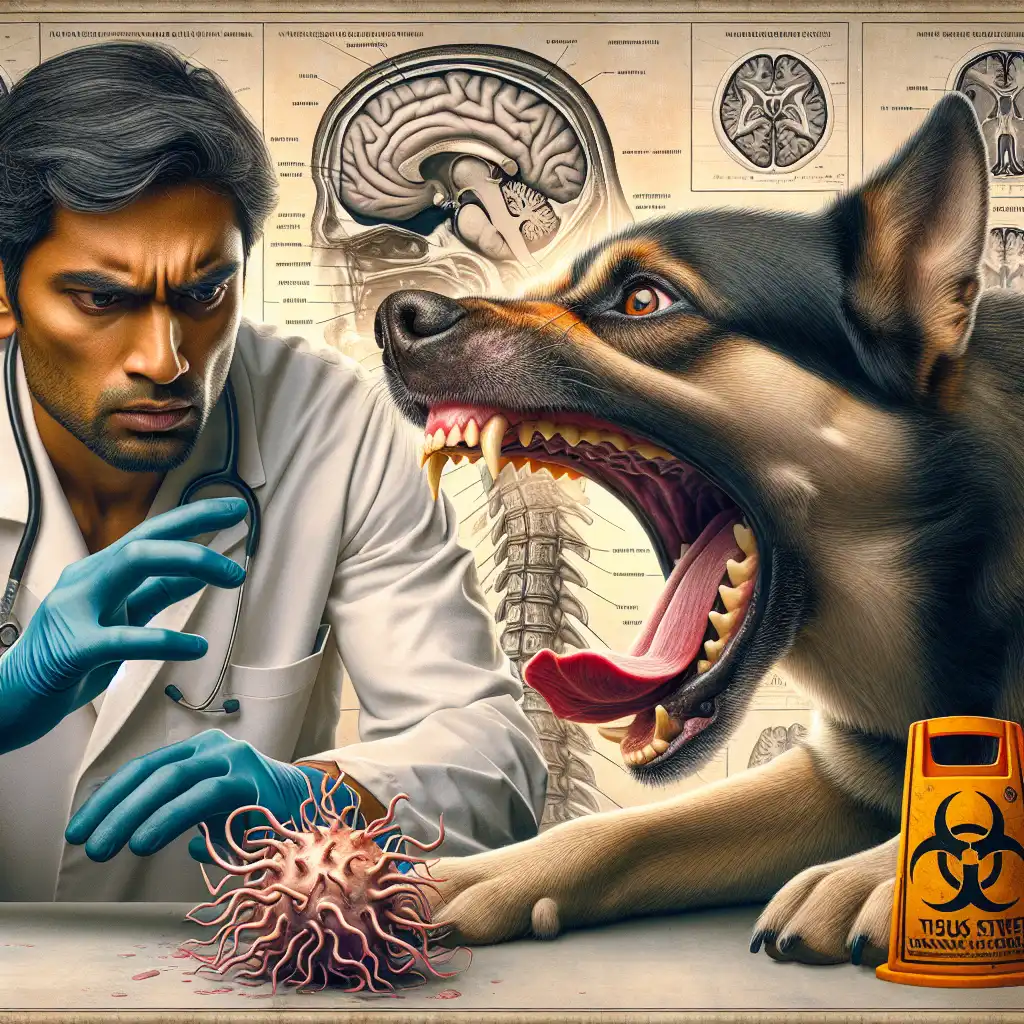
A deadly disease of the nervous system that animals get, and can give to people.
The stray dog was found to be carrying rabies.
rabies
ˈreɪbiːz
Cargando…
ˈreɪbiːz
A deadly disease of the nervous system that animals get, and can give to people.
The stray dog was found to be carrying rabies.
No se pudo cargar el audio. Inténtalo de nuevo más tarde.
'Rabies' is a disease caused by a virus that affects animals, especially dogs, bats, raccoons, and skunks. If you get bitten or scratched by an infected animal, you can also get rabies, which can be fatal if not treated on time. Rabies can cause symptoms such as fever, headache, muscle weakness, and seizures. It's important to seek medical attention immediately if you've been bitten by an animal or suspect that you have rabies. The word 'rabies' is usually used in medical and scientific contexts to refer to this disease.
Encephalitis and rabies are both diseases that affect the brain, but they are caused by different things and have different symptoms.
Encephalitis is caused by a viral infection that inflames the brain.
It can be caused by a number of viruses, including West Nile virus, herpes simplex virus, and St. Louis encephalitis virus.
Encephalitis can cause symptoms such as fever, headache, confusion, seizures, and weakness.
Both encephalitis and rabies can be serious and require medical attention.
However, encephalitis is more common and can be caused by a variety of viruses, while rabies is relatively rare and is mainly transmitted by animals.
Abrir palabra: Encephalitis →Hydrophobia refers to the fear or avoidance of water, while rabies is a deadly viral infection that affects animals and humans.
In the case of rabies, hydrophobia is a symptom that occurs during the later stages of the disease. This symptom occurs because the virus affects the brain, making it difficult for the infected person or animal to swallow and drink water.
Rabies is applicable in cases where an animal (typically a wild animal like a bat or raccoon) bites a human, while hydrophobia might be used to describe a person's fear of swimming or water activities.
Abrir palabra: Hydrophobia →Mad describes a person or animal that is angry or irritable.
It can also describe something that is crazy or illogical. For example, "I'm mad at my friend for breaking my phone," or "That idea is mad!".
The main difference between the two words is that mad refers to a state of mind or behavior, while rabies is a serious and potentially deadly illness.
Abrir palabra: Mad →The malaria parasite on the other hand, blocks an enzyme that helps the mosquitoes feed, forcing them to bite over and over and over again. The rabies virus may cause that snarling slobbering behavior by putting the immune system into overdrive. But whatever the method, when you think about how effectively
Ver en YouTube ↗A dog that has rabies probably will do things it wouldn't do if it didn't have rabies. But that doesn't change the fact that it has rabies.
under the influence of rabies even docile animals often become dangerously
Ver en YouTube ↗I got rabies shots for biting the head off a bat but that's OK - the bat had to get Ozzy shots.
to work out some of the patterns of what drives that initial crucial jump from one species to the next, and potentially how we might stop it, then we're going to end up better prepared for those viruses that jump between species more rarely but pose a greater threat of pandemics. Now rabies as terrible as it is,
Ver en YouTube ↗Natural selection shaped the human brain to be drawn toward aspects of nature that enhance our survival and reproduction, like verdant landscapes and docile creatures. There is no payoff to getting the warm fuzzies in the presence of rats, snakes, mosquitoes, cockroaches, herpes simplex and the rabies virus.
take the animals they'll go in the corridor and put them into a squeeze cage and then if you can help us we'll give them a cat flu vaccine a rabies jab
Ver en YouTube ↗If you have been vaccinated for polio, mumps, measles, chicken pox, hepatitis, or rabies, it may be too late for you to stand your ethical ground: You have already benefited from fetal-tissue research. This is, after all, a practice that's been legal since the 1930s.
their data on the people that have died from different diseases the World Health Organization the information that goes there about rabies and numbers are dismal fear of them making it look like drevis is not a big disease
Ver en YouTube ↗in truth all species of bats have sight. And some have even adapted large eyes to see better in dim lighting. Many people worry about getting infected by bats, and like any other animals bats can carry diseases like rabies.
Ver en YouTube ↗Their acidic stomachs protect them from living animals their rancid vomit scares off most predators. These stomachs of steel are essential to removing pathogens like cholera, anthrax and rabies from the African ecosystem.
Ver en YouTube ↗population it's rare for people living in these agricultural areas to become infected with rabies rabies is a frightening and deadly disease a classic form of the disease turns even docile creatures into aggressors that folman
Ver en YouTube ↗Unfortunately there's not really much evidence that it's doing anything to control rabies. One of the first questions that I wanted to ask was why is it that this conventional wisdom that the only good bat is a dead bat isn't actually doing its purpose. So one of the most I think innovative and exciting ideas
Ver en YouTube ↗that and many think of vampires sinking their fangs and two helpless victims even in the real world bats are thought of as carriers of dreaded diseases like rabies but in the madonna region of
Ver en YouTube ↗