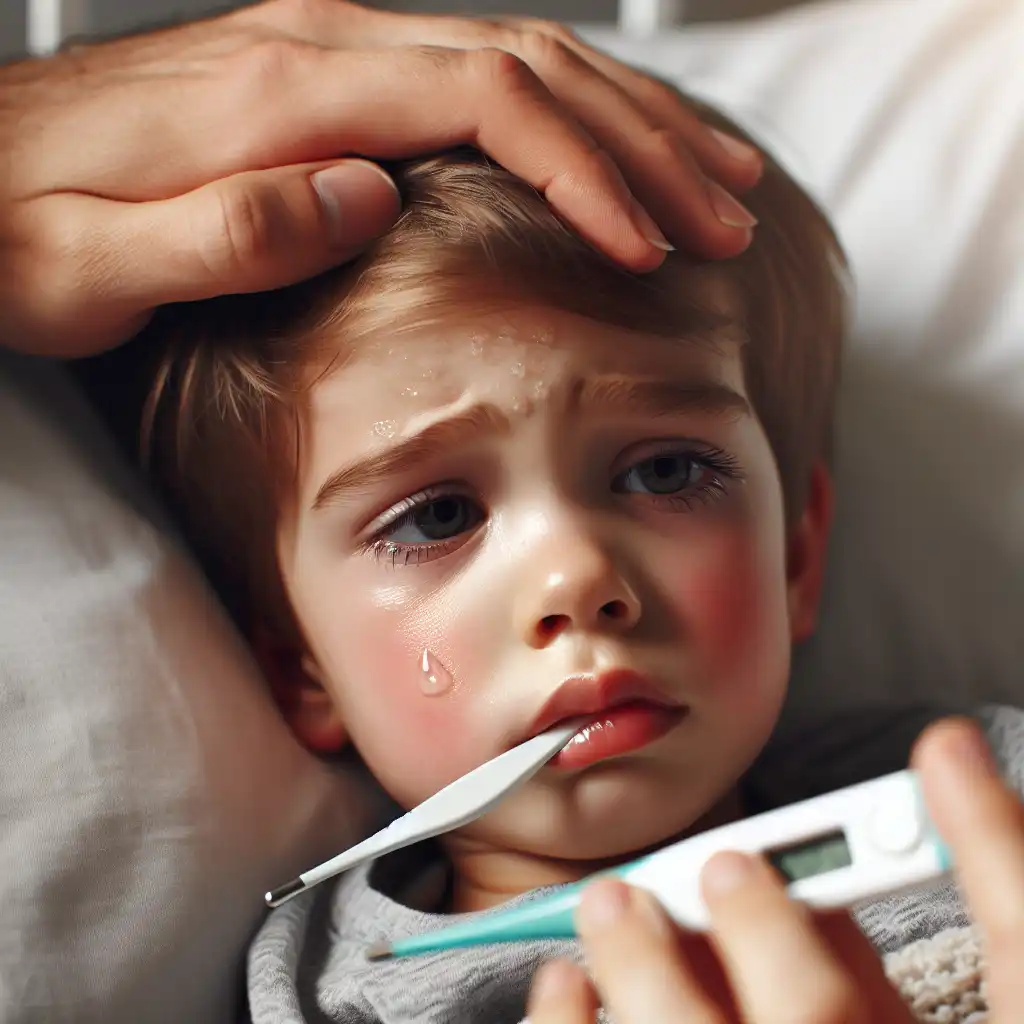
febrile
adjective febrile
ˈfiːbraɪl
Having or showing symptoms of a fever
The child showed febrile symptoms like high temperature and sweating.
febrile
ˈfiːbraɪl
Đang tải…
ˈfiːbraɪl
Having or showing symptoms of a fever
The child showed febrile symptoms like high temperature and sweating.

ˈfiːbraɪl
Full of nervous excitement or energy
The crowd was febrile with anticipation before the concert started.
Không tải được âm thanh. Vui lòng thử lại sau.
Febrile is a word that describes someone who has a fever. It is often used in medical settings to describe someone who is experiencing a high body temperature due to an illness or infection. For example, a doctor might say "the patient is febrile" to indicate that they have a fever. It can also be used more broadly to describe a situation that is marked by intense activity or excitement, similar to a fever.
Agitate means to stir up or disturb, usually in a negative way, such as causing unrest or anxiety.
It can describe a situation or a person's emotions. For example, if a protestor starts to agitate the crowd, they might be provoking them to become more vocal or physical.
Agitate is used when talking about causing disturbance, while febrile is used when talking about something related to having a fever.
Mở từ: Agitate →Anxious means feeling worried or uneasy about something, usually because of an uncertain outcome. It refers to a mental state of being nervous or scared, for example, being anxious about an upcoming exam or interview.
Anxious relates to a mental state, while febrile relates to a physical state. Anxious is applicable when talking about emotions and feelings while febrile is applicable when referring to physical health.
Mở từ: Anxious →Excitable refers to someone who is easily excited or prone to excitement.
It is a term used in medical contexts to describe a physical state. Excitable describes a person's emotions and behavior, while febrile describes a physical condition.
Mở từ: Excitable →Both febrile and feverish describe a state of having a fever, but they are slightly different in their usage.
It can also describe a state of feverishness or excitement.
Feverish is often used to describe someone who is experiencing symptoms of a fever, such as sweating, chills, and fatigue.
Febrile is more commonly used in a medical context, while feverish is often used to describe the symptoms or behavior associated with having a fever.
Mở từ: Feverish →Heat, on the other hand, is a more general term that can refer to a variety of things, such as warmth, high temperatures, or energy.
Febrile is applicable in a medical context to describe a specific state of having a fever, while heat is a more general term that can refer to a variety of things.
Mở từ: Heat →Febrile and inflame are two different words used to describe different situations.
Inflame means to cause irritation or swelling, often due to injury or infection. Inflammation can occur in any part of the body and can cause redness, pain, and heat as the immune system tries to fight off the injury or infection.
Febrile is used to refer to symptoms of a fever, while inflame is used to refer to the body’s immune response to an injury or infection.
Mở từ: Inflame →Febrile refers specifically to having a fever, while restless refers to a state of agitation or unease. Febrile is applicable in medical contexts when describing a patient with a fever, while restless is more general and can be used in a variety of situations where someone is feeling uneasy or unable to find comfort.
Mở từ: Restless →Tense describes a mental or emotional state when a person is nervous or anxious about something, often resulting in tight muscles and a feeling of restlessness.
Febrile is only applicable when someone has a high body temperature due to an illness, while tense describes a feeling of anxiety or nervousness in a person.
Mở từ: Tense →An AI smartwatch that...
Xem trên YouTube ↗The Cauliflower' is full of these bizarre anecdotes, some of them petty, others moving or whimsical, as its many characters try to make sense of the universe in which they live - a universe strange, febrile, and utterly unique.
It might be easy to brush away the febrile atmosphere online as a nasty byproduct of free expression: it's less easy when it happens to you.
When my son was 8 months old, he had a febrile seizure. You know, if you're in the first year - my wife and I refer to it as the 'darkness.' You're just underwater.