mist
noun mist
mɪst
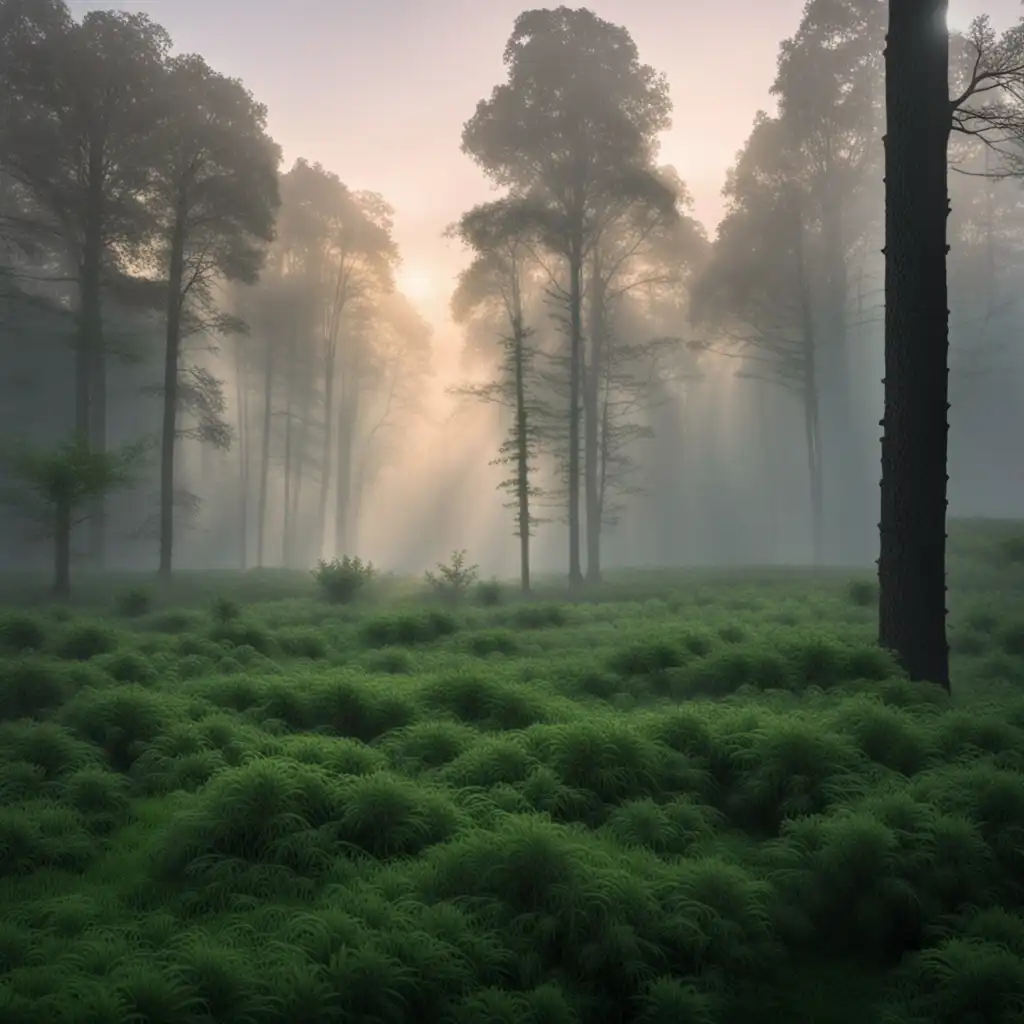
A light cloud of tiny water droplets in the air, closer to the earth's surface and reducing visibility.
The morning mist makes the forest look mystic.
mist
mɪst
불러오는 중…
mɪst
A light cloud of tiny water droplets in the air, closer to the earth's surface and reducing visibility.
The morning mist makes the forest look mystic.

mɪst
To become covered with a mist
My glasses misted up when I entered the warm room.

mɪst
To spray small droplets of liquid onto something.
She misted the plants with water.

mɪst
A spray of fine droplets of a liquid
I lightly sprayed a mist of perfume.

mɪst
To become teary-eyed, usually due to a strong emotion.
Her eyes misted up when she heard the tragic news.


mɪst
To obscure or dim with or as if with mist.
Past memories misted his clear thoughts.
오디오를 불러오지 못했어요. 잠시 후 다시 시도해 주세요.
The word 'mist' is used to describe a light fog or haze that often appears in the morning or evening. It can also be used as a verb to mean to cover or become covered in mist. For example, if you wake up early in the morning and see a light fog outside your window, you could describe it as 'mist.' Or if you go for a walk in the woods and the trees are covered in a light layer of moisture, you could say they are 'misty.'
Dew is the moisture that forms on surfaces like grass or plants overnight when the temperature drops and the air becomes cool.
This process is called condensation, which means the water vapor in the air turns into liquid droplets on the surface. Dew is usually seen in the morning and can make surfaces wet.
Dew is the liquid form of water that forms on surfaces, while mist is water vapor suspended in the air, making the air look hazy.
Dew is applicable in the morning when temperatures drop, and mist is seen around bodies of water or in forests when the air cools down.
단어 열기: Dew →Drizzle refers to light rain that falls in small drops. It is more consistent and visible than mist. Mist refers to a collection of small water droplets suspended in the air that can scatter light and reduce visibility.
Drizzle is applicable when it is raining lightly and you can see and feel individual droplets falling on you.
Drizzle is light rain that falls in small drops, while mist is a collection of small water droplets suspended in the air.
Drizzle is associated with light precipitation on overcast days, while mist is associated with high moisture levels and reduced visibility.
단어 열기: Drizzle →Fog and mist are both types of condensed water vapor in the air, but fog is thicker and reduces visibility more than mist does.
Fog usually appears when warm, moist air cools down quickly, while mist appears when cool, moist air warms up gradually.
Fog is more commonly found in low-lying areas or near bodies of water, while mist is prevalent in forests or when humidity levels are high.
In terms of applications, fog is the term used for conditions that can disrupt transportation, such as flights or driving, whereas mist is often associated with a pleasant, natural atmosphere, like in a misty forest.
단어 열기: Fog →Haze and mist are both types of atmospheric phenomena, but they differ in how they affect visibility.
Haze is a layer of fine particles (usually pollution or smoke) in the air that causes a reduction in clarity and color saturation.
Haze occurs in dry or dusty conditions and is most common in urban areas.
Mist can cause a slight reduction in visibility but usually does not affect color or clarity as much as haze.
Haze is caused by air pollution or smoke and can be seen in dry or dusty environments, while mist is caused by water vapor condensation and typically visible in areas with humid conditions or near bodies of water.
단어 열기: Haze →Smog is a combination of smoke and fog. It refers to a type of air pollution where a mixture of smoke, fog, and chemicals fills the air.
Smog occurs mostly in cities and urban areas where there is a lot of traffic, industries, and human activities. Smog is harmful to health, and people with respiratory problems are most affected.
단어 열기: Smog →Mist and spray both refer to small droplets of liquid dispersed in the air, but they differ in the size of the droplets.
Mist consists of larger droplets, while spray has smaller, finer droplets.
It can also be created artificially, such as when mist is sprayed over plants to keep them hydrated.
Spray is used more commonly when describing the application of liquids to surfaces.
A spray bottle is used to distribute a fine mist of liquid onto a surface, such as when cleaning or applying beauty products.
Insect repellent, for example, is applied in a spray form.
Mist refers to a visible cloud of larger water droplets while spray refers to a fine mist of smaller droplets applied to a surface.
단어 열기: Spray →The main difference between mist and steam is how they are formed.
Steam is formed when water is boiled and turns into vapor.
Mist is formed in cool conditions by water droplets in the air while steam is produced by boiling water and is hot and dense.
단어 열기: Steam →Mist and vapor are both words used to describe thin, filmy substances in the air, but they have some important differences.
Vapor is an invisible gas that is made up of tiny particles of a substance.
Vapour can form when a liquid, such as water, evaporates and turns into a gas.
Vapour is usually much lighter than mist and cannot get you wet.
So, in short, mist is a collection of tiny water droplets in the air that can be seen and felt, whereas vapour is an invisible gas that is lighter and cannot be seen or felt.
Vapour is used when describing the process of evaporation, like when the sun dries up water from a puddle.
단어 열기: Vapour →This is where inhalers the primary treatment for asthma come in. These medications help asthmatics both control and prevent their asthma symptoms. Inhalers transport medication along the affected airways using a liquid mist or fine powder to treat the problem at its source.
YouTube에서 보기 ↗I enter the world called real as one enters a mist.
the guano from thousands of terms which have chosen to mist here enriches the sandy soil which then can support more plants
YouTube에서 보기 ↗Sob, heavy world Sob as you spin, Mantled in mist Remote from the happy.
It looks very menacing, like a billowing monsoon cloud or thunderstorm. We think we could sit on the cloud, but if you go there it's just mist. Likewise if you look at the thought of anger, it will vanish like frost under the morning sun.
YouTube에서 보기 ↗There is no cloud above my head - there is not even a mist.
the seventeenth century and it's it's that real-world infusion which gives the book as much of it sort of bottom and it's juice well I think that the social share verbal effusive mists and
YouTube에서 보기 ↗By the time the traditionally male lexicographers become interested in looking at fashion words, their origins are lost in the mists of time.
see here there is nothing wrong with mist up there you go that was it yeah
YouTube에서 보기 ↗Knowledge is soon changed, then lost in the mist, an echo half-heard.
And the last thing I saw was his leg sticking out in the back and he was like this And he was shaking to try to get himself deeper in. I remember one of his shoes fly off and spin through the mist and disappear off the ledge. And for the rest of the trip he had one shoe.
YouTube에서 보기 ↗That mist was thick. It was hard to see at times. The wind was wild. It'd come at me one way and hit me from the front, and hit me from the back.
which was a kind of giant floating fetus-creature that lived in a giant tank with this orange mist of psychedelic spice swirling around him, allowing him to bend space and time. He could never leave the tank or interact with the outside world.
YouTube에서 보기 ↗Walk on a rainbow trail; walk on a trail of song, and all about you will be beauty. There is a way out of every dark mist, over a rainbow trail.
photographs of life to me is not their anonymity but they are landscapes in motion the storm is arriving the fire is burning the mist is lifting
YouTube에서 보기 ↗I laugh with the sun, and mist that tries so hard to seduce the mountains.
there during the rainy season so although the mist could move around the ruins people often ask me why do I use black-and-white photography because I think there are things there go beyond color that speak of spiritual things that speak of things that go deep into
YouTube에서 보기 ↗I love to start the morning with a mist spray, especially after a night out.
up a chemical mist an SOS to these black wasps why because black wasps are known as a food coloring and some aphids are busily sucking the life out of these plants now despite its nickname this
YouTube에서 보기 ↗Suddenly a mist fell from my eyes and I knew the way I had to take.