serf
noun serf
sɜːrf
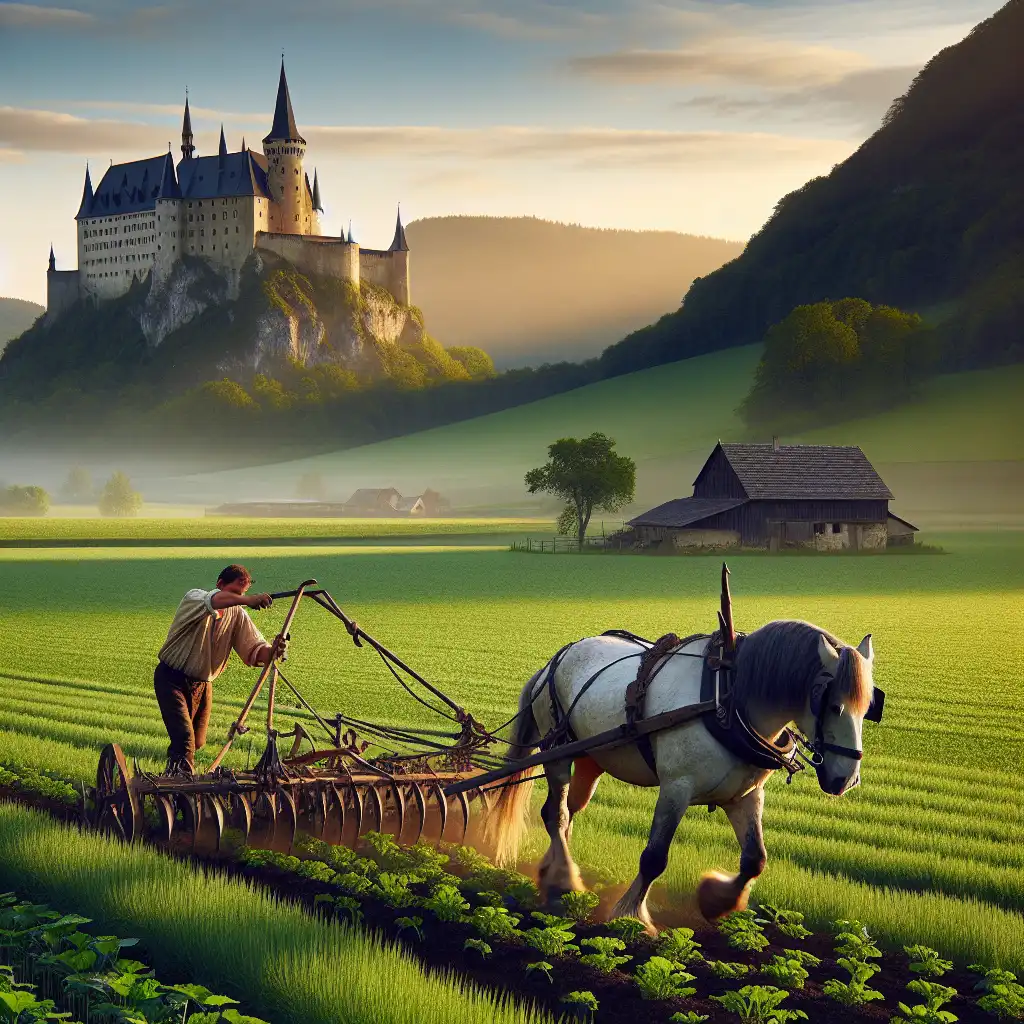
A person in the past who lived and worked on the land of a lord in exchange for protection and the right to live on and use the land.
In medieval Europe, most of the population consisted of serfs.
serf
sɜːrf
Cargando…
sɜːrf
A person in the past who lived and worked on the land of a lord in exchange for protection and the right to live on and use the land.
In medieval Europe, most of the population consisted of serfs.
sɜːrf
Someone who works very hard and depends on someone powerful for protection and other needs in the present time.
He was treated like a serf by his employer.
No se pudo cargar el audio. Inténtalo de nuevo más tarde.
A serf is a person who worked on a farm or in a specific area of land and was not free to leave. In the past, some people were considered serfs because they were born into a certain family or were not allowed to leave and work somewhere else. It is not a word commonly used nowadays, but it is important to understand its historical significance.
Dependent refers to a person who relies on another for support or help. This can be in terms of financial, emotional, or physical support.
A dependent is usually someone who cannot take care of themselves and needs another person to provide for them.
Dependent refers to a person who relies on someone else for support, while serf refers to a person who is bound to a particular land and has limited freedom.
Dependent is a more general term, while serf is a more specific historical term.
Abrir palabra: Dependent →A laborer is a person who works with their hands to perform physical tasks such as construction, landscaping, or factory work.
A laborer is a paid worker who has the freedom to choose their occupation and employer, while a serf is an unfree worker who is legally bound to work on a specific estate.
The term laborer is applicable in modern industrialized societies, while the term serf is more applicable to feudal societies in Europe during the Middle Ages.
Abrir palabra: Labourer →Peasant typically refers to a small farmer who cultivates his or her own land and may be free to move or work for wages elsewhere.
Serfdom was abolished in many countries during the 19th century, while peasants still exist in various forms around the world.
Abrir palabra: Peasant →Both serf and slave are terms used to describe people who were considered property and forced to work without pay.
A slave was a person who was considered property and owned by an individual or group of individuals. Slaves were bought and sold like property and had no legal rights.
A serf was tied to the land but not owned by an individual, while a slave was considered property and owned by someone else.
Serfdom was most common in feudal societies, while slavery was widespread in many cultures and societies throughout history.
Abrir palabra: Slave →A tenant is someone who rents land, property or a dwelling from a landlord or landowner, and pays rent for the right to occupy the space.
A serf was a type of slave who worked on a specific piece of land for their lord, while a tenant is a person who rents a property from a landlord in order to live or work in it.
Abrir palabra: Tenant →Both serf and thrall are terms used to describe a person who is bound to work on someone else's land or property in exchange for protection or other benefits.
The term thrall is similar to serf, but is typically used to describe a person from Viking or Norse cultures who was enslaved by a landowner.
Thralls were typically prisoners of war or people who had fallen into debt, and were considered to be the lowest class of society.
Abrir palabra: Thrall →A villein was similar to a serf but was more commonly used in Western Europe, particularly in England. They were made to serve as agricultural laborers, but unlike serfs, they were given some degree of freedom and could own their own property.
Villeins also had to pay taxes and rent to their lord in exchange for the use of their land.
In summary, both serfs and villeins were peasants who had to work for nobles, but serfs had less freedom and were more common in Eastern Europe, while villeins had more autonomy and were mainly found in Western Europe.
Abrir palabra: Villein →Why should you read...
Ver en YouTube ↗The purposeful restriction of knowledge has been at the heart of untold misery and hardship in this world. Serfs were kept illiterate so as to not jeopardize the feudal system. Slaves were kept in the dark on a variety of subjects so as to not provide them the possibility of escape.
Juan Enriquez: The...
Ver en YouTube ↗The crusades made great improvement in the condition of the serfs.
Human-powered mobility...
Ver en YouTube ↗Knowledge has always flowed upwards to bishops and kings, not down to serfs and slaves.
The concept of a 'job' is pretty recent. If you go back a few hundred years, everyone was either a slave or a serf, or living off slave or serf labor to pursue science or philosophy or art.
Corporations are like countries now, there's a king, there are serfs, there's a court, basically everything but moats. They're feudal societies, and there are good ones and bad ones.
They are imported by companies, controlled as serfs, worked like slaves, and at last go back to China with all their earnings. They are in every place, they seem to have no sex. Boys work, girls work; it is all alike to them.
Most Americans aren't the sort of citizens the Founding Fathers expected; they are contented serfs. Far from being active critics of government, they assume that its might makes it right.
Even a moderniser like Alexander II - who emancipated the serfs in 1861 - had no intention of devolving real power.
I am an artless serf of Cupid.
Alexander II really used autocracy well to negotiate the freeing of the serfs in 1861.