
revocation
noun revocation
ˌrevəˈkeɪʃn
The act of taking back or cancelling something.
She appealed against the revocation of her driving license.
revocation
ˌrevəˈkeɪʃn
読み込み中…
ˌrevəˈkeɪʃn
The act of taking back or cancelling something.
She appealed against the revocation of her driving license.
ˌrevəˈkeɪʃn
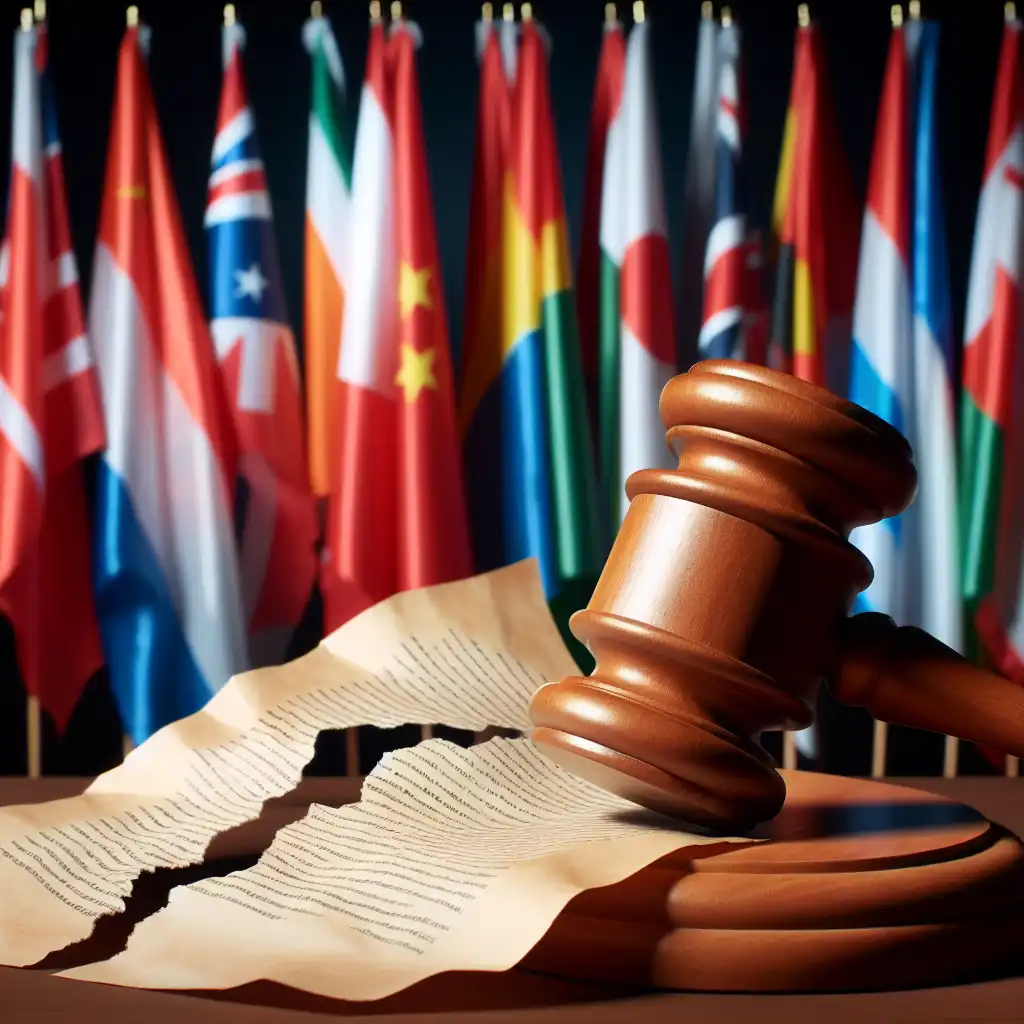
The act of officially saying that a law, contract, agreement or decision is no longer valid.
The revocation of the treaty caused an international outcry.
音声を読み込めませんでした。しばらくしてからもう一度お試しください。
Revocation is used when something is cancelled, taken away or invalidated. It can be used in different situations like an event, agreement or permission being revoked. For example, a driver's license can be revoked by the government if the driver gets too many traffic violations or commits a serious driving offense. Revocation can also refer to the annulment of a contract or the cancellation of someone's membership or access to a certain place or service. It means to undo or reverse a decision, agreement or authorization that was previously granted.
Abrogate means to officially or formally end, cancel or revoke a law, treaty, agreement or decision.
Abrogate is more specific to legal or formal situations where a law or treaty is being cancelled, while revocation can be used in a wider range of scenarios where a decision or right is being cancelled or taken away.
単語を開く: Abrogate →Annul means to declare something invalid or null and void, as if it never existed in the first place. For example, a marriage can be annulled if it was not legally binding to begin with.
In simpler terms, annul means to invalidate from the beginning, while revocation means to cancel something that was previously allowed or granted.
単語を開く: Annul →Cancellation means to stop or end something that has already been planned or agreed upon. For example, if you cancel a flight, you are stopping the flight from happening.
Cancellation is used when something is planned, scheduled, or agreed upon, while revocation is used when something has been granted or given.
単語を開く: Cancellation →Nullify means to make something legally void or invalid. This can apply to contracts, agreements, or even laws. For example, a court could nullify a contract if it was signed under duress or if it contained illegal language.
Nullify means to declare something as invalid or void, while revocation means to take back or cancel something that was previously granted or allowed.
単語を開く: Nullify →Both repeal and revocation mean the cancellation or annulment of something, but the difference lies in what is being cancelled.
Repeal is used to cancel a law or statute, while revocation is used to cancel a right, privilege, or license. For example, if a government wants to cancel a law, they will use the term repeal, such as repealing the Affordable Care Act.
単語を開く: Repeal →Rescission refers to the cancellation or voiding of a contract or agreement. It is applicable when there has been a mistake or misrepresentation by one party, or when the contract was entered into under duress or coercion.
Rescission is used when a contract or agreement needs to be cancelled before it is completed, while revocation is used when something that has already been granted or given needs to be taken back.
単語を開く: Rescission →Retraction refers to the act of withdrawing something that was previously stated or published. This could apply to a statement made by an individual, or an article published in a newspaper or journal.
Essentially, a retraction is meant to correct a false or incorrect statement that was made.
Overall, while both words involve undoing something that was previously established, retraction involves correcting a mistake or falsehood, while revocation involves cancelling or invalidating a previous decision or approval.
単語を開く: Retraction →Withdrawal generally refers to the act of taking something away or removing oneself from a situation or commitment. For example, a student can withdraw from a class if they no longer wish to take it.
Revocation is more actively done by a higher authority, while withdrawal is more voluntary and done by the individual.
単語を開く: Withdrawal →I am asking the state of Israel to revoke my citizenship. This wish for revocation of citizenship is neither new nor recent. Now, however, it is supported by the new Revocation of Citizenship Law.