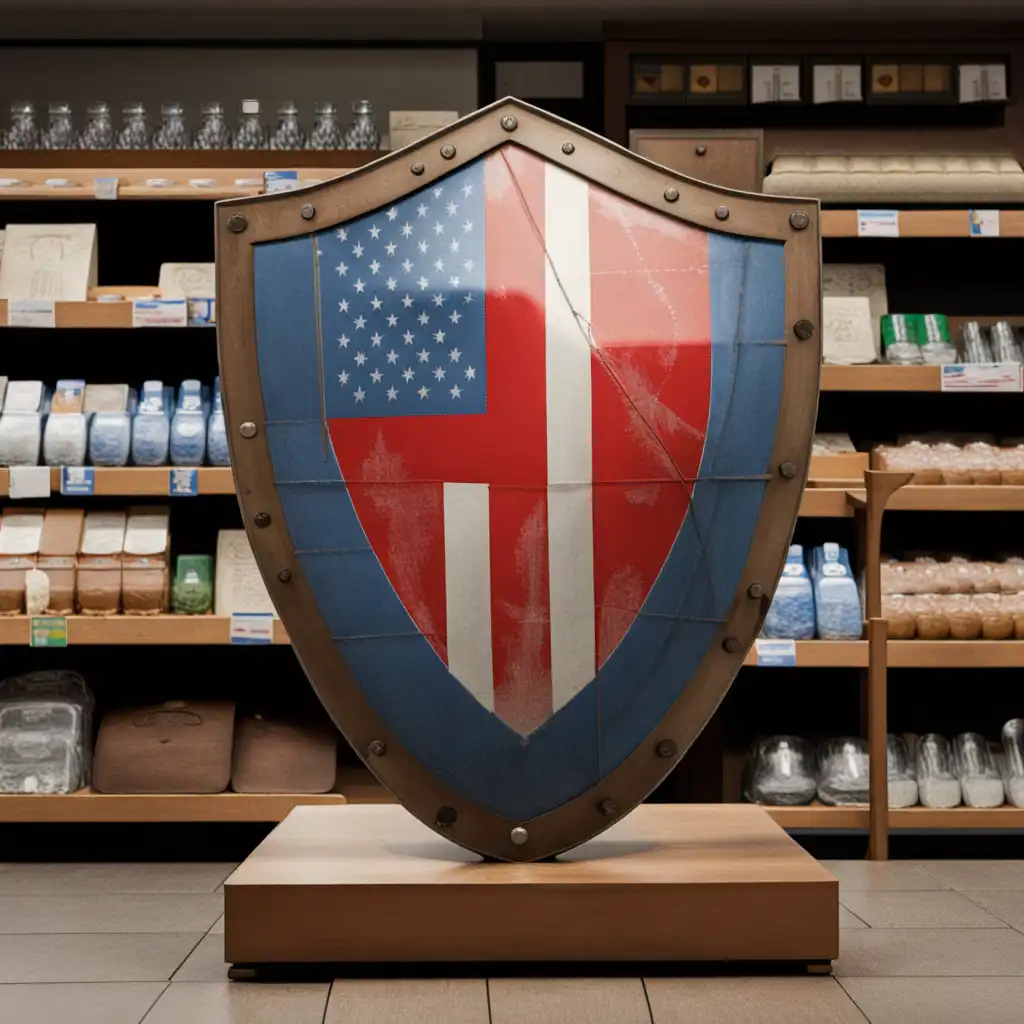
The word 'protectionist' is used to describe someone who tries to protect their own country's businesses and industries from foreign competition. It can also refer to policies or actions taken to restrict imports and promote domestic trade. The word is often used in debates about international trade and economic policy.
Insular refers to someone or something that is isolated and inward-looking, often due to a lack of exposure or interest in outside perspectives or ideas.
Both terms relate to the idea of closing oneself off from the outside world, but insularity focuses more on a lack of interest or awareness, while protectionism is a deliberate effort to shield domestic interests from foreign competition.
Insular would be applicable when describing someone who is closed-minded and not receptive to new ideas, while protectionist would be applicable when describing a government policy aimed at supporting local industries.
Isolation refers to being separated or disconnected from others.
Isolation is about being alone, while protectionist is about keeping outsiders away. Isolation could be applicable when someone needs time away from others for personal reasons, while protectionist policies might be applicable in the context of international trade, where a country wants to protect its own industries from foreign competition.
The term nationalist refers to someone who strongly supports their own country and prioritizes its interests over those of other countries.
In simpler terms, a nationalist is someone who loves their country, whereas a protectionist is someone who looks out for their country's businesses and economy.
There's a tendency in many politicians to become inward-looking, more protectionist, more nationalistic and more defensive, in the bad sense of the word.
If we do not counter the argument that most radical nationlists use, which is, 'To protect is to be protectionist,' if we don't counter that argument, all of our economies will suffer.
Protectionism is a very real danger. It is understandable that in times of a severe downturn protectionist pressures mount but the lessons of history are clear. If we give in to protectionist pressures, we will only send the world into a downward spiral.
Look at trade and automation: two competing but slightly overlapping forces in the shrinking of the duration of jobs right now. We have to be able to talk honestly about how disrupted this world is going to be, and it is crazy to mislead people and say we're going to bring back all of the big factory jobs by creating a protectionist regime.
Basically, the myth is that America has been founded on the free market; the government has done very little; it has thrived under free trade. But actually, if you look at the history, this is actually the country that has succeeded most with protectionist policies.
What nobody wants to discuss is whether or not the black-and-white argument about trade - you're either a free trader or you're a protectionist - is the right one. It's the old 19th century argument.