
blanch
verb blanch
blæntʃ
To become white or pale, often due to fear or shock
Her face blanched when she heard the bad news.
blanch
blæntʃ
加载中…
blæntʃ
To become white or pale, often due to fear or shock
Her face blanched when she heard the bad news.

blæntʃ
To make something white or pale
The hot sun had blanched the wood on the deck.
blæntʃ
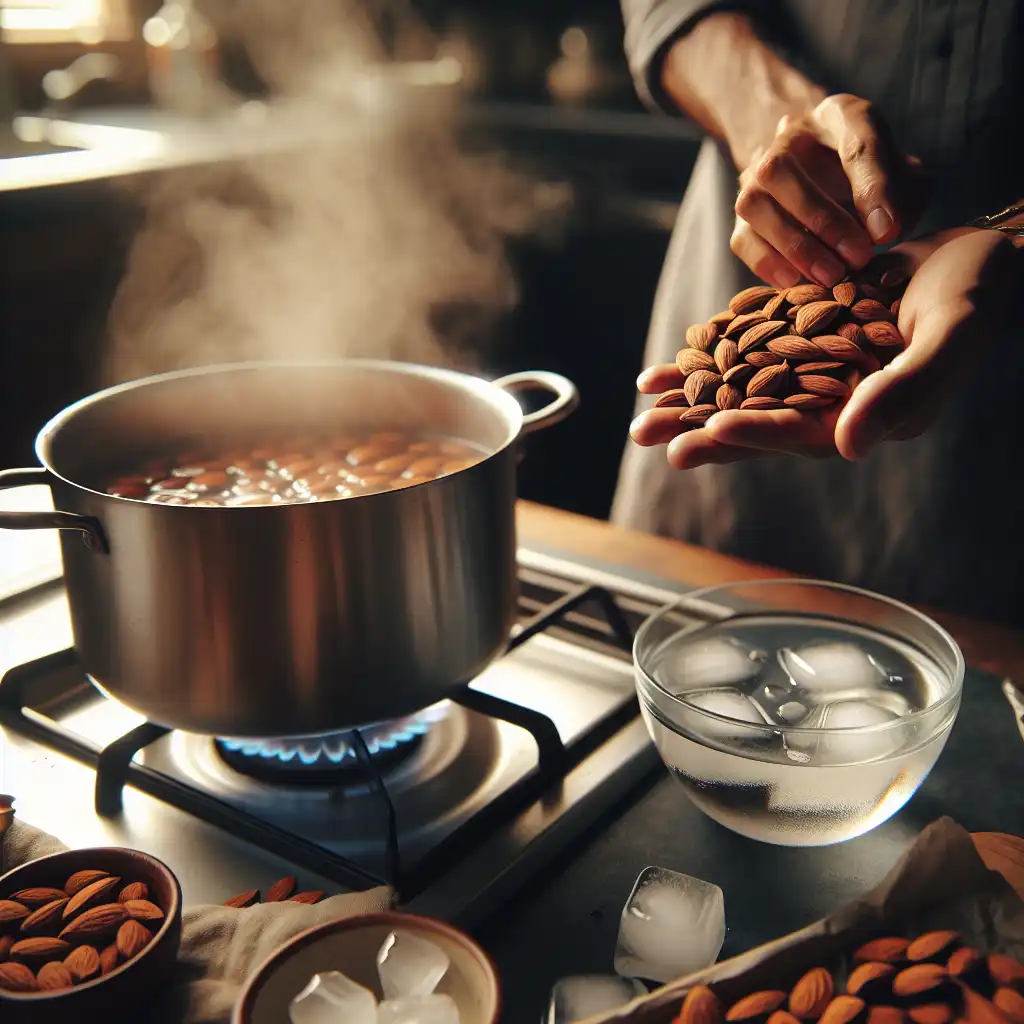
To boil or scald food briefly
You need to blanch the almonds before removing the skin.
音频无法加载,请稍后再试。
The word 'blanch' means to dip something into boiling water for a short time, then immediately putting it into cold water. This technique is often used to prepare vegetables like broccoli, asparagus, and green beans before cooking them further. Blanching helps to soften the vegetables and also preserves their color and nutrients. The word 'blanch' can also be used to describe when someone's face turns pale due to shock or fear.
Bleach means to remove color or lighten the color of something by using chemical agents. This is commonly done to fabrics or hair to make them whiter or lighter in color.
So, blanching is applicable in cooking to preserve the color and texture of fresh produce, while bleaching is applicable in hair or laundry treatments to lighten their color.
打开单词: Bleach →Draining is the process of removing excess liquid from cooked or raw food. This can be done by using a strainer or colander to separate the solids from the liquid.
Blanching is mainly used for vegetables, like broccoli, kale, or green beans, while draining is applicable to a wide range of foods, including pasta, rice, and canned goods.
打开单词: Drain →Fading means losing color or brightness over time.
It can refer to colors of clothing, furniture or decorative items. Fading can be caused by sunlight, washing or general wear and tear.
Fading is applicable in the context of colors and textiles.
打开单词: Fade →Pale means to lose color or become less bright, usually due to sickness or fear. For example, when someone is feeling unwell, their face may turn pale.
Similarly, when someone is afraid, their face may also turn pale.
To sum it up, blanching is a method of removing color, while paling is a natural change of color due to certain circumstances.
打开单词: Pale →Whiten is to make something white in color or to remove the color from something.
This word is commonly used in the context of bleach. Blanching is applicable in cooking, while whitening is applicable in cleaning or removing stains from fabrics.
打开单词: Whiten →The case for collaborativ...
在 YouTube 上观看 ↗I always have poached shrimp and blanched vegetables on hand.
D-L Stewart: Scenes from...
在 YouTube 上观看 ↗I love Cate Blanchett; I think she's brilliant.
Blanching the cloves removes the harsh and bitter bite of raw garlic.
I'm obsessed with not chucking away food. I'm lucky enough to have a gardener, so we grow sweetcorn, tomatoes, beetroots, cabbages, pumpkins, lettuce. I'm trying to get into blanching it and freezing so I don't have to buy veg over the winter, but then you need loads of freezers, and that's not ideal.
When we blanch some ingredients in ash water it removes all their bitterness and astringency, which has opened up a new list of ingredients that we had never considered as edible.