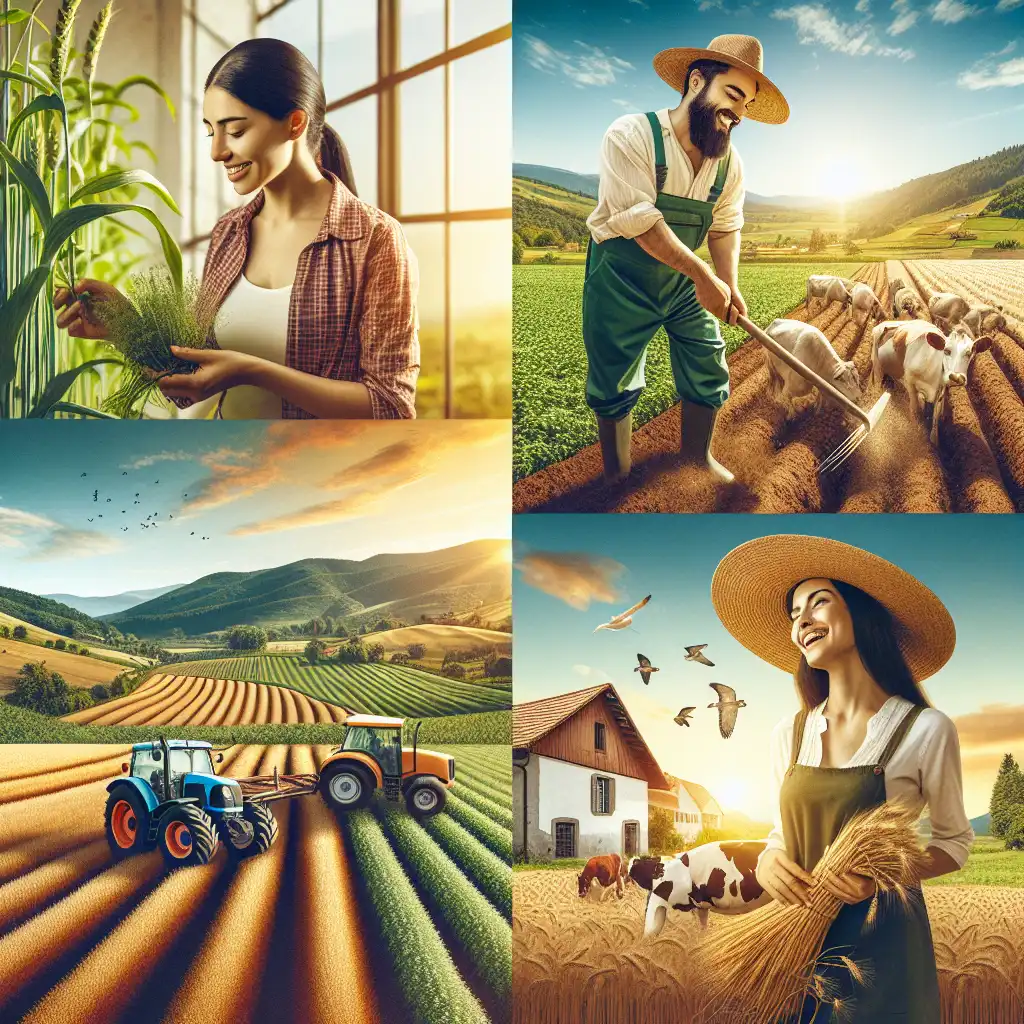
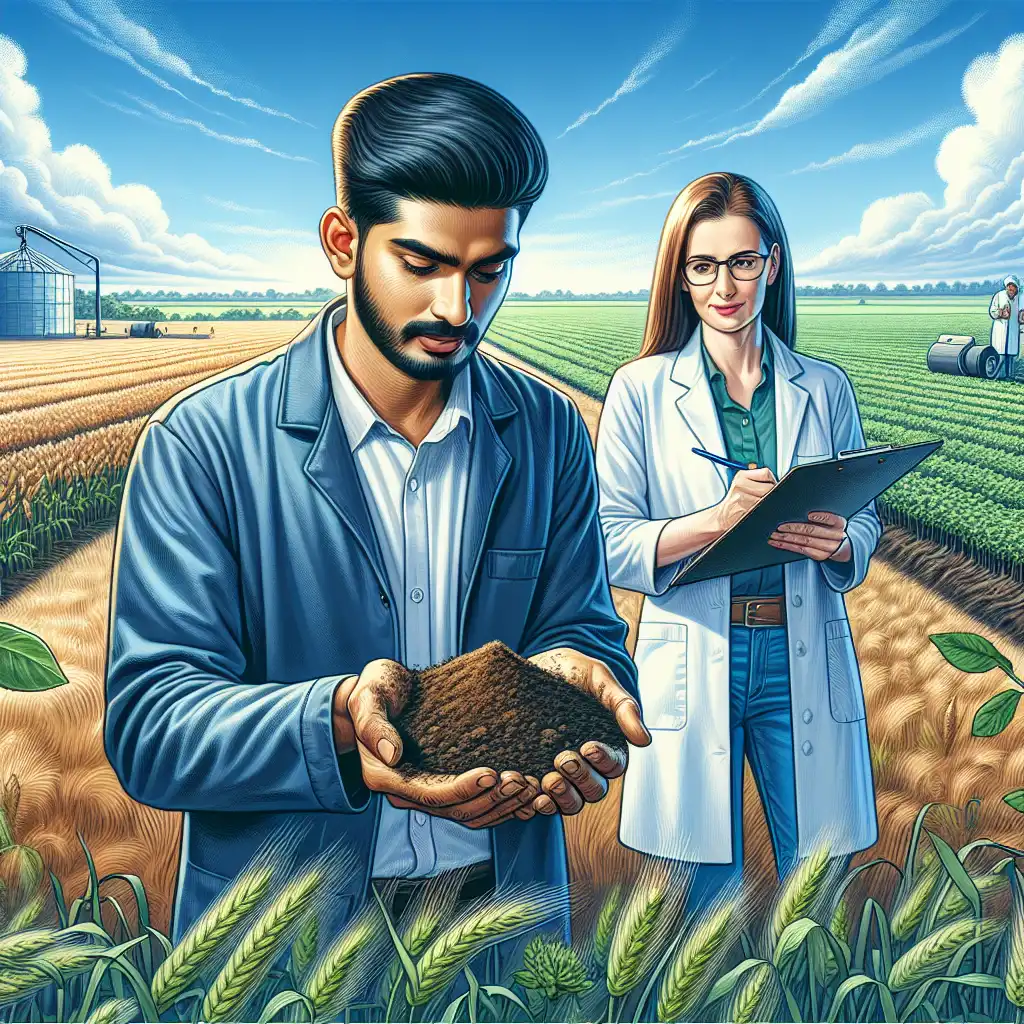
Agronomy is the science of growing plants for food, fuel, and other practical uses. It involves studying the soil, crops, and climate to improve crop yields and quality. Agronomy can be applied to all types of crops, including grains, vegetables, and fruits. If you are interested in gardening, farming or plant biology, you might enjoy studying agronomy. Agriculturists and plant scientists often use agronomy to develop new techniques and technologies for improving crop growth and sustainability.
Farm is a piece of land where crops and/or animals are raised for food, fuel, or other purposes. It refers to the physical place where agriculture activities take place, including the buildings, structures, and infrastructure used to manage and support the land.
Agronomy is the scientific study of growing crops and managing soil, while a farm is the physical location where agriculture activities take place.
Agronomy is applicable to a wide range of activities related to agriculture, including research, education, and fieldwork, whereas a farm is primarily used for practical purposes such as growing crops, raising livestock, and producing food.
Agronomy and Horticulture are both related to the field of agriculture, but they focus on different aspects.
Horticulture deals with growing plants for ornamental purposes or for human consumption. It focuses on the science of cultivating plants to improve their quality and quantity.
In simple words, agronomy mainly deals with crop production while horticulture deals with plant cultivation for ornamental or consumption purposes.
Agronomy is applicable in the production of crops like cereals, oilseeds, pulses, etc. while horticulture is applicable in growing fruits, vegetables, flowers, landscaping, etc.
And the more profoundly the science of biology reveals the laws of the life and development of living bodies, the more effective is the science of agronomy.
Farmers, young and old, educated and uneducated, have easily taken to the new agronomy. It has been heart-warming to see young college graduates, retired officials, ex-armymen, illiterate peasants and small farmers queuing up to get the new seeds.