
prostration
noun prostration
prɑːˈstreɪʃn
The action of lying stretched out on the ground
He fell into a state of prostration from exhaustion.
prostration
prɑːˈstreɪʃn
Đang tải…
prɑːˈstreɪʃn
The action of lying stretched out on the ground
He fell into a state of prostration from exhaustion.

prɑːˈstreɪʃn
Extreme weakness or exhaustion
The runners were in a state of prostration after finishing the marathon.
prɑːˈstreɪʃn
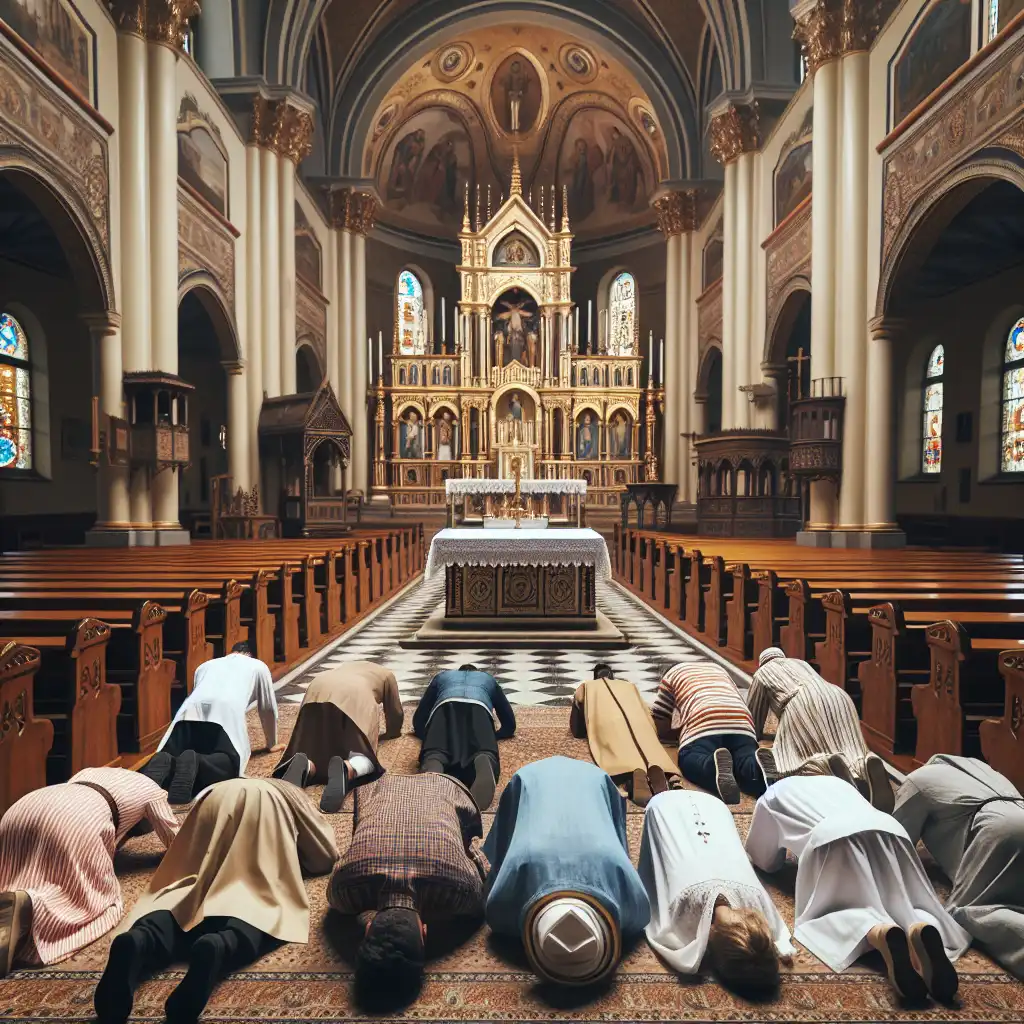
Submission or respect shown by lying down on the ground
The worshippers showed their reverence with a prostration before the altar.
Không tải được âm thanh. Vui lòng thử lại sau.
The word 'prostration' is used to describe the act of lying down flat on the ground with your face downwards, as a sign of worship, submission, or extreme exhaustion. It is often used in religious contexts, where people might prostrate themselves before a deity, and can also be used to describe someone collapsing or collapsing in extreme exhaustion or illness. In everyday language, it can also be used to describe someone feeling really sad, upset or defeated, as if they have been brought to their knees.
Collapse means to fall down suddenly, often due to weakness or fatigue, while prostration refers to a state of extreme physical or emotional exhaustion where a person may lie down or become unable to move.
Collapsing may happen due to a sudden event, such as fainting, a heart attack or a building collapsing. Prostration is usually caused by prolonged physical or emotional stress, such as intense exercise, heat exposure, or a feeling of deep sadness or defeat.
Collapse suggests a sudden fall due to physical weakness, while prostration suggests a state of prolonged exhaustion due to physical or emotional stress.
Mở từ: Collapse →Exhaustion and prostration are both words that describe extreme tiredness, but they have slightly different meanings.
Exhaustion refers to a state of being completely depleted of energy or resources.
Exhaustion is a general feeling of tiredness or depletion, while prostration is a more severe and specific condition characterized by physical weakness or inability to function normally.
Mở từ: Exhaustion →Faint means to lose consciousness temporarily, often caused by a lack of oxygen to the brain.
Faint refers to a temporary loss of consciousness due to lack of oxygen, while prostration refers to a physical collapse due to exhaustion or submission.
Mở từ: Faint →Fatigue and prostration both refer to conditions of extreme tiredness or exhaustion, but they are slightly different.
Fatigue means a feeling of tiredness, weakness, or lack of energy. It is a general term that describes a range of symptoms, such as a loss of motivation, difficulty concentrating or making decisions, and physical exhaustion.
Fatigue can be caused by many things, such as lack of sleep, illness, stress, or physical activity.
Fatigue is a more common and mild form of tiredness that can be overcome with rest and relaxation, while prostration is a more severe and potentially dangerous condition that requires immediate medical attention.
Mở từ: Fatigue →Helpless means being unable to do anything or being in a situation where one cannot help oneself. It is applicable when someone is in a situation where they lack the power, ability or strength to act on their own or get out of a problem.
Helpless means lack of power, whereas prostration refers to the act of submission.
Mở từ: Helpless →Prostration refers to physical exhaustion or inability to move due to extreme fatigue or weakness. It is a medical condition where the body is unable to function properly, and a person feels too weak to stand or walk.
Weak, on the other hand, refers to a lack of physical, mental, or emotional strength.
For example, someone may feel weak when they have not eaten properly or when they are emotionally drained.
Prostration is a medical condition characterized by extreme fatigue and inability to move, while weak refers to a lack of strength in various aspects of life.
Mở từ: Weak →Feisal Abdul Rauf: Lose...
Xem trên YouTube ↗There comes a pause, for human strength will not endure to dance without cessation; and everyone must reach the point at length of absolute prostration.
Prostration is our natural position. A worm-like movement from a spot of sunlight to a spot of shade, and back, is the type of movement that is natural to men.