unmannerly
adjective unmannerly
ʌnˈmænərli
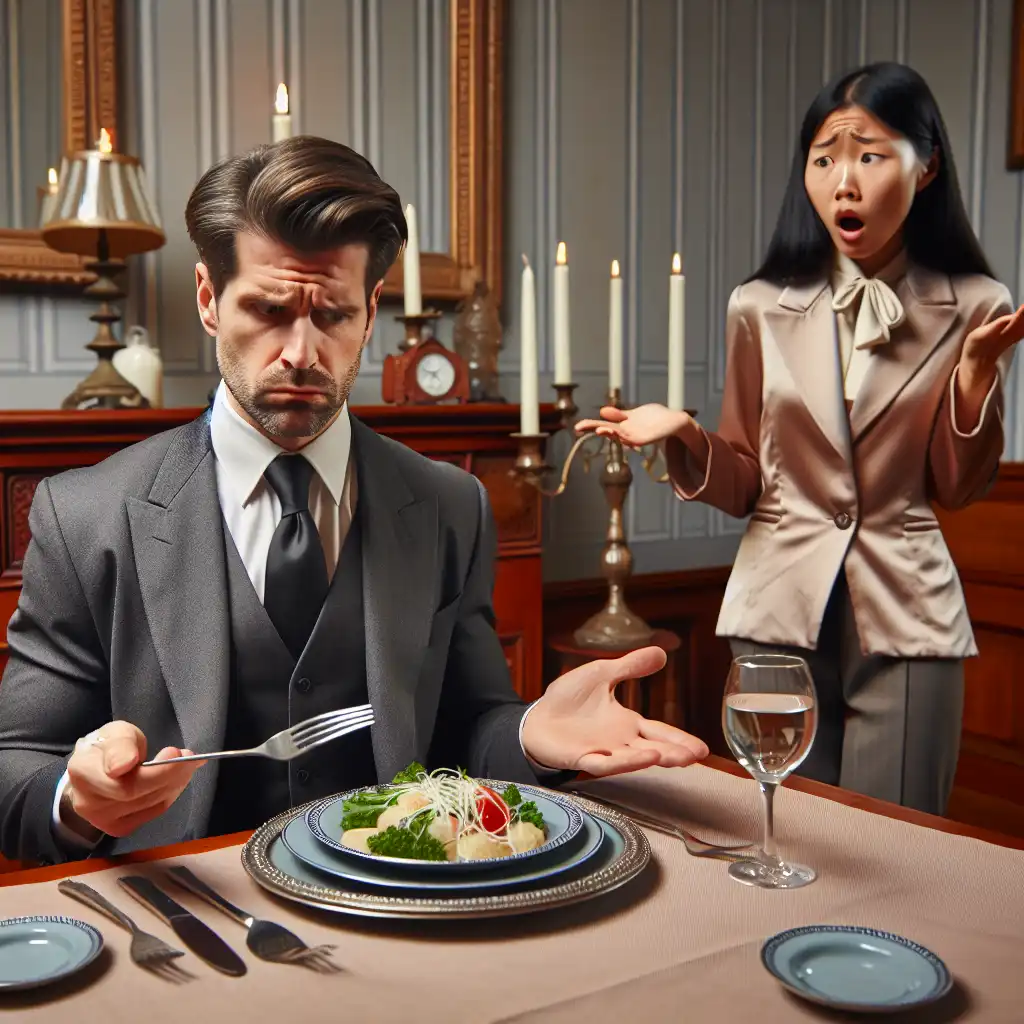
Rude or not showing respect
It was utterly unmannerly of him to criticize our host's cooking.
unmannerly
ʌnˈmænərli
Chargement…
ʌnˈmænərli
Rude or not showing respect
It was utterly unmannerly of him to criticize our host's cooking.
Impossible de charger l’audio. Réessayez plus tard.
The word 'unmannerly' is used to describe someone who is rude or impolite. You can use this word when you want to express that someone is not behaving properly in a certain situation, like interrupting someone when they are speaking, talking with their mouth full, or not saying thank you when someone has done something nice for them. It is important to use this word in a respectful and polite manner, and not to use it to insult someone.
Brusque means to be blunt or abrupt in speech or manner, usually without wasting time on needless pleasantries.
Brusque refers to a directness of speech, while unmannerly refers to a lack of courtesy in behavior.
Ouvrir le mot: Brusque →Crass refers to a lack of elegance or refinement in behavior or language, often being offensive or vulgar. It is more often used to describe someone who is insensitive or ignorant to appropriate social behavior.
In essence, crass refers to someone who is vulgar and offensive in their behavior or language, while unmannerly refers to someone who is impolite or rude in their social behavior.
Ouvrir le mot: Crass →Discourteous means being rude and disrespectful in behavior or speech towards someone. It implies a lack of consideration for others or their feelings.
Both words are similar in that they describe disrespectful behavior, but discourteous focuses more on the intention of disrespect, while unmannerly focuses more on the behavior itself.
Discourteous refers to being intentionally rude, while unmannerly refers to simply not knowing how to behave politely.
Ouvrir le mot: Discourteous →Both impolite and unmannerly mean not being polite or showing good manners.
However, impolite is more about saying or doing something rude or offensive, while unmannerly is more about not being courteous or showing improper behavior.
For example, interrupting someone when they're talking is impolite, while not holding the door for someone or not saying "please" or "thank you" is unmannerly.
Both words can be used in formal or informal situations, but impolite is slightly stronger and may be more appropriate in situations where there is intentional disrespect or disregard for social norms.
Ouvrir le mot: Impolite →Impudent means being disrespectful or rude, especially towards people in authority. It is applicable in situations where someone acts in a way that shows they don't care about others' feelings or social norms, and may be intentionally challenging authority.
To summarize, impudent suggests intentional rudeness or defiance, while unmannerly suggests a lack of awareness or knowledge of social norms.
Ouvrir le mot: Impudent →Inconsiderate means not thinking about other people's feelings or needs, while unmannerly means not having good manners or etiquette in social situations.
Inconsiderate behavior can be accidentally or intentionally thoughtless, while unmannerly behavior is usually a result of not having learned proper social behavior or etiquette.
Inconsiderate behavior might include interrupting others or not cleaning up after oneself, while unmannerly behavior might include chewing with one's mouth open or not saying please and thank you.
Ouvrir le mot: Inconsiderate →Insolent means showing a rude and arrogant lack of respect towards others. It implies intentional disrespect and disregard for others' feelings.
Insolent behavior is intentionally disrespectful, while unmannerly behavior is unintentionally rude due to a lack of proper manners or cultural understanding.
Ouvrir le mot: Insolent →Both words rude and unmannerly are used to describe behavior that is not polite or respectful.
However, rude is generally used to describe behavior that is offensive or disrespectful towards others, while unmannerly describes behavior that is lacking in social etiquette or is impolite in a more unintentional or ignorant way.
For example, if someone insults or belittles another person, that would be considered rude behavior. If someone talks with their mouth full, interrupts others repeatedly or doesn't say "please" or "thank you," that would be considered unmannerly behavior.
Ouvrir le mot: Rude →