bight
noun bight
baɪt
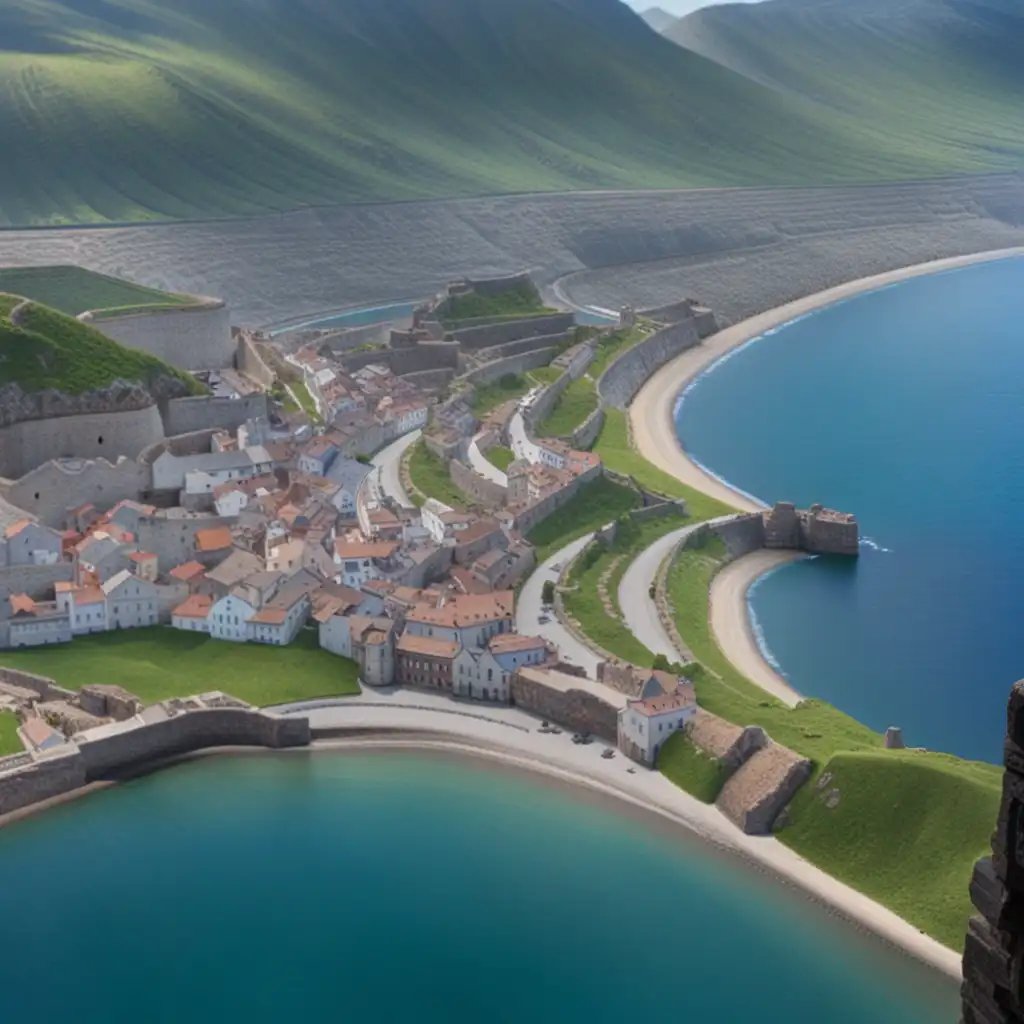
A bend in a geographical feature, like a river, coastline, or hill
The town is situated in a large bight along the coastline.
bight
baɪt
Chargement…
baɪt
A bend in a geographical feature, like a river, coastline, or hill
The town is situated in a large bight along the coastline.

baɪt
A loop in a rope, chain, or line
He tied a bight in the rope to secure the boat.
baɪt
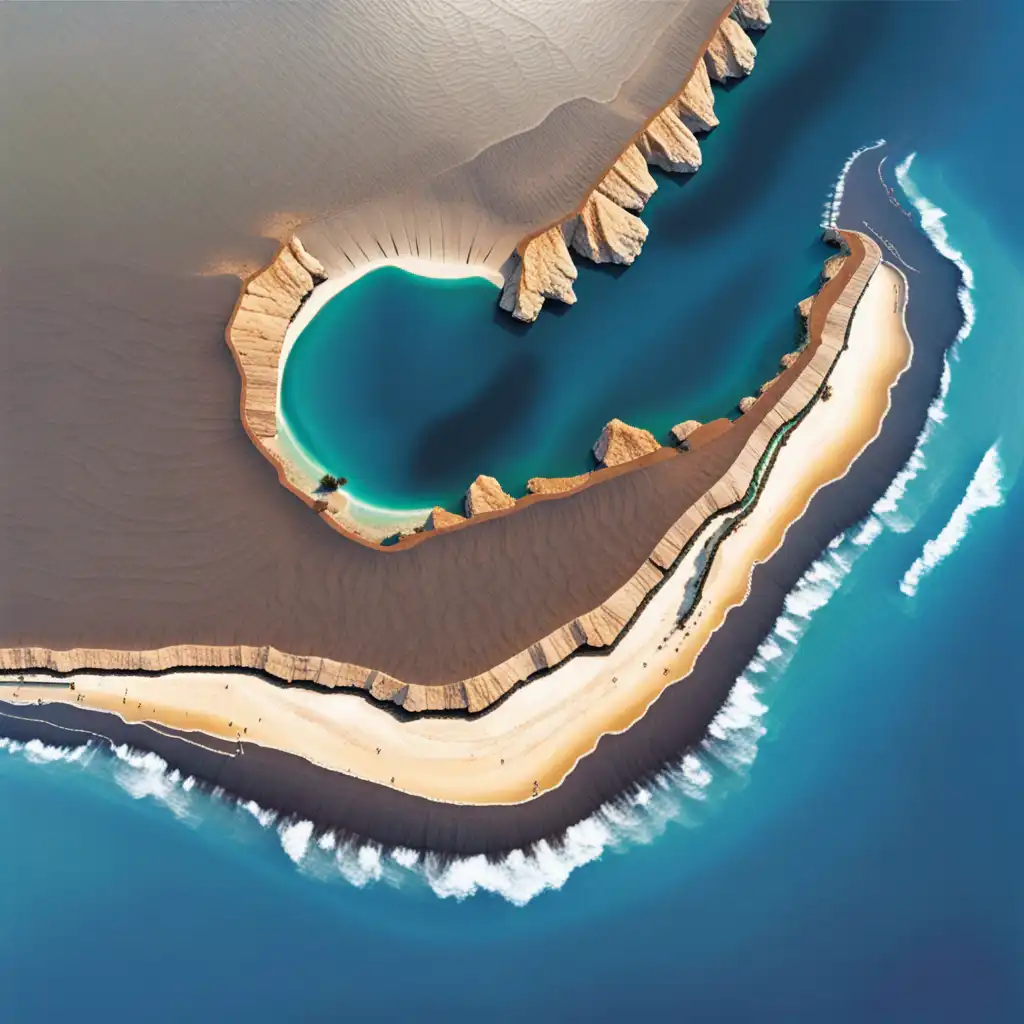
A region or area divided by lines of longitude and latitude
The Great Australian Bight is a massive open bay area in Australia.
Impossible de charger l’audio. Réessayez plus tard.
The word 'bight' is used to describe a bend or curve in a coastline or a body of water. For example, when a river or a sea makes a U-shaped curve, that curve is called a bight. The word can also refer to a loop in a rope or cable. The context in which the word is used is related to geography and marine navigation or sailing.
Arm can refer to a body part or to a narrow body of water that extends from a larger body of water. For example, the human arm extends from the shoulder to the hand, and the Chesapeake Bay has many different arms that branch off from the main body of water.
Arm typically refers to a narrow body of water that extends from a larger body of water, while bight refers to a curve in a coastline or a loop of rope.
Ouvrir le mot: Arm →A bay is a curved body of water that is partly surrounded by land. Bays are usually wider than they are deep and often form a natural harbor.
Bays can be found along coastlines and along rivers.
A bight is a curve or indentation in a coastline, often shaped like a crescent. Bights are typically wider than a bay at the entrance, but narrower at the base.
A bay is a larger body of water that is partly surrounded by land and often used as a natural harbor.
Ouvrir le mot: Bay →Bights are generally larger than coves and can be found on coasts all over the world.
A cove is a small, sheltered bay or inlet, often with a narrow entrance.
It is usually surrounded by steep cliffs or hills and is often used as a natural harbor. Coves are typically smaller than bights and can be found in coastal areas or in freshwater bodies like lakes and rivers.
A bight is a large, sweeping curve in the coast or bay, while a cove is a small, sheltered inlet or bay. Bights are larger and more open, while coves are smaller and more protected.
Ouvrir le mot: Cove →It is usually sheltered from large waves and open water. An estuary is a partially enclosed body of water where a river meets the ocean or sea.
Estuaries are typically subject to tides and are influenced by both freshwater and saltwater.
In simpler terms, a bight is a curved section of the shore that is protected from rough seas and open water, while an estuary is a body of water where a river meets the ocean or sea, affected by both freshwater and saltwater.
Ouvrir le mot: Estuary →A bight is a broad curve or bay in the coastline, while a fjord is a long, narrow inlet with steep sides or cliffs, created by glacial erosion.
Bights can be found in many coastal areas where the land juts out into the ocean, forming a large, sweeping bay. They are often wider and less steep than fjords, making them better suited for boating and fishing.
Fjords are typically found in areas with high mountain ranges and glaciers. As the glaciers move and carve their way through the landscape, they create long, narrow inlets with steep walls.
Examples of fjords include Milford Sound in New Zealand and Norway's famous Sognefjord.
Ouvrir le mot: Fjord →A bight is a curved bay or inlet that is often sheltered from waves and currents, while a gulf is a large body of water that is surrounded by land on three sides.
They are often small and not as deep as a gulf.
A gulf is a larger body of water that is deep and wide. Gulfs are typically found between two landmasses and can be quite large, such as the Gulf of Mexico or the Persian Gulf.
A bight is a smaller, sheltered bay while a gulf is a larger body of water that is surrounded by land on three sides.
Ouvrir le mot: Gulf →A bight is a U-shaped bend or curve in a coastline, often with a wide opening to the ocean. An inlet is a narrow body of water that leads into a larger body of water, often surrounded by land.
Bights are generally larger and wider than inlets, and can be found on rocky coastlines, while inlets are often found in areas where rivers or streams flow into larger bodies of water, such as bays or estuaries.
A bight is a large U-shaped bend in a coastline, while an inlet is a narrow body of water leading into a larger body of water.
Ouvrir le mot: Inlet →Bight and sound are both terms used to describe bodies of water, but they are different in their applications.
A sound is a large body of water generally deeper than a bight, usually connected to the ocean or sea by a narrow channel or inlet.
In geography, a sound is a large sea or ocean inlet, longer than a bay, wider than a fjord, or it may identify a narrow sea or ocean channel between two bodies of land.
The Puget Sound in Washington State is an example of a sound.
A bight is a smaller indentation in a shoreline, while a sound is a larger body of water that is often connected to the ocean or sea.
Ouvrir le mot: Sound →Reel Talk Ep. 7 - The...
Voir sur YouTube ↗Somewhere along the line I made the switch and was able to look at the bight side rather than the dark side all the time. Now I look at everything I have and think how lucky I am.