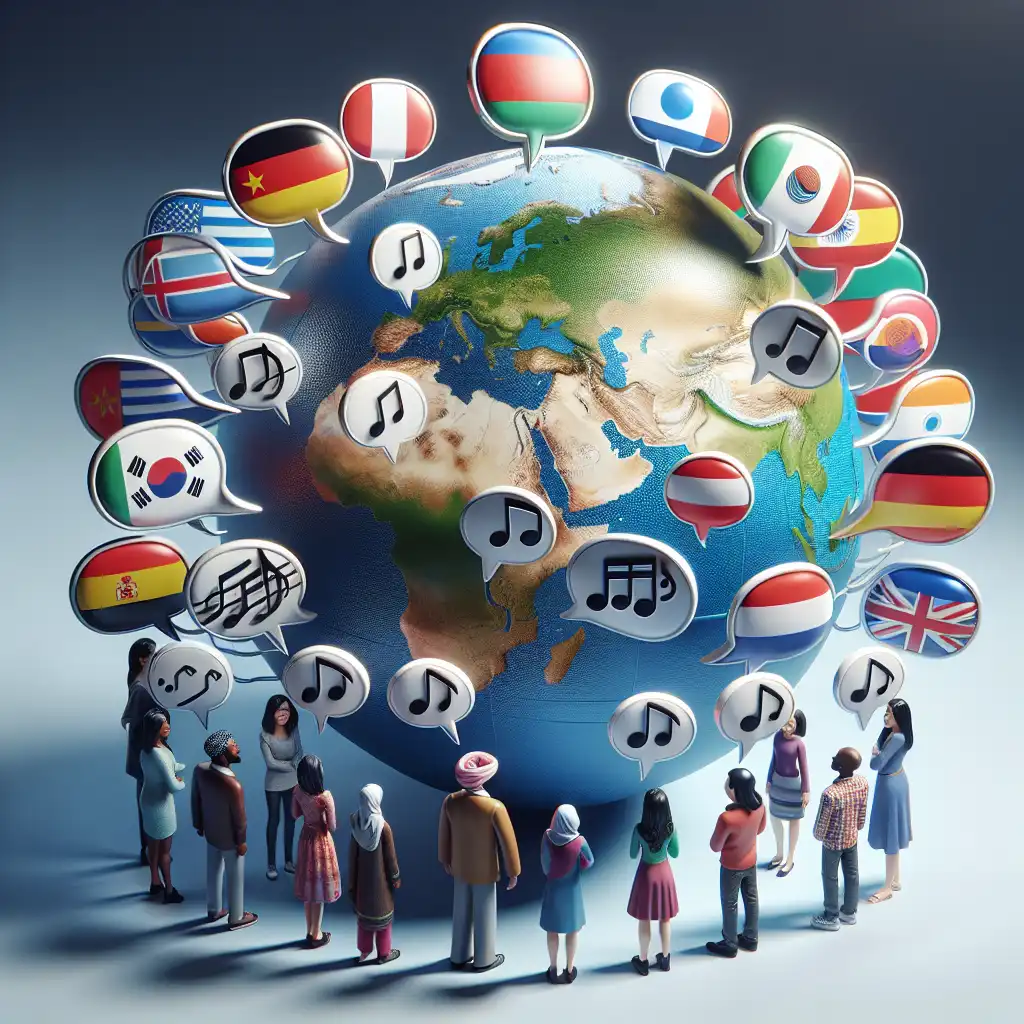
accent
noun accent
ˈæksent
The way people in a particular area, country, or social group pronounce words.
He spoke with an American accent.
accent
ˈæksent
Loading…
ˈæksent
The way people in a particular area, country, or social group pronounce words.
He spoke with an American accent.

ˈæksent
To emphasize a particular feature.
She accented the first syllable of the word.

ˈæksent
A distinctive mode of pronunciation of a language, especially one associated with a particular nation, locality, or social class.
A French accent.
ˈæksent
A mark on a letter, typically a vowel, to indicate pitch, stress, or vowel quality.
The accent on the letter 'e' in 'résumé'.

ˈæksent
To emphasize something or make it more noticeable.
Her dress was accented with red accessories.
Audio could not be loaded. Please try again later.
As an English learner, the word 'accent' refers to the way you pronounce words when speaking English. It can also refer to the different ways that people from different regions or countries may speak English. For example, someone from England may have a British accent, while someone from the United States may have an American accent. It's important to understand that accents are a natural part of language and they may vary depending on the speaker's background and location. When communicating with others in English, it's important to be aware of your own accent and the accents of those you are speaking with, and make sure you can understand each other clearly.
Articulate refers to the ability to clearly and effectively communicate ideas and thoughts through speaking or writing.
Accent is applicable in discussing the pronunciation and sound of words, while articulate is applicable in discussing the effectiveness and clarity of communication.
Open word: Articulate →Emphasis refers to the stress placed on a certain word or phrase in a sentence. This is usually done to emphasize its importance or to convey a certain tone or emotion.
For example, if you were telling a story and wanted to emphasize a certain character's bravery, you might put emphasis on the word "brave" when you say it.
Accent refers to how words are pronounced based on where someone is from, while emphasis refers to how certain words or phrases are stressed in a sentence for effect.
Open word: Emphasis →Enunciate refers to the clarity and precision with which a person speaks. It's more about making sure each word is pronounced distinctly and clearly, regardless of any accent or dialect.
Accents can add richness and personality to speech, but clear enunciation ensures others can understand what is being said.
Open word: Enunciate →Inflection refers to the variation of tone or pitch in a person's voice that can change the meaning of a sentence or phrase.
However, both the British and American person may still use the same inflection to emphasize a particular word in a sentence.
Accents are more concerned with how words are pronounced, whereas inflection is concerned with how words are said to help convey meaning.
Both accents and inflection are applicable in language and play important roles in communication.
Open word: Inflection →Intonation refers to the way a person's voice rises and falls in pitch while speaking.
It can communicate meaning and emotion in a sentence. For example, a rising intonation at the end of a sentence can indicate a question.
Both accent and intonation are important in effective communication, but they are distinct concepts. Accent is applicable to individual words, while intonation applies to entire sentences.
Open word: Intonation →Modulate means to change or adjust the tone, volume, or pitch of your voice. For example, if you are singing a song, you may need to modulate your voice to hit higher or lower notes.
Accent is more focused on pronunciation and how you speak individual words, while modulate is focused on the overall sound and tone of your voice.
Open word: Modulate →Pronunciation refers to how a person says individual words and sounds within a language.
Both accent and pronunciation are important in effective communication, but they are different.
Accent can affect how understandable someone is to others who are not familiar with their way of speaking, while pronunciation can affect how easily someone is understood even within their own language community.
Open word: Pronunciation →Stress refers to the emphasis placed on a specific syllable or word in a sentence. For example, in the word "banana," the stress is on the second syllable, "na.".
Both terms are applicable in language and communication, but accent refers to how someone speaks overall, while stress is more focused on specific words or syllables within a sentence.
Open word: Stress →Because all types of bilingual people can become fully proficient in a language regardless of accent or pronunciation, the difference may not be apparent to a casual observer. But recent advances in brain imaging technology have given neurolinguists a glimpse
Watch on YouTube ↗I've been online doing all kinds of research and that seems to be the constant criticism, that Aibileen's accent was just too thick. And for me, I don't want anything to distract from the character.
they have accents they're not idiomatic. Suddenly these characters that you've fallen in love with become husks of themselves they're shadows of themselves. To go into a culture and to only ever process people through that kind of skrim curtain is to never truly get the culture.
Watch on YouTube ↗I love playing characters with different accents. It's a lot of fun.
about it so completely subconsciously I start to speak back to them in their accent which leads to a great amount of misunderstanding because of course they think I'm mocking them and they become quite offended and that's happened to me quite a few times in my life where I've
Watch on YouTube ↗Music controls moods and accents life's moments. It's necessary for every situation.
understand accents they understand nor in noisy environments so speech is another important thing a six-year-old child has manual dexterity good enough to do any task we ask a factory worker can do in a low-cost production region but our robots are nowhere near as good
Watch on YouTube ↗It's rare that there's a role that requires an Australian accent.
deal with challenging terminology, and handle a multitude of foreign accents. They may resort to acronyms to shorten long names, choose generic terms over specific, or refer to slides and other visual aides.
Watch on YouTube ↗My voice was awkward. I had a deep Texan accent.
these are the philanthropists and artists and scientists who sort of shape our world. And what could I possibly have to say that would be distinguished enough to justify my participation in something like that? And so I thought perhaps a really civilized-sounding British accent
Watch on YouTube ↗I've heard other actors saying they don't want to play a character with an accent at all. To me, that's kind of an insult to somebody like me who did have an accent.
and may have tortured you about your credit card bills in a very clear English accent. So then people said well how far will it go? Where does it stop? I decided I would destroy my own argument
Watch on YouTube ↗In my normal life, I do not speak with an accent. It's harder for people to realize my hearing loss in everyday life.
Runes are short straight and diagonal lines that make up an alphabet called the “futhark.” All classes of people spoke and wrote this language in many different dialects. There was no standard spelling they wrote the individual runic letters by pronouncing the sounds of their regional accents. Some of these inscriptions also bore the influence of other cultures
Watch on YouTube ↗I know there are some actors who won't switch their accents off when they're on set and like to be called by their character's names. That works for them, and that's great.
the fear of loss will rekindle desire and make way for an entirely new kind of truth now you've listened to me and i know what you're thinking she has a french accent she must be pro-affair
Watch on YouTube ↗I have always like doing accents; I find it much easier to get into character for me.
And that story has helped put my own experience into context. So when I first read the comments on the video, my initial reaction was to take it all very personally. But the people commenting did not know how self-conscious I am about my voice. They were mostly reacting to my accent,
Watch on YouTube ↗I actually love working with accents. I don't know, something about it unlocks something in me. It makes me concentrate on getting into character a little more, helps me find a focus.