chemical
noun chemical
ˈkemɪkl
A substance made through a process in chemistry.
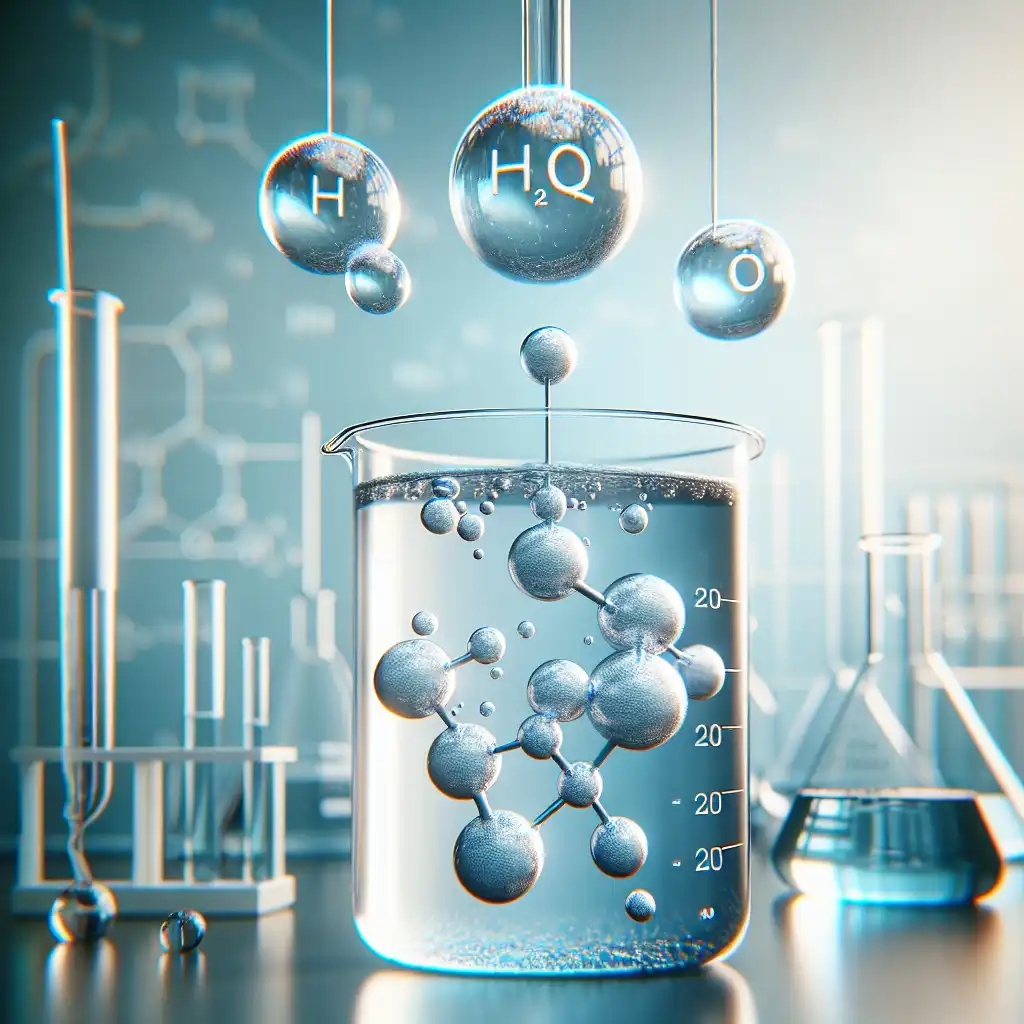
Water is a chemical made from hydrogen and oxygen.
chemical
ˈkemɪkl
Đang tải…
ˈkemɪkl
A substance made through a process in chemistry.
Water is a chemical made from hydrogen and oxygen.
ˈkemɪkl
Related to chemicals or the study of chemicals.
She works in a chemical lab.

ˈkemɪkl
A dangerous or poisonous substance.
There has been a chemical leak at the factory.
Không tải được âm thanh. Vui lòng thử lại sau.
The word “chemical” is used to describe something relating to or involving chemicals. Chemicals are substances that exist in nature or are made by people and can have many different effects on our lives. They are used in things like medicine, cleaning products, and fertilizers. When we use the word “chemical,” we are usually talking about things that are made up of a combination of different elements, such as hydrogen, oxygen, carbon, and nitrogen. Chemicals can be harmless or dangerous, depending on how they are used and what they are used for. For example, if you are talking about a substance in a science experiment, you might describe it as a “chemical solution” or “chemical reaction.” If you are talking about a cleaning product, you might talk about how it contains “harsh chemicals” that can be harmful if not used properly. So, overall, the word “chemical” is used in a variety of contexts to describe things related to chemicals and their effects on our lives. It is important to understand the context in which it is being used in order to fully understand its meaning.
A compound is a type of chemical that is made up of two or more elements that are chemically combined in a fixed ratio.
So, every compound is a chemical, but not every chemical is a compound. For example, oxygen and nitrogen are chemicals, but they are not compounds because they are made up of only one type of element.
However, water (H2O) is a compound because it is made up of two different elements (hydrogen and oxygen) that are chemically combined in a fixed ratio.
In summary, chemicals can be single elements or combinations of elements, while compounds are specific types of chemicals that are made up of two or more elements that are chemically combined.
Mở từ: Compound →Element refers specifically to the basic building blocks of matter - substances that cannot be broken down into simpler substances by chemical means.
Elements are defined by their atomic number (the number of protons in their nucleus) and have their own unique physical and chemical properties.
So, while all elements are chemicals, not all chemicals are elements. For example, water (H2O) is a chemical substance made up of two elements - hydrogen and oxygen.
However, something like sugar (C12H22O11) is also a chemical, but it is a compound made up of multiple elements.
The term chemical can describe any substance with a distinct chemical makeup, while element refers specifically to the basic building blocks of matter.
Mở từ: Element →It can be either organic (derived from living organisms) or inorganic (not derived from living organisms).
Inorganic specifically refers to any substance that is not composed of carbon and hydrogen, which are the building blocks of organic compounds found in living things.
This means that inorganic substances do not contain carbon-to-hydrogen bonds. Examples of inorganic substances are metals, salts, and minerals.
In summary, all substances are chemical, but not all chemicals are inorganic. Chemicals are applicable in industries such as medicine, food, and agriculture, while inorganic substances are commonly used in construction, electronics, and other related fields.
Mở từ: Inorganic →Molecular refers to the smallest unit of a substance that has all the properties of that substance. Molecules are made up of atoms that are chemically bonded together in a specific way.
Mở từ: Molecular →Organic refers specifically to compounds that contain carbon, hydrogen, and usually other elements like oxygen, nitrogen, or sulfur.
Chemicals are applicable in a wide range of fields, including medicine, agriculture, industry, and manufacturing. Organic compounds are found in living things and serve as the building blocks of many biological processes.
In summary, while all organic compounds are chemicals, not all chemicals are organic. Chemical refers to a broad category of substances with specific chemical structures, while organic specifically refers to molecules containing carbon and other elements essential to biology.
Mở từ: Organic →Reagent refers specifically to a chemical substance that is used in a chemical reaction to detect, measure, produce, or modify other chemical substances.
Reagents are often used in scientific experiments or industrial processes where precise chemical reactions are needed.
The main difference between chemical and reagent is that chemical is a general term used to describe a substance, while reagent is a specific type of chemical used in chemical reactions.
Mở từ: Reagent →Chemical and substance are related terms, but they have different meanings.
A chemical is a specific type of substance. Chemicals are made up of atoms and molecules that have unique properties and react differently under different conditions.
A substance is a more general term that can refer to anything that has mass and takes up space.
A substance can be a chemical, but it can also be a mixture of different chemicals, like a solution or a compound.
Examples of substances include water, air, and salt.
In summary, chemicals are a type of substance that have unique properties and can react under different conditions. Substances are a general term that refer to anything that has mass and takes up space.
Mở từ: Substance →Synthetic refers specifically to substances that are created through chemical reactions in a laboratory or factory.
In general, both terms may be used to describe substances that have been artificially created or modified, but chemical has a broader application while synthetic is more specific to man-made materials.
Mở từ: Synthetic →including proteins, carbohydrates, and cholesterol. Cholesterol keeps the membrane at the right fluidity. It also helps regulate communication between cells. Sometimes cells talk to each other by releasing and capturing chemicals and proteins.
Xem trên YouTube ↗I'm afraid of happy people. They're chemically unbalanced.
I need you to stick out your arm for science, roll up your sleeve a bit, So what I'm going to do I'm putting electrodes on your arm, and you're probably wondering, I just said I'm going to record from your brain what am I doing with your arm? Well you have about 80 billion neurons inside your brain right now. They're sending electrical messages back and forth and chemical messages.
Xem trên YouTube ↗We the chefs have a responsibility to learn about the chemical makeup of food!
significance the single chemical aldehyde found in blood makes this one time hunter drool there is a way to bring their smelly world to life shiron photography visualizes the ear currents that carry
Xem trên YouTube ↗Michael John's music is soul-stirring. It gets inside the deepest part of you; it's almost a chemical reaction.
and he's very hot so full package i had a technology where i could make synthetic chemicals but with the sun this is a world-changing idea this is a competition where people can come from difficult backgrounds and still make it my mom told me you
Xem trên YouTube ↗As parents and as consumers, we have the right and the power to pressure the entertainment industry to respond to our needs. Americans, after all, should insist that every corporate giant - whether it produces chemicals or records - accept responsibility for what it produces.
we have a fancy name for this we call it quorum sensing they vote with these chemical votes the vote gets counted and then everybody responds to the vote and what's important for today's talk is that we know that there are hundreds of behaviors that bacteria carry out in these collective fashions but the one
Xem trên YouTube ↗Basically, farm chemicals are labor-saving devices, and farmers who don't use them - weed killers especially - have to work harder or hire more help.
But there are very effective treatments. Medications and therapy complement each other to boost brain chemicals. In extreme cases electroconvulsive therapy, which is like a controlled seizure in the patient's brain, is also very helpful. Other promising treatments, like transcranial magnetic stimulation,
Xem trên YouTube ↗Chance plays a powerful role in every life - our brains and personalities are just chemical soup, after all; a few drops here or there matter enormously - but consequences often become more serious as income levels go down.
telling our brain we are tired, and signals from the environment telling us it's dark outside. The rise in sleep-inducing chemicals, like adenosine and melatonin, send us into a light doze that grows deeper, making our breathing and heart rate slow down
Xem trên YouTube ↗I'm very anti-antidepressants. It's not the chemicals of my brain that's a problem; it's reality. I don't think tricking my brain into reinterpreting reality is going to help.
to deal with the extra sugar you're eating. The major currency of our reward system is dopamine, an important chemical or neurotransmitter. There are many dopamine receptors in the forebrain, but they're not evenly distributed. Certain areas contain dense clusters of receptors,
Xem trên YouTube ↗Modern life would not be possible if it were not for chemicals, nor would modern natural gas production.
as visceral or deep belly fat. This type of fat doesn't just make it harder to button your pants. It is an organ that actively releases hormones and immune system chemicals called cytokines that can increase your risk of developing chronic diseases, such as heart disease and insulin resistance.
Xem trên YouTube ↗I always feel my work is a chemical reaction between me and the world, wherever I happen to be.
possibly even warping your sense of time, and enhancing your memory. This might explain why people never forget their first kiss. The idea of so much of our attraction being influenced by chemicals and evolutionary biology may seem cold and scientific rather than romantic,
Xem trên YouTube ↗My father, Kaneki, was a gifted research director of a chemical company, and his profession strongly influenced the path of my life.