
knighthood
noun knighthood
ˈnaɪthʊd
The status or qualities of a knight.
He was honored with a knighthood for his service to the country.
knighthood
ˈnaɪthʊd
불러오는 중…
ˈnaɪthʊd
The status or qualities of a knight.
He was honored with a knighthood for his service to the country.
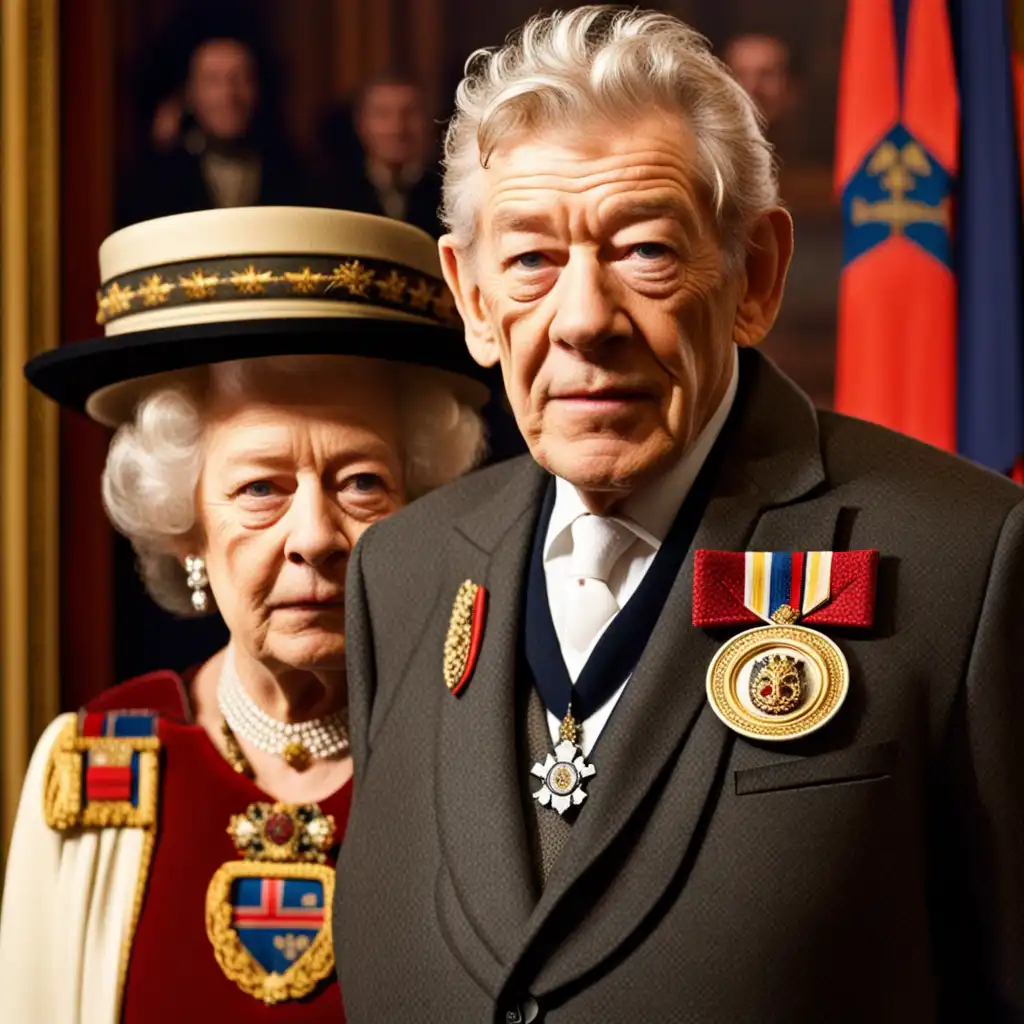
ˈnaɪthʊd
A social rank held by men who have been knighted, especially in the UK.
Sir Ian McKellen received a knighthood from the Queen for his services to drama.

ˈnaɪthʊd
A group or order of knights.
He belonged to an ancient order of knighthood.
오디오를 불러오지 못했어요. 잠시 후 다시 시도해 주세요.
Knighthood is a title given to someone who has been appointed by the Queen or King of England for their outstanding contributions to society or their country. It is an honorary title and is often bestowed upon someone who has shown great bravery or has made a significant impact in their field of work. The title 'sir' is used before their name, for example Sir David Attenborough. The term knighthood is usually used in the context of British history or culture, and is not commonly used in daily conversation.
Aristocracy refers to a social class of people who hold a hereditary title and are usually wealthy landowners. They are considered to be above the common people and have privileges and power because of their status.
Knights were typically members of the aristocracy, but not all aristocrats were knights. This term is applicable in societies that have a tradition of chivalry and honor, such as medieval Europe.
Aristocracy refers to a social class based on hereditary status and wealth, while knighthood is a title given for individual achievements and prowess in battle.
단어 열기: Aristocracy →Chivalry and knighthood are both terms used to describe a code of conduct that originated in medieval Europe, but they have different meanings.
Chivalry was a moral code of behavior for knights, emphasizing virtues such as bravery, honor, and respect for women. It was also associated with the idea of courtly love and romantic ideals.
Chivalry is applicable in any situation where a person wants to demonstrate good behavior and be respectful to others, regardless of whether they are a knight or not.
Knighthood is only applicable in societies that have a system of nobility or monarchy, and it is not a universal code of behavior like chivalry.
Chivalry is a set of moral principles emphasizing virtuous behavior, while knighthood is a social status granted to individuals by the ruling class.
단어 열기: Chivalry →Gallantry refers to brave and courageous behavior, typically in the face of danger or difficulty. This can be applied in any situation where a person shows bravery, such as in battle, during a rescue, or in standing up for what is right.
Gallantry describes a specific behavior or action, while knighthood refers to a title or honor that can be bestowed upon someone for exhibiting such behavior.
단어 열기: Gallantry →Gentry refers to a social class of people who are wealthy and well-educated but don't necessarily have a noble title. In contrast, knighthood is an honor bestowed upon someone by a monarch or other high-ranking official as recognition for their bravery and service to their country.
Gentry is applicable to a broader group of people who are considered upper-class due to their wealth, education, and social status.
Gentry refers to a social class while knighthood is an honor or title bestowed upon an individual.
단어 열기: Gentry →Honour means having respect and admiration from others for one's personal qualities or achievements. It is applicable in any situation where someone is recognized and respected for something they have done or accomplished.
For example, winning an award or being recognized for community service could be considered an honour.
It is applicable in a formal setting, like being given the title of Sir or Dame by the Queen of England. It is an honorific title that is typically reserved for those who have achieved great things in their line of work or for contributions to society.
단어 열기: Honour →Nobility refers to a social class that is typically hereditary, and is made up of people who hold titles such as duke, count, or baron.
In essence, knighthood is an individual honor given for service while nobility is a social class based on inherited titles and land ownership.
단어 열기: Nobility →A peerage refers to the system of ranks and titles held by members of the noble class, such as dukes, earls, and barons.
Peerage is often hereditary, passed down from generation to generation within a family.
Knighthood is applicable in recognizing individual achievement, while peerage is applicable in recognizing a family's historical status and rank within the noble class.
Additionally, knighthood can be awarded to any individual, regardless of social status or background, while peerage is typically only given to those of noble birth or significant wealth.
단어 열기: Peerage →Eddie Obeng: Smart...
YouTube에서 보기 ↗The knighthood was a tremendous honour, I don't dismiss it. But I feel embarrassed by the flowery, theatrical stuff that goes with being an actor.
I am hugely honoured and proud to be receiving a knighthood.
The knighthood I received was a fantastic honour but it's not something I've ever used and I don't think I ever will.
I'm glad a genre writer has got a knighthood, but stunned that it was me.
The culmination of three trophies was the pinnacle of my career and it has been rewarded with a knighthood.
I don't poo-pooh anyone's knighthood or other honors.
I found the offer of a knighthood something that I couldn't possibly accept. I found it to be somehow squalid, a knighthood. There's a relationship to government about knights.
The knighthood for my humanitarian work meant more than if it had been for my acting.
A knighthood would be a bit too much. An OBE or an MBE or whatever they are called, one of those would be more elegant.
I made a comment saying that it was 'mad' that I'm getting a knighthood for riding a bike but I meant mad as in unbelievable.