silo
noun silo
ˈsaɪləʊ
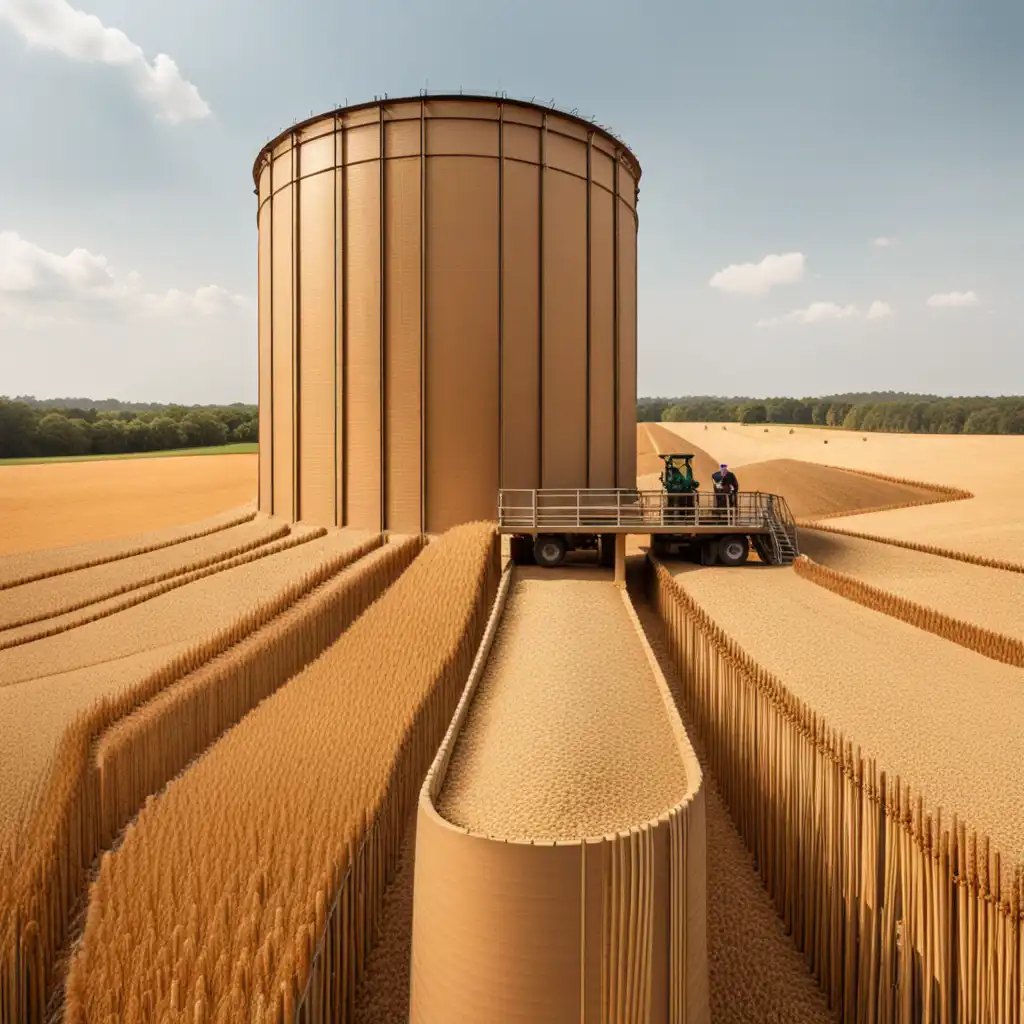
A tall round structure made for storing grain or fermenting animal feed.
The farmer stored his grain harvest in the silo.
silo
ˈsaɪləʊ
加载中…
ˈsaɪləʊ
A tall round structure made for storing grain or fermenting animal feed.
The farmer stored his grain harvest in the silo.

ˈsaɪləʊ
A system, department, etc. that operates in isolation from others.
There is a lack of communication between different silos within the company.

ˈsaɪləʊ
An underground facility made to hold and launch missiles.
The missile silo is hidden in a remote location for safety.
音频无法加载,请稍后再试。
The word 'silo' can be used in different contexts, but generally, it refers to a tall container used for storing grain, animal feed, or other dry substances on farms or in industrial settings. It is usually made of metal or concrete and has a tube-like shape with a top that can be opened or closed. Additionally, 'silo' can also be used metaphorically to describe how information or resources are organized within a company or organization. When different departments or teams do not communicate or collaborate with each other, it can create 'silos' of information that are isolated from the rest of the organization. This can lead to inefficiencies and problems in decision-making. Overall, 'silo' refers to a physical or metaphorical container that holds something inside and can be closed off from the outside.
A barn is a large building used to house animals, especially on a farm.
It may also be used for storage of equipment or crops. Barns may have stalls or feed troughs for animals and usually have a hayloft for storing hay.
In summary, barns are used to house animals and store crops or equipment, while silos are used specifically for storing grains.
打开单词: Barn →A bin is a container or storage unit with a relatively small capacity, typically used for storing loose materials such as grains, seeds, or powders.
Bins are often used in homes, farms, or small businesses for storage purposes.
The main difference between these two words is their size and capacity. Bins are smaller containers used for personal or small-scale storage, while silos are large-scale storage units typically used in industrial settings.
打开单词: Bin →A container is a general term used for any object that is used to hold and transport goods or materials.
It can be made of various materials like plastic, metal, or glass, and can have different shapes and sizes. Containers are commonly used in shipping, storage, and packaging.
A silo is a specific type of container that is used to store grain, food, or other dry materials like cement, coal, or sawdust.
So, in summary, while container is a general term used for any type of object used to hold and transport materials, silo is a specific type of container used for bulk storage of dry materials like grain or cement.
打开单词: Container →A granary is a building designed to store harvested grains like wheat, oats, and barley.
Granaries are typically used on smaller farms or in rural villages, while silos are more commonly used on large commercial farms.
A granary is usually constructed of wood, stone or brick, and has specific compartments where the different types of grains are stored.
打开单词: Granary →A warehouse is a larger facility that is used to store a variety of goods.
It can be used to store anything from finished products to raw materials and can come in various shapes and sizes. Warehouses are commonly used in the logistics and distribution industry to store and organize products before they are transported to their final destinations.
A silo is used to store and protect specific types of materials, while a warehouse is used to store and organize a variety of goods.
打开单词: Warehouse →thinking maybe I missed something, maybe the cavalry is still coming. They didn't come, so I bought bigger pillows. My grandmother could cure anything by talking the life out of it. And she said that I could make a thief in a silo laugh
在 YouTube 上观看 ↗We get caught in our little silos and end up working against ourselves. And I think social media culture really encourages that, because you're really just shouting into a void hoping someone picks up on what you're saying.
thanks to the internet thanks to the explosion of mass media thanks to a lot of other things that are bubbling through our society around the world tribes are everywhere the internet was supposed to homogenize everyone by connecting us all instead what it's allowed is silos of interest so you got
在 YouTube 上观看 ↗It's important the sheriff and the D.A. work with the community to realize real-world solutions. If they make decisions in silos, it will fall short.
from someone who's just looking at my work or buying my work and don't stop doing that but but also be a co-creator participate in bringing my work to life and for me it's really exciting that I'm here because I believe that I could have never done this within the silos of the art world I had to learn to color
在 YouTube 上观看 ↗I think it is going to be very difficult to be a company in silos. I think the game has changed. We won't define our success by looking at the competitors but at how satisfied are our customers, how engaged are our internal stakeholders, and how good is our product pipeline.
industry for the computer manufacturer ICL everybody would have coffee together in the canteen every every day because that was where people interchanged information we were not in little silos I was a mathematician you're a scientist is an engineer it was an interesting
在 YouTube 上观看 ↗Studying doesn't have to happen in a silo. It can be a social experience. You can engage with your friends and family to find out the answer to a tough question or have someone explain it to you. You can also study anywhere you happen to be and on any device.
But now thanks to the internet thanks to the explosion of mass media, thanks to a lot of other things that are bubbling through our society around the world, tribes are everywhere. The Internet was supposed to homogenize everyone by connecting us all. Instead what it's allowed is silos of interest.
在 YouTube 上观看 ↗By exciting citizens about the new digital opportunity, breaking down silos of competing groups to form a truly open innovation ecosystem and shifting day-to-day resources to focus on big long-term investments for the future, countries can ensure that they break through and bridge the digital gap.
but think about the role we have to play in other people's successes, just like people do for me every single day. It's vitally important that we help each other, because society is increasingly placing people in silos
在 YouTube 上观看 ↗There's a strong distinction to be made between dry code smart contacts and wet code's physical law. So law is based on our minds, our wetware - it's based on analogy. The law is more flexible; software is more rigid. Various laws tend to be batched in jurisdictional silos. Software tends to be independent.
poverty worldwide has gone down. And that we should resist the temptation to retreat into our silos. And we should resist this upsurge in isolationism and jingoism. Which brings me to my final point.
在 YouTube 上观看 ↗Make sure that the people at the top are working together and there aren't divisions of labor. Don't have people working in silos; have them working across the team.
to prepare the company to compete in a mobile-first cloud-first world. This included changes to strategy, the organization and very importantly the culture. Microsoft's culture at the time was one of silos and internal competition --
在 YouTube 上观看 ↗There are no silos at 'Frontline.' Our digital team works with our filmmakers, and our filmmakers work with our digital team. They're always in touch, and they're always talking.
This is not for lack of information; it's a lack of integration. You know it's a silo people in silos. They didn't know that the same thing was happening. So one of them thought about it and said OK well if this is just crystallization
在 YouTube 上观看 ↗People tend to forget about nuclear weapons. We think they are going to remain in silos for the rest of time. As long as they exist, they are going to be used.
connected to their sources, so that people and algorithms can better judge what is credible. And educators around the world are testing different techniques for finding ways to make people critical of the content they consume. All of these efforts are wonderful but they're working in silos, and many of them are woefully underfunded.
在 YouTube 上观看 ↗The internet was supposed to homogenize everyone by connecting us all. Instead what it's allowed is silos of interest.