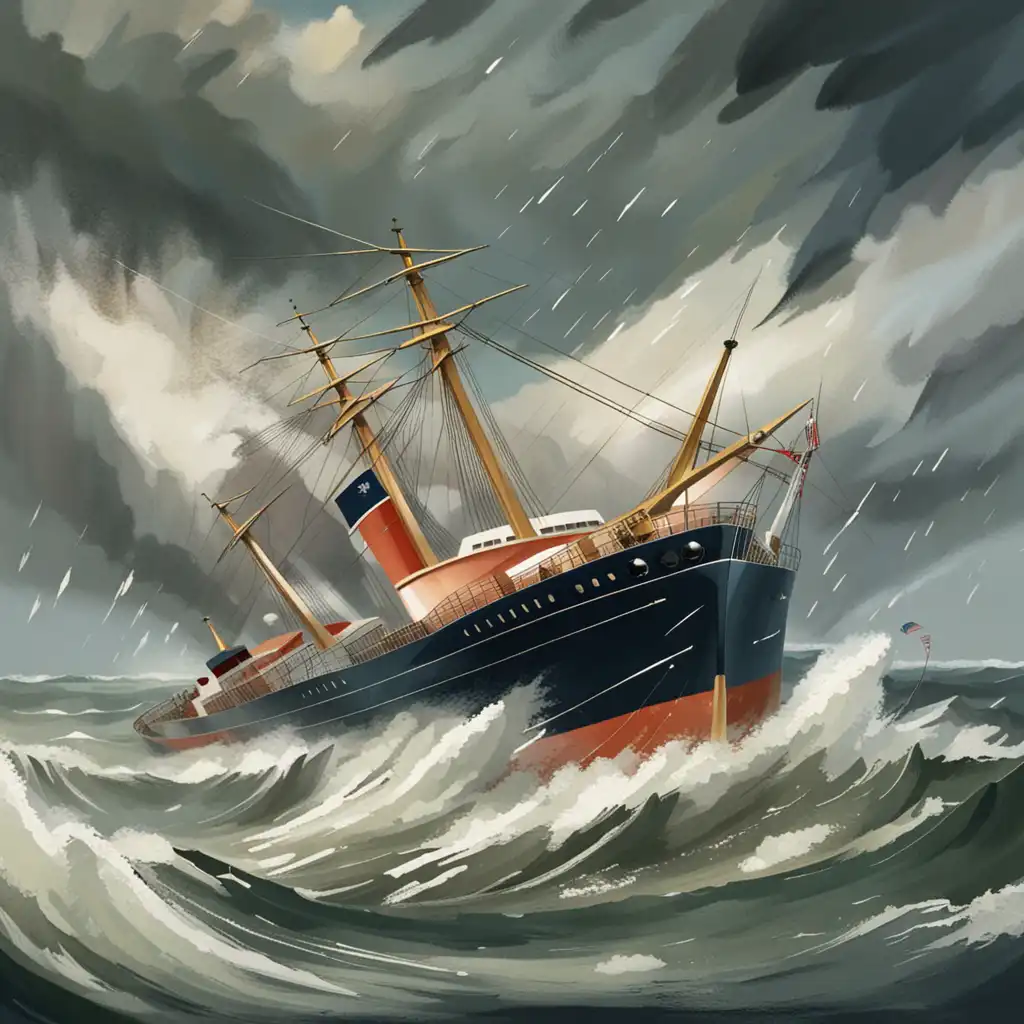
squall
noun squall
skwɔːl
A sudden, violent gust of wind, often accompanied by rain, snow, or sleet
A squall blew the deck chairs off the ship.
squall
skwɔːl
불러오는 중…
skwɔːl
A sudden, violent gust of wind, often accompanied by rain, snow, or sleet
A squall blew the deck chairs off the ship.


skwɔːl
To scream or cry loudly and harshly
The baby squalled for his milk.
오디오를 불러오지 못했어요. 잠시 후 다시 시도해 주세요.
Squall is a word used to describe a sudden and violent gust of wind that comes along with a storm. It is often used to describe a brief and intense burst of wind and rain that can happen suddenly and unexpectedly during a thunderstorm. For example, you might say "I got caught in a squall on my way home from work and got completely soaked." Squall can also be used to describe the sound of the wind, such as "the squalling wind made it hard to hear anything."
Blast and squall are both words that describe powerful and sudden bursts of wind, but they are used in different contexts.
Blast is typically used to describe a sudden and forceful gust of wind, often associated with explosions or intense pressure.
For example, a blast of wind might occur during a hurricane, or when a rocket launches into space.
Blast describes a sudden and forceful gust of wind, while squall describes a sudden and violent windstorm.
단어 열기: Blast →A cyclone is a rotating mass of air in the atmosphere, usually creating strong winds and sometimes accompanied by heavy rain or thunderstorms.
Cyclones are typically larger and more long-lasting than squalls, and they can produce significant damage to structures and property.
Squalls are typically shorter in duration and more localized than cyclones, although they can still be powerful enough to cause damage or disruption.
In general, cyclones are more commonly associated with tropical regions and hurricane-prone areas, while squalls can occur in a variety of weather patterns and locations.
Cyclones may be more dangerous and unpredictable, while squalls may be more of an inconvenience or nuisance for people caught in them.
단어 열기: Cyclone →A gale is a strong wind that persists for a long time, while a squall is a sudden and brief burst of strong wind accompanied by rain or snow.
Gales are usually associated with storms or bad weather conditions and can cause significant damage to structures and trees.
A gale can last for hours, days, or even weeks, depending on the intensity and location of the storm.
In summary, gales and squalls are both strong winds, but a gale is a persistent and long-lasting wind, while a squall is a brief, sudden gust of wind accompanied by rain or snow.
단어 열기: Gale →A gust is a sudden, strong blast of wind. It usually lasts for a few seconds and can be caused by a sudden pressure change or an obstacle in the wind's path.
Gusts are more common in windy areas and during storms.
The main difference between gusts and squalls is the duration and the presence of precipitation. Gusts are sudden and short-lived blasts of wind, while squalls are longer-lasting and often accompanied by precipitation.
단어 열기: Gust →A hurricane is a large, swirling storm with strong winds, heavy rain, and sometimes flooding. It typically develops over warm ocean waters and can cause significant damage to coastal areas.
In summary, hurricanes are much larger and more intense storms that typically occur over the ocean, while squalls are smaller bursts of wind and rain that can occur during thunderstorms and pose a danger to ships at sea.
단어 열기: Hurricane →A squall is a sudden gust of wind that occurs within a storm. It usually lasts for a short duration and can be quite intense, with wind speeds reaching up to 40 knots or more.
Squalls typically occur near the edge of a storm and can be dangerous for sailors or anyone in the water.
A storm is a broader term that refers to a disturbance in the atmosphere that is often characterized by strong winds, heavy rain or snow, thunder, and lightning.
Storms can be severe and can cause damage to property and infrastructure. They can occur in a variety of settings, including over land, sea, and air.
A squall is a sudden, intense gust of wind within a storm, while a storm is a broader disturbance in the atmosphere that can include a variety of weather elements such as strong winds, heavy rain or snow, thunder, and lightning.
단어 열기: Storm →A tempest is a violent and intense storm with strong winds, heavy rain or snow, thunder, and lightning. It is larger and longer-lasting than a squall and can cause significant damage to property and infrastructure.
A squall is a sudden burst of wind and precipitation, while a tempest is a severe storm that can last for hours.
A squall is more likely to occur during a thunderstorm, while a tempest can occur during any major storm.
단어 열기: Tempest →A squall is a sudden, strong gust of wind often accompanied by rain or snow, while a whirlwind is a rotating column of air that is often seen in dry and arid regions, picking up dust and debris.
A squall is applicable in a weather-related context, while a whirlwind is seen in dry and dusty settings such as deserts.
단어 열기: Whirlwind →A windstorm refers to a much more significant and prolonged weather event with sustained high winds.
단어 열기: Windstorm →Tricky Landing %\PIPE% Alaska...
YouTube에서 보기 ↗It takes a real storm in the average person's life to make him realize how much worrying he has done over the squalls.
The journey across the...
YouTube에서 보기 ↗I was completely fascinated by the studio process and layering sounds and creating soundscapes out of layering massive squalls of sound.
Amit Sood: Building a...
YouTube에서 보기 ↗From squalls, jibes, and other sudden calamities, I learned you don't always get to decide when you've got to make a decision.