disenfranchise
verb disenfranchise
ˌdɪsɪnˈfræntʃaɪz
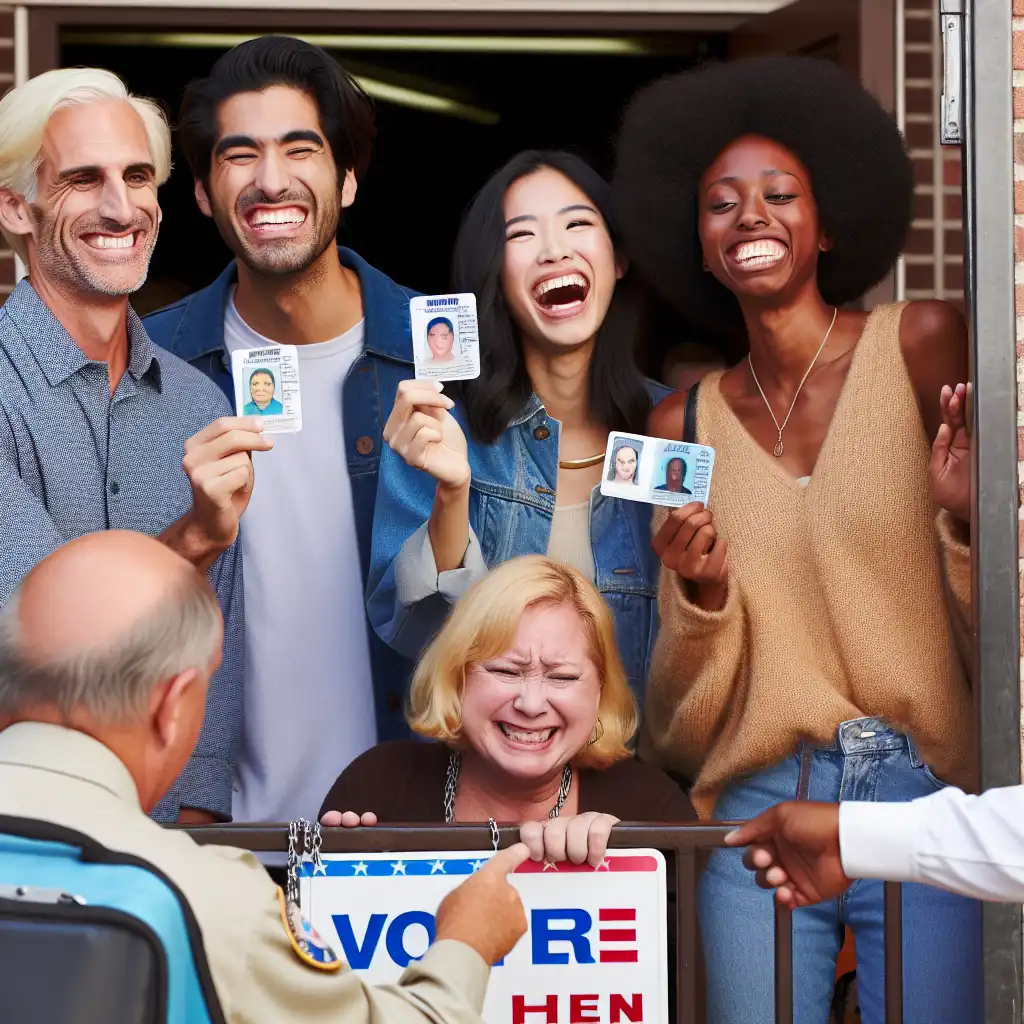
To take away someone's right to vote or other privileges
The new laws tend to disenfranchise the poor and minorities.
disenfranchise
ˌdɪsɪnˈfræntʃaɪz
Cargando…
ˌdɪsɪnˈfræntʃaɪz
To take away someone's right to vote or other privileges
The new laws tend to disenfranchise the poor and minorities.

ˌdɪsɪnˈfræntʃaɪz
To exclude or reject someone from something
The team felt disenfranchised by the decision to bring a new player aboard without consultation.
No se pudo cargar el audio. Inténtalo de nuevo más tarde.
The word 'disenfranchise' means to take away someone's right to vote or to make them feel less important and powerless. It is usually used when a person or a group of people are not given the opportunity to participate in decision-making, even though they are entitled to it. This can happen because of discrimination, inequality or unfair laws. For example, when a particular community or race is not allowed to vote in an election, they are being disenfranchised. In simpler terms, it means taking away someone's basic rights and making them feel excluded from society.
Defraud means to cheat or deceive someone in order to gain something, usually money. It is applicable in cases of financial fraud, such as cheating people out of their investments or money.
Defraud is about cheating someone out of their money or possessions, while disenfranchise is about depriving someone of their fundamental rights and participation in society.
Abrir palabra: Defraud →Deprive means to take away something from someone, such as food or possessions.
It can also mean to prevent someone from having something they need or want. For example, if a person cannot afford food, they may be deprived of it.
To deprive someone is to take something away from them, while to disenfranchise someone is to take away their rights or status.
Abrir palabra: Deprive →Disinherit means to prevent someone from receiving an inheritance or passing down property or money to them.
This word is typically used in legal contexts, where someone might disinherit a family member or relative for various reasons, such as disagreements or simply not wanting to pass on their wealth.
Disenfranchise is about losing a right to participate or vote, while disinherit is about being excluded from receiving an inheritance or passing down property or money.
Abrir palabra: Disinherit →Dispossess means to take away someone's property or possessions, often forcibly. This is typically used when talking about people being evicted from their homes or losing their land or other assets.
Disenfranchise relates more to political rights while dispossess relates more to property rights.
Abrir palabra: Dispossess →Disqualify means to declare someone ineligible for something that they were previously eligible for. It is applicable in situations where a person is found to have violated the rules or requirements of a competition, job application, or other similar process.
Abrir palabra: Disqualify →Exclude means to keep someone or something out, to not include them or it.
It can be used in a variety of contexts, such as social groups, activities, or events. For example, a person can be excluded from a party or a club, or a certain food can be excluded from a recipe.
Disenfranchise involves taking away a person's right to participate in decision-making, while exclude simply involves leaving something or someone out.
Abrir palabra: Exclude →A short history of trans...
Ver en YouTube ↗Everybody's life matters. But that's why we have to say black lives matter, because the highest disproportionality, police brutality, disenfranchisement, education disproportionality in school discipline, curriculum, misrepresentation, all of this.
We need to talk about an...
Ver en YouTube ↗We need to recognize that, whether you're looking at Georgia or North Carolina or North Dakota or Florida, that the disenfranchisement of voters, the suppression of votes, cuts across every community, and therefore, it cuts across partisanship.
Continuing the Fight for...
Ver en YouTube ↗There are states with photo ID requirements that don't disenfranchise eligible voters.
If we treasure our own experience and regard it as real, we must also treasure other people's experience. Reality is no less precious if it presents itself to someone else. All are discoverers, and if we disenfranchise any, all suffer.
It's tremendously undemocratic in a democratic society when you deliberately disenfranchise thousands of people.
The legacy of slavery comes from the sustained political, legal and economic effort to link permanently an entire group of people to poverty - and to mystify that systematic disenfranchisement by making up something called race, which could serve as a distraction.
Medical disenfranchisement is fueled by a host of factors that include worsening shortage of primary care doctors in needy communities and a troubling scarcity of providers willing to treat the uninsured or publicly insured. Adding to the trend are fewer medical students choosing primary care over more lucrative and specialized fields.
My obsessions stay the same - historical memory and historical erasure. I am particularly interested in the Americas and how a history that is rooted in colonialism, the language and iconography of empire, disenfranchisement, the enslavement of peoples, and the way that people were sectioned off because of blood.
I think as a whole America is dealing with the issue of homophobia. We got to be really honest about whether we believe in civil rights for all people or not. As Black people we need to remember the moment that we say it's okay to disenfranchise one segment of society, we're opening the door to move backward on ourselves.
We are fighting to pass clean-slate legislation in Pennsylvania to seal nonviolent misdemeanor records automatically after 10 years. We must provide opportunities for employment, housing, education, loans, and voting. We should not disenfranchise a third of the population.