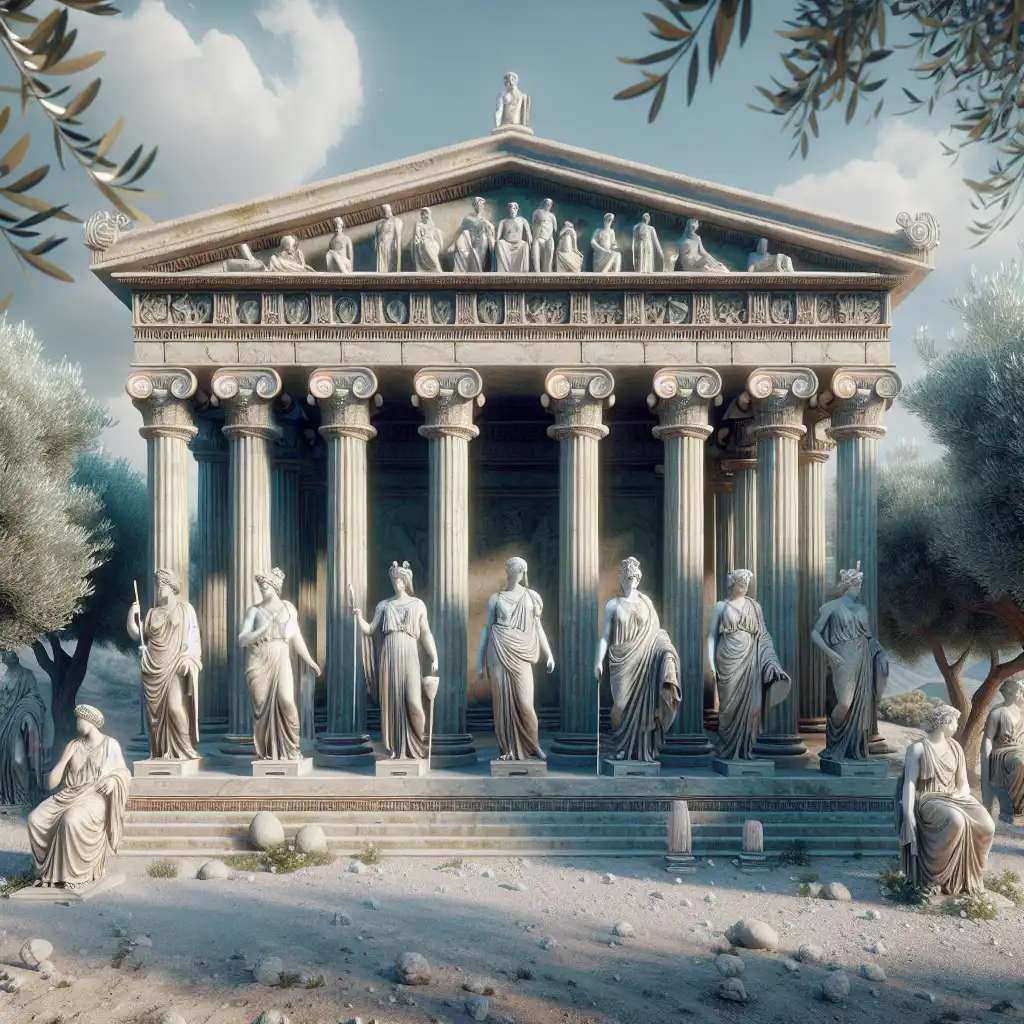
polytheistic
adjective polytheistic
ˌpɑːliθiˈɪstɪk
Relating to or that shows belief in more than one god.
Ancient Greek society was predominantly polytheistic.
polytheistic
ˌpɑːliθiˈɪstɪk
लोड हो रहा है…
ˌpɑːliθiˈɪstɪk
Relating to or that shows belief in more than one god.
Ancient Greek society was predominantly polytheistic.
ऑडियो लोड नहीं हो सका। कृपया बाद में फिर कोशिश करें।
The word 'polytheistic' is used when talking about religion. It means believing in many gods or goddesses. For example, ancient Greeks believed in many gods and goddesses such as Zeus, Apollo, and Athena, so they were known as polytheistic. This word is useful when learning about different religions and their beliefs.
Animistic refers to the belief that everything, including inanimate objects, has a spiritual essence or life force. Polytheistic refers to the belief in multiple gods or goddesses.
Animistic beliefs are found in many indigenous cultures around the world, where people believe in the spiritual significance of natural elements such as rocks, trees, and animals.
Animistic beliefs focus on the spirituality of everything, while polytheistic beliefs involve the worship of multiple gods and goddesses.
शब्द खोलें: Animistic →Idolatrous refers to the practice of worshipping idols or images as gods. It implies a focus on the physical representation of deity rather than the spiritual essence.
Idolatrous refers to the act of worshipping physical representations, while polytheistic refers to a belief in multiple gods or deities.
Idolatrous is applicable when we talk about criticism of worshipping idols or images, and polytheistic is applicable when we talk about religious beliefs that involve multiple gods or deities.
शब्द खोलें: Idolatrous →Mythological refers to stories and beliefs about gods and goddesses, heroes, and supernatural events that were passed down through generations in ancient cultures.
Mythological can refer to any stories or beliefs about gods and supernatural beings, while polytheistic refers to a specific type of belief system that involves multiple deities.
शब्द खोलें: Mythological →Both pagan and polytheistic refer to religious beliefs and practices that involve multiple gods or deities.
However, pagan is a broader term that can refer to any non-Abrahamic religion or belief system, including those that are monotheistic or animistic.
For example, Hinduism is both pagan and polytheistic. It is pagan because it is not one of the Abrahamic religions (Christianity, Islam, or Judaism) and it is polytheistic because it has multiple gods and goddesses.
On the other hand, Judaism is not pagan because it is one of the Abrahamic religions, but it is also not polytheistic because it only believes in one god.
Pagan is a broader term that can refer to any non-Abrahamic religion, while polytheistic specifically refers to religions or belief systems that have multiple gods or deities.
शब्द खोलें: Pagan →Pantheistic refers to a belief system that sees the entire universe as divine or god-like, with no distinct or separate deity.
The main difference between pantheistic and polytheistic beliefs is the focus on either the oneness or multiplicity of the divine.
शब्द खोलें: Pantheistic →A shaman is a person who serves as a spiritual guide, healer or mediator between the physical and spiritual realms. Shamans use various methods to achieve a trance-like state in order to communicate with spirits and obtain guidance, often through rituals and ceremonies.
While polytheistic beliefs are widespread across cultures, shamanism is primarily associated with indigenous cultures and their spirituality.
Polytheistic is applicable to religions that worship multiple gods, and shaman is applicable to a guide or healer who practices shamanism.
शब्द खोलें: Shaman →The five major world...
YouTube पर देखें ↗When I am at home writing, I have all the power. I am God. But TV is a polytheistic universe.
Well, right now, I'm very fascinated with 1920s Berlin. I mean, probably the more interesting thing would be to go to the beginning of civilization or precivilization - like polytheistic times. It would be interesting to see what came before modern religion and culture - what circumstances created the environment or the need for it.
It's a common part of the narrative of the history of Christianity that it was 'real' religion that involved real spirituality and real faith, and that's why it's completely superseded the more pagan polytheistic practices.