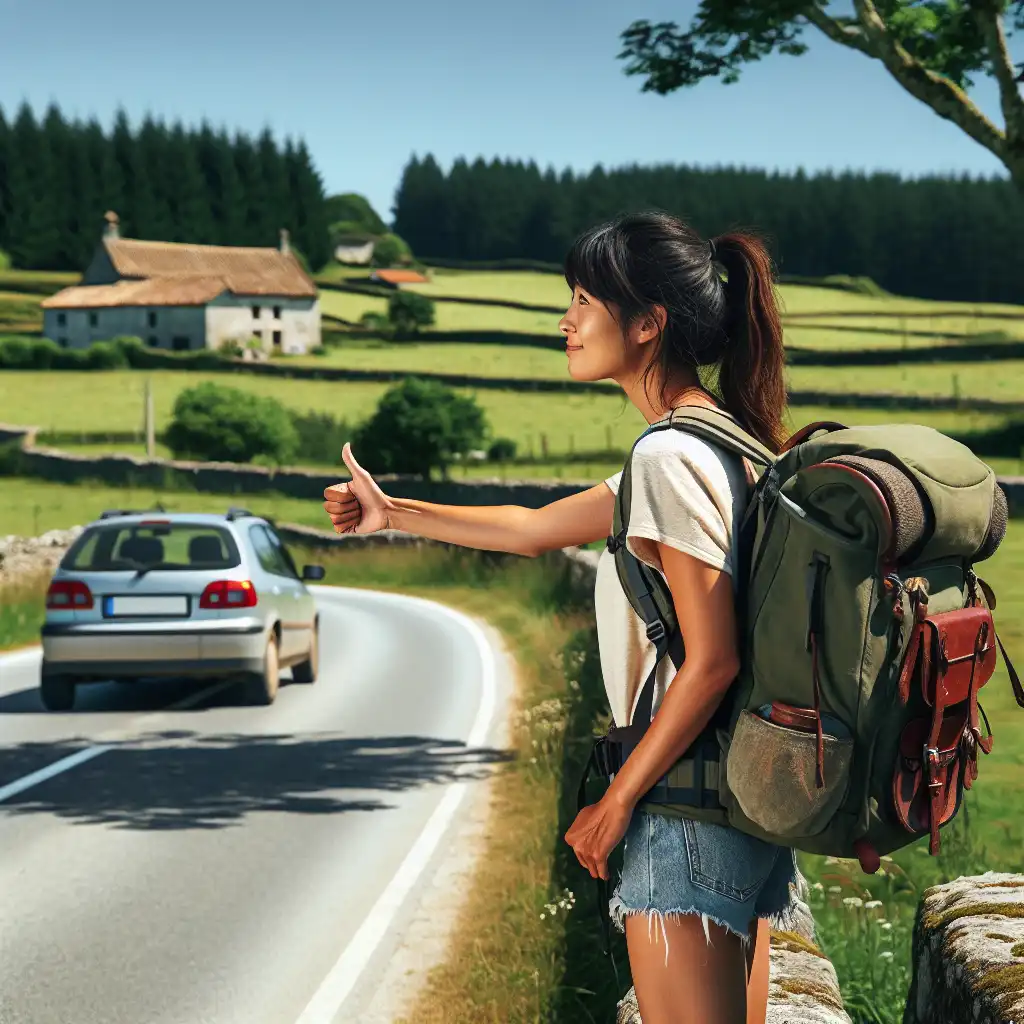
hitchhiker
noun hitchhiker
ˈhɪtʃər
A person who travels by getting free rides from passing vehicles.
He spent the summer traveling as a hitchhiker, getting rides from kind strangers.
hitchhiker
ˈhɪtʃər
불러오는 중…
ˈhɪtʃər
A person who travels by getting free rides from passing vehicles.
He spent the summer traveling as a hitchhiker, getting rides from kind strangers.

ˈhɪtʃər
A plant or animal that attaches itself to another and travels with it for dispersal.
The ocean currents help the hitchhiker species to spread far and wide.

ˈhɪtʃər
A character or element that joins or links different parts of something.
The hitchhiker character in the novel expertly ties together the multiple plotlines.
오디오를 불러오지 못했어요. 잠시 후 다시 시도해 주세요.
A hitchhiker is a person who asks for a ride from drivers who are going in the same direction they are. They usually stand on the side of the road and hold up their hand with their thumb out. This is a common way for travelers to get around, especially if they do not have their own transportation. However, it is important to be careful when picking up hitchhikers as there can be safety concerns.
A backpacker is someone who travels with a backpack and stays at hostels, campsites or other budget accommodation options.
Backpackers usually plan their trip and have a set itinerary. They often travel for a longer period of time and are interested in immersing themselves in the local culture.
Hitchhikers are often backpackers, but not always. Hitchhiking is typically done for short distances and is not necessarily a planned means of transportation.
Overall, backpackers and hitchhikers are both travelers, but they have different styles of traveling and different intentions.
Backpackers tend to have a more structured approach to their travel, while hitchhikers are more spontaneous and often rely on chance encounters for transportation.
단어 열기: Backpacker →Drift refers to the movement of something or someone slowly and aimlessly without control.
It can be applied to natural phenomena like the drift of snow, the drift of sand, the drift of ice, etc.
It can also be applied to people who move aimlessly from one place to another without any clear intention or plan. For instance, we say that someone is drifting through life if they don't have any clear goals or directions.
Drift refers to aimless movement, while hitchhiker refers to a specific kind of traveler who relies on the kindness of strangers for transportation.
단어 열기: Drift →A hitchhiker is someone who travels by getting rides from passing cars. Itinerant refers to someone who travels often with no fixed home or job.
Hitchhiker is applicable when someone is traveling short distances and needs a ride from strangers. Itinerant is applicable when someone travels frequently for work or other reasons, usually without a permanent residence.
단어 열기: Itinerant →A nomad is someone who travels from place to place, but usually has a specific purpose or goal in mind. They might move around to follow food sources, find work, or explore new places.
A hitchhiker travels mainly by accepting rides from others, while a nomad travels on their own, usually with a specific purpose or goal in mind.
단어 열기: Nomad →Hitchhiker refers to a person who travels by getting free rides from passing vehicles. This is applicable when someone needs a ride but does not have a vehicle of their own, so they stand on the side of the road and ask for a ride from passing drivers.
Travel, on the other hand, refers to the act of going from one place to another, often for leisure or business purposes.
Hitchhiker describes someone who gets free rides from passing vehicles, while travel describes the act of going from one place to another, often by a variety of transportation methods.
단어 열기: Travel →A vagabond is someone who travels from place to place without a specific destination or purpose. They may wander around aimlessly, staying in different places for a short period of time before moving on.
Both words describe people who are traveling, but a hitchhiker is more focused on getting to a specific place, while a vagabond is more focused on the journey itself.
Hitchhiker is usually used when someone is traveling by car or other vehicle, while vagabond describes someone traveling on foot or by other means.
단어 열기: Vagabond →Hitchhiker refers to a person who is seeking a ride from a passing vehicle on a road, while wander means to walk or travel without a specific destination or purpose.
On the other hand, wandering is more about exploring or discovering new places without a particular goal in mind. A person who wanders may take a walk to the nearest park, visit a new city or country just for the thrill of it, or hike in the wilderness to enjoy nature.
Wandering can be a fun and enriching experience, but it's important to be prepared with the right gear and safety precautions.
단어 열기: Wander →Wayfarer refers to someone who is traveling on foot or by other means, and is often associated with a journey or pilgrimage.
A hitchhiker is someone who is looking for a ride to a specific destination, while a wayfarer is someone who is traveling for a longer period of time and may not have a specific destination in mind.
단어 열기: Wayfarer →Brian Skerry: Ocean Soul...
YouTube에서 보기 ↗The one thing I miss is hitchhiking. Now there's no more of that. When's the last time you saw a hitchhiker? It's not that I consider it a great sport, but it was my way of seeing the country. The open road, especially in the western United States, is still very pristine, but everything else around it has changed.
How reliable is your...
YouTube에서 보기 ↗