No se pudo cargar el audio. Inténtalo de nuevo más tarde.
Cómo se usa
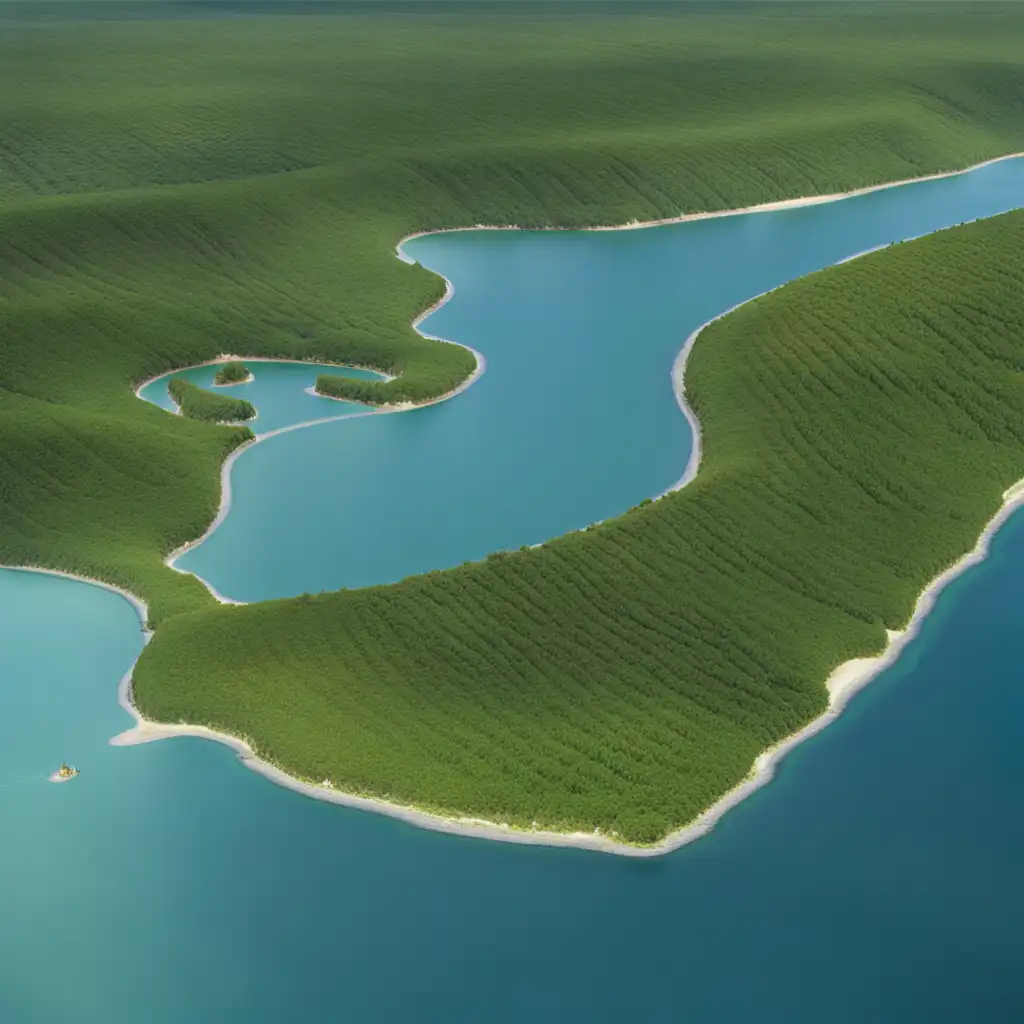
The word 'peninsular' is used to describe a piece of land that is almost completely surrounded by water, but connected to a larger piece of land. It can be used to describe a geographic location like the Iberian Peninsula in Europe or the Malay Peninsula in Southeast Asia. It can also be used to describe something that is related to or characteristic of a peninsula. For example, you could say that a certain type of plant is commonly found in peninsular regions. Overall, the word 'peninsular' is used to describe anything that is located on or associated with a long, narrow piece of land that juts out into the water.
A headland is a narrow strip of land that juts out into the sea.
A headland is a narrow strip of land that juts out into the sea and is surrounded by water on three sides, while a peninsula is a piece of land almost surrounded by water and connected to the mainland by an isthmus.
Point typically refers to a smaller landform that extends outwards into a body of water, such as a river, lake or ocean.
To differentiate the two, a peninsula is a larger area of land surrounded by water except for one end that is connected to a larger landmass, while a point is a smaller landform that extends outwards into a body of water.
A spit is a narrow strip of land that extends from the mainland into a body of water. It is formed by the deposition of sediment by longshore drift or waves.
Spits are usually long and thin, and can be found at the mouth of a river or along a coastline. Examples of spits include Dungeness Spit in Washington State, USA and Spurn Head in Yorkshire, England.
The main difference between peninsulas and spits is that peninsulas are larger pieces of land extending into the water, while spits are narrow strips of land that are formed by natural processes such as deposition of sediment.
A tongue has the shape of a narrow and elongated protrusion of land that extends outward from a larger landmass.
A tongue is usually a result of erosion and deposition.
A tongue is applicable when describing physical features such as a glacier tongue, river tongue, or tongue of land.
A peninsula is a landform that is surrounded on three sides by water, while a tongue is a narrow and elongated protrusion of land that extends outward from a larger landmass.
In this great nation of saints and poets, public administrators and ingenious architects, has our national and local imagination shrunk so much that we cannot leave the last major free flowing river of peninsular India alone, for future generations to explore, enjoy and benefit from? Let the Aghanashini flow with Aviral, Nirmal Dhara.