valley
noun valley
ˈvæli
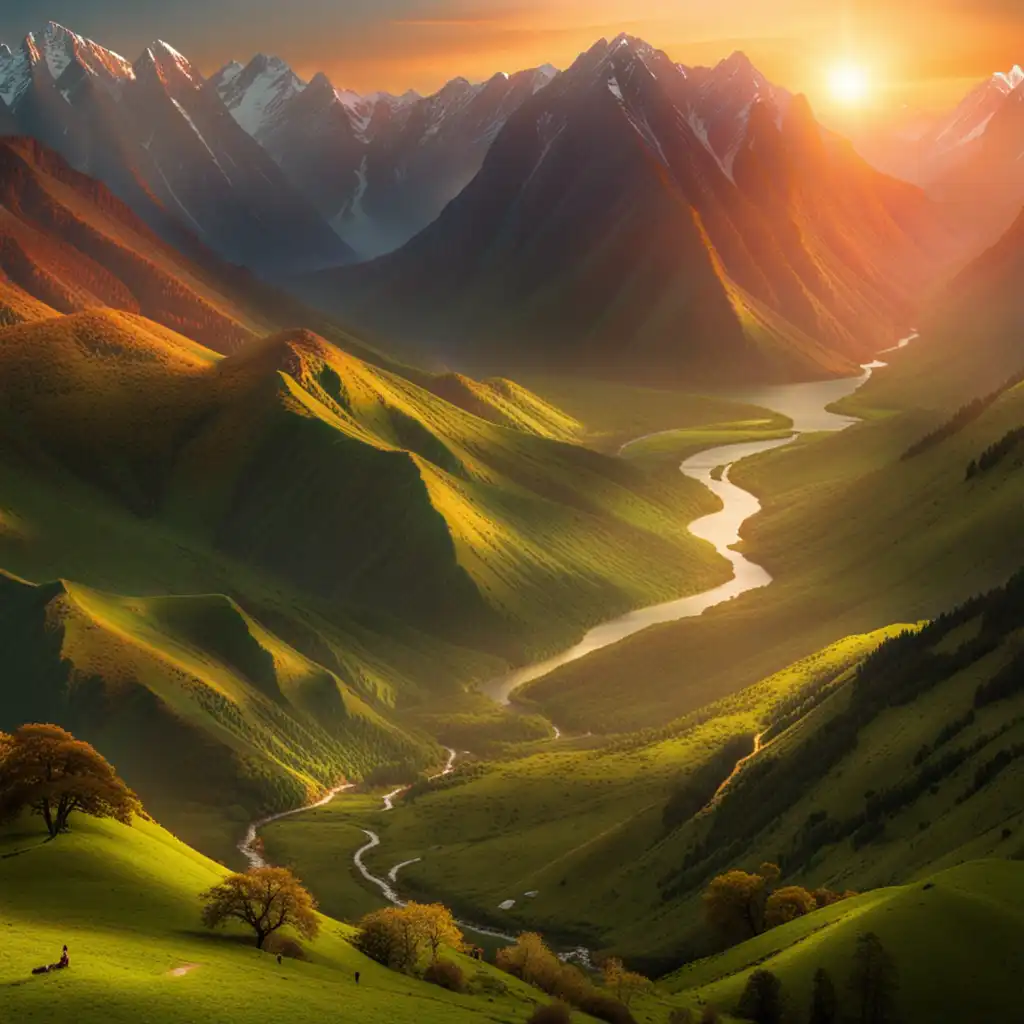
A type of land between mountains or hills.
The sun set over the lush green valley.
valley
ˈvæli
Loading…
ˈvæli
A type of land between mountains or hills.
The sun set over the lush green valley.

ˈvæli
Refers to a situation or period of time characterized by disappointment, failure or suffering.
She went through a valley of despair after losing her job.
ˈvæli
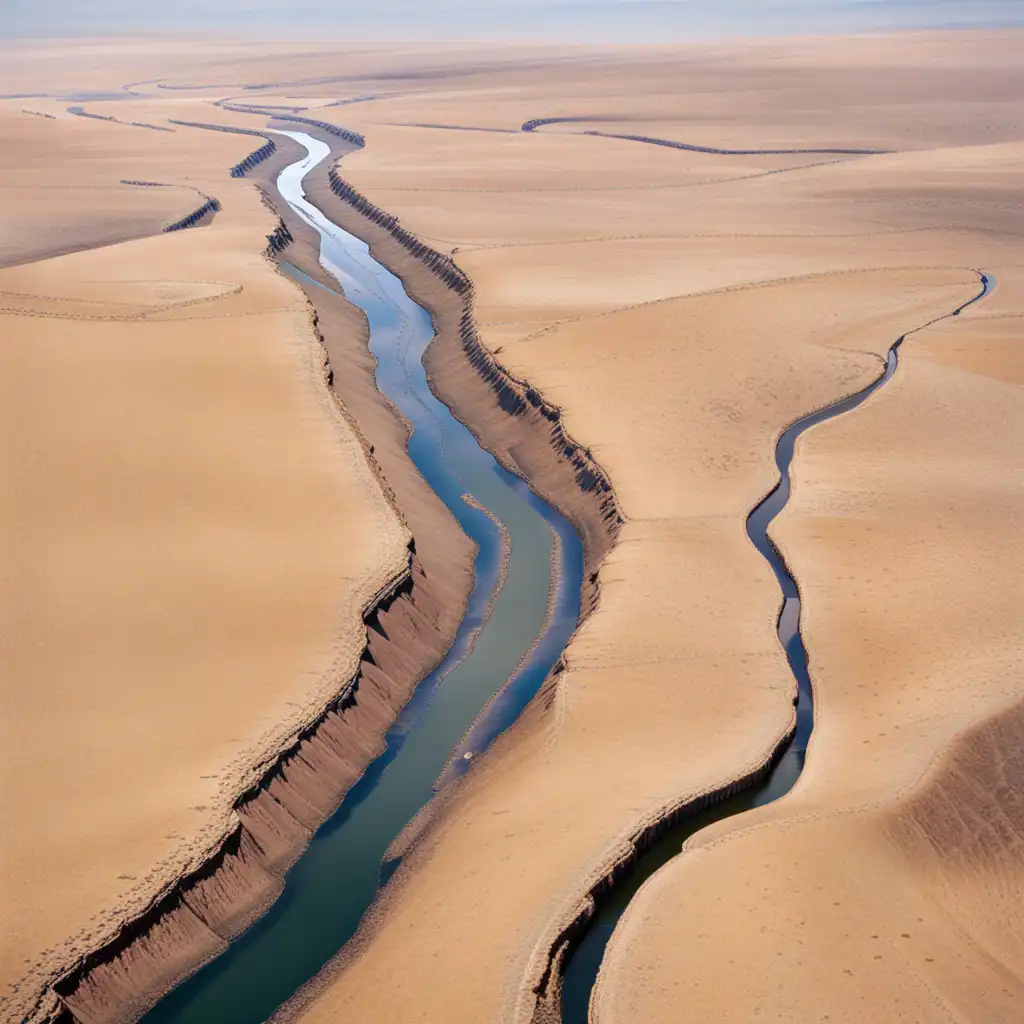
In geography, a valley is a depression that is longer than it is wide.
The valley, carved by a river, stretched for miles.
ˈvæli
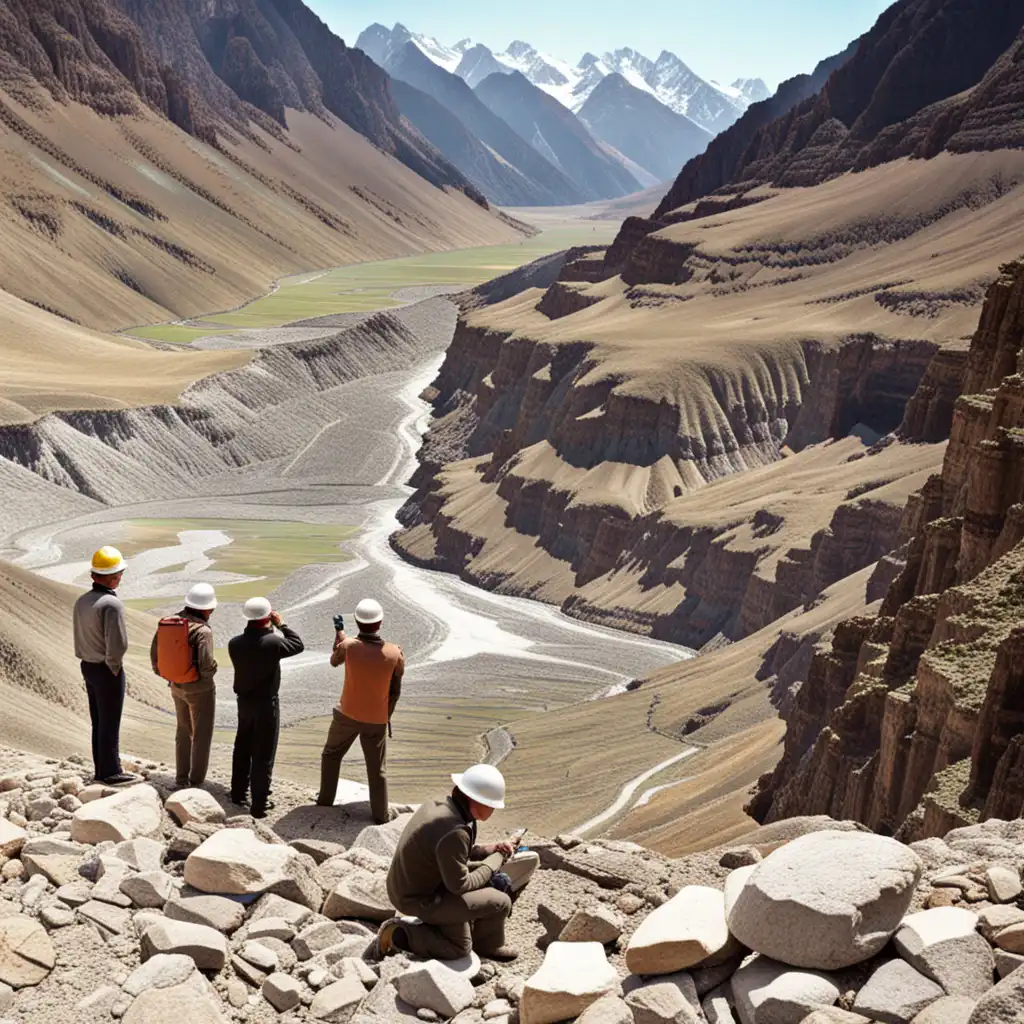
A low area between ranges of mountains, hills, or other high areas.
Geologists are studying the formation of this valley.
Audio could not be loaded. Please try again later.
A valley is a low area of land that is nestled between hills or mountains. It is often wider at the bottom and can have a river or stream running through it. People might live in a valley, and it is a great place for agriculture because the soil is often fertile. When you are talking about a place that is between two hills or mountains, you can use the word valley. For example, "I went hiking in the valley yesterday," or "The valley is so beautiful in the autumn."
A basin is a low area surrounded by higher ground, where water from rain or melting snow collects, typically with no outlet or only an intermittent one.
Basins are often formed from the erosion of soft rock, and can be found at the foot of mountains or hills. They are commonly used to describe a depression or area that collects water or sediment.
Valleys are created by the movement of water, ice or tectonic activity, and tend to be longer and deeper than basins. They often provide a natural route for a river or stream to flow through.
A basin is a low area where water collects with no outlet, while a valley is a low area between hills or mountains with a flowing river or stream.
Basins are commonly used to describe depressions, while valleys are often associated with natural routes for the movement of water.
Open word: Basin →A canyon is a narrow and deep valley with steep sides.
It is usually created by erosion from a river or other natural forces. Canyons are more common in areas with rocky terrain, such as deserts or mountains.
It is usually wider and shallower than a canyon and may have a river or stream flowing through it. Valleys are often used for agriculture or residential purposes and can be found in various geographic locations.
A canyon is a narrow and steep valley typically found in rocky terrain, while a valley is a broader lowland surrounded by higher terrain and may have agricultural or residential uses.
Open word: Canyon →Dell and valley are both used to describe a low area between hills or mountains, but they are used in different contexts.
A dell is a small, narrow valley that is often wooded and sheltered. It is a term used more in literature and poetry because it creates a sense of intimacy and seclusion.
A valley is a large, open area of land that is usually much wider and longer than a dell.
A dell is a smaller and more intimate valley, while a valley is a larger and more open expanse of land. They are both used to describe low areas between hills or mountains, but their different sizes and contexts make them applicable in different situations.
Open word: Dell →A glen is a narrow valley with steep sides, often created by a small stream or river.
A valley is a lowland area between hills or mountains, usually broader and flatter than a glen.
A glen is a smaller, narrow valley in a mountainous or hilly area, whereas a valley is a larger, broader lowland area between hills or mountains.
Open word: Glen →A gorge is a narrow, steep-sided ravine that is often created by a fast-flowing river. It is characterized by very high walls and canyons, which can be hundreds of feet tall.
A gorge usually starts at a narrow opening and widens gradually.
It is often broader compared to a gorge and is characterized by much gentler slopes.
A gorge is a narrow, deep, and steep-sided rocky valley with high walls created by rivers, while a valley is a low area between peaks or hills with a river or stream running through it.
A gorge is typically more challenging to traverse than a valley, which may be more traversable.
Open word: Gorge →Hollow refers to a space that is empty on the inside, whereas valley refers to a low area between hills or mountains.
You can use the word hollow to describe an object or space that is empty on the inside. For example, a tree trunk that has been hollowed out by a woodpecker, or a Halloween pumpkin that has been carved out.
Hollow refers to something that is empty on the inside, while valley refers to a low area between hills or mountains.
Open word: Hollow →A ravine is a narrow and steep-sided valley usually carved by a river or water that flows between hills or mountains.
Both terms refer to a low land area between two higher ones, but a ravine is characterized by its steep and rugged sides, while a valley has more gradual slopes.
A ravine is often narrower and deeper than a valley and may have more extreme and rugged terrain.
A ravine is applicable in situations where the land is steep and narrow, while a valley is applicable in situations where the land is flatter and wider.
Open word: Ravine →A trough is a long, narrow and often shallow container that is used for holding liquids, while a valley is a low area of land between two higher points, often with a river running through it.
A trough is more commonly used to describe a physical object, such as a container or a shape, while a valley is more often used to describe a natural landform.
For example, a gardener might use a trough to plant flowers in, while a geologist might use the term valley to describe the Grand Canyon.
Trough describes a container or shape, while valley describes a natural landform.
Open word: Trough →Vale and valley are similar in meaning, but valley is more commonly used.
A vale is also a low area, but it is more often used in poetry or literature to describe a picturesque or idyllic area, usually with flowers or other beautiful features.
Valley refers to a geographic feature - a lowland area between hills or mountains, usually with a stream or river running through it, whereas vale is a more poetic term, that denotes a beautiful, picturesque landscape.
Open word: Vale →like ripples covering the surface of a pond. We can clearly identify features of the wave pattern as a whole, most importantly its wavelength, which is the distance between two neighboring peaks, or two neighboring valleys. But we can't assign it a single position.
Watch on YouTube ↗We've climbed the mighty mountain. I see the valley below, and it's a valley of peace.
are an integral part of temple life and their presence here is entwined in folklore they are said to have once been headless fallen from the cut hair of manjushri a religious figure associated with the creation of the valley where
Watch on YouTube ↗All of life is peaks and valleys. Don't let the peaks get too high and the valleys too low.
completely parched on average the valley gets less than two inches of rain each year some years they don't get any at all in this extreme desolate landscape life is often hidden of course there are common creatures bighorn sheep that live
Watch on YouTube ↗Regard your soldiers as your children, and they will follow you into the deepest valleys; look on them as your own beloved sons, and they will stand by you even unto death.
with peaks and valleys that correspond to differences in the well-being of conscious creatures, both personal and collective. And one thing to notice is that perhaps there are states of human well-being that we rarely access that few people access. And these await our discovery.
Watch on YouTube ↗You go through life in a series of peaks and valleys.
love because design is looking valleys about frankly money the potential for advancement in the economic advancement and so I was thinking how like it's no longer that kind of design it's now dollar sign design and this kind of this is interesting because we don't quite understand it why
Watch on YouTube ↗Everyone messes up in relationships and has peaks and valleys in their personal lives. When I realized it wasn't the end of the world and I would keep on standing, I knew it was going to be OK.
dissolving rocks or breaking them down in a process known as weathering. Water moving downhill carries the weathered material and erodes the landscape, carving out deep valleys and jagged peaks.
Watch on YouTube ↗I think sometimes with new characters, you can kind of hit a creative valley, and it's important to recognize when you're in that valley so you can get back out and get back to that peak.
far away down the valley the haunting call of the orangutan now with forest destruction truly wild orangutans are very rare and notoriously shy of humans
Watch on YouTube ↗As you go through life, you've got to see the valleys as well as the peaks.
A rare event amongst ring-tail lemurs and a direct result of a good food supply. But this valley troop still has to work hard to collect food in this broken landscape.
Watch on YouTube ↗Transformation is a process, and as life happens there are tons of ups and downs. It's a journey of discovery - there are moments on mountaintops and moments in deep valleys of despair.
straight through the farms and settlements in the valley that will almost certainly mean conflict between humans and elephants by keeping him under close surveillance the team are hoping to find ways of helping him
Watch on YouTube ↗Life has all sorts of hills and valleys, and sometimes you don't end up doing what you had your heart set out on, but sometimes that's even better!
down in one of these valleys that have tiger cubs in it tigers breeding this high in the himalayas is totally new to science more importantly these animals could be central to the
Watch on YouTube ↗You have to go through those mountains and valleys - because that's what life is: soul growth.