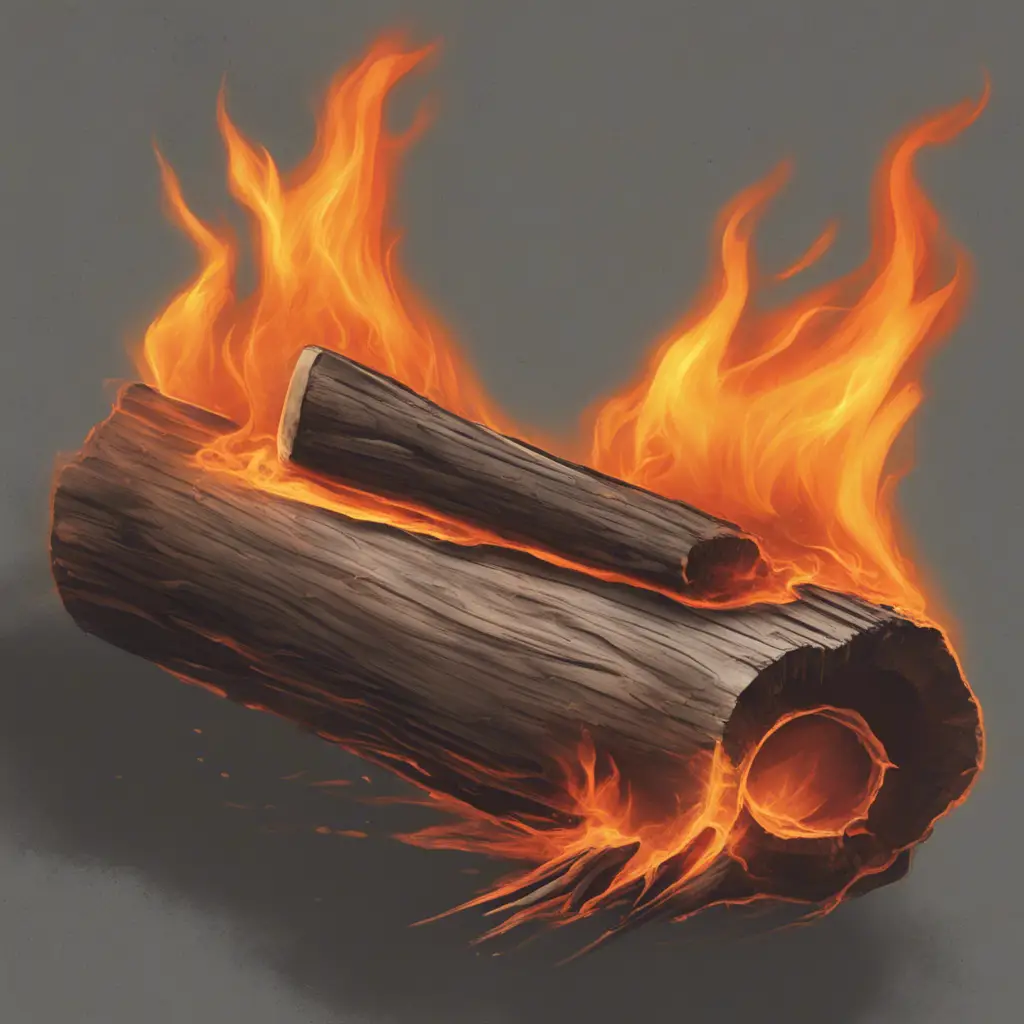
fire
noun fire
ˈfaɪər
A process in which substances combine chemically with oxygen from the air and typically give out bright light, heat, and smoke.
The fire in the fireplace made the room warm.
fire
ˈfaɪər
Cargando…
ˈfaɪər
A process in which substances combine chemically with oxygen from the air and typically give out bright light, heat, and smoke.
The fire in the fireplace made the room warm.

ˈfaɪər
Shooting of guns or cannons
He ordered his men to open fire on the enemy.

ˈfaɪər
To dismiss from a job
He was fired from his job for being late too many times.

ˈfaɪər
A burning passion or strong emotion
He has a fire in his eyes when he talks about his dreams.

ˈfaɪər
To heat something in an oven or kiln
She fired the clay pots in the kiln.
No se pudo cargar el audio. Inténtalo de nuevo más tarde.
The word "fire" can be used to refer to flames and smoke that come from burning objects. For example, you might say "The fire in the fireplace keeps us warm" or "The house caught on fire and the firefighters had to put it out." It can also be used as a verb, meaning to start a fire or to dismiss someone from their job. For instance, you might say "I'm going to fire up the barbecue" or "The boss had to fire the employee for being late too often." It's important to understand the context in which the word "fire" is being used so that you can use it correctly in your own sentences.
Fire refers to a general term for a burning flame, while blaze refers to a more intense, shining flame. Fire is used in everyday language when referring to something that is burning, such as a campfire or a building fire.
Blaze is used when referring to a brightly burning fire that may be out of control, such as a forest fire or a house ablaze in flames.
Abrir palabra: Blaze →Combustion refers to the chemical reaction that occurs when a fuel reacts with oxygen in the air to produce heat and light.
Fire is a physical manifestation of combustion that occurs when there is a sustained reaction between fuel and heat. Fires produce heat, light, and smoke, and can result in significant damage, injury, or death.
Combustion is a chemical process, while fire is the physical manifestation of that process. Combustion happens in engines or industrial machinery, while fire can happen naturally or be deliberately set in specific locations.
Abrir palabra: Combustion →Conflagration specifically refers to an extensive and uncontrolled fire that spreads quickly and often involves multiple structures.
It is a more severe and dramatic term that is usually reserved for large, catastrophic fires. Fire is applicable in any situation where there is burning, while conflagration specifically refers to a large, spreading fire that causes significant damage.
Abrir palabra: Conflagration →It can be used to refer to any kind of burning, such as a raging forest fire, burning embers in a fireplace, or a simple match flame.
Flame specifically refers to the visible, flickering part of the fire that emits light and heat. It is the part of the fire that we can see and, therefore, is more often used to describe smaller, concentrated sources of fire, such as a candle flame or a gas stove burner flame.
Fire is a broader term, referring to the overall burning phenomenon, while flame describes the visible part of the fire that we can see.
Abrir palabra: Flame →A furnace is a man-made structure that is designed to create a controlled fire for a specific purpose, such as heating a home or melting metal.
So, while both involve fire, a fire is a natural event while a furnace is a man-made structure that controls and utilizes fire for a specific purpose.
Abrir palabra: Furnace →Ignite refers to the act of starting a fire or beginning the combustion process.
It is often used when referring to a specific action, such as igniting a propane torch or switching on a gas stove burner.
Fire is more commonly used to describe the actual flame and heat produced by a burning substance, while ignite describes the action of starting a fire or beginning the combustion process.
Abrir palabra: Ignite →In contrast, the word inferno typically describes an extremely large and intense fire, often accompanied by raging flames and heat, smoke, and destruction.
Fire is a more general term used to describe flames, whereas inferno is a more specific term used to describe a monumental, devastating fire.
Abrir palabra: Inferno →Torch refers to a portable light source made of some combustible material that is lit on fire.
A torch can provide light in dark places and can also be used as a tool for burning, welding, or cutting.
Fire is a natural force that can be dangerous, while a torch is a tool that is used to produce fire for practical purposes.
Abrir palabra: Torch →Say you're standing in front of a door ready to pull it open. Your brain and muscles are perfectly poised to help you achieve this goal. First your brain sends a signal to motor neurons inside your arm. When they receive this message they fire, causing muscles to contract and relax,
Ver en YouTube ↗Some say the world will end in fire, some say in ice.
I would love to break a world record today, -I'm not gonna lie. -Okay. And where's the other half? Is this working in a different way? So this is an acoustic vortex. So we fire these loudspeakers in a sequence,
Ver en YouTube ↗Most people work just hard enough not to get fired and get paid just enough money not to quit.
It was in front of the whole class and I felt dreadful. But it's what I wanted and as soon as I left school, I applied to the fire service and I was accepted. You know I was thinking about that guy recently, just a few minutes ago when you were speaking about this teacher, because six months ago I saved his life."
Ver en YouTube ↗Build a man a fire, and he'll be warm for a day. Set a man on fire, and he'll be warm for the rest of his life.
What? And they taste disgusting because they're full of-- --this yellow kind of weird stuff and really pungent. It stays with you forever. But if you cook them and you barbecue them up, then it's perfect. Thank God for the fire because that's going
Ver en YouTube ↗Sometimes in the real world, there is fire between people.
lots of fire routinely others only episodically or even rarely and one reason is that life did not control the third element of the fire triangle namely ignition well that changed when a creature arrived who could wrest control of
Ver en YouTube ↗Love is friendship set on fire.
with no knowledge of the outside world. They are chained facing a wall unable to turn their heads, while a fire behind them gives off a faint light. Occasionally people pass by the fire, carrying figures of animals and other objects that cast shadows on the wall.
Ver en YouTube ↗I've never been fired in my life.
Neurons in your brain have receptors perfectly tailored to this molecule. When adenosine docks to these receptors, it activates a cascade of biochemical reactions that cause neurons to fire more sluggishly and slow the release of important brain-signaling molecules.
Ver en YouTube ↗I've lost a little bit of my fire... I don't want to say I've lost my passion.
Buddha proposed that we love because we are trying to satisfy our base desires. Yet our passionate cravings are defects, and attachments even romantic love are a great source of suffering. Luckily Buddha discovered the eight-fold path, a sort of program for extinguishing the fires of desire
Ver en YouTube ↗I'm not afraid of being fired, and I'm gonna speak my mind.
Nematocyst discharge can occur in less than a millionth of a second, making it one of nature's fastest biomechanical processes. Nematocysts can continue to fire even after a jellyfish has died, so it's important to remove lingering tentacles stuck to the skin.
Ver en YouTube ↗I don't even like firing people. I don't think I've ever said, 'You're fired' to anybody.
For most jobs it's understood that you can be fired, whether for crime, incompetence, or just poor performance. But what if your job happens to be the most powerful position in the country, or the world?
Ver en YouTube ↗This fire in me will last forever.