lordship
noun lordship
ˈlɔːrdʃɪp
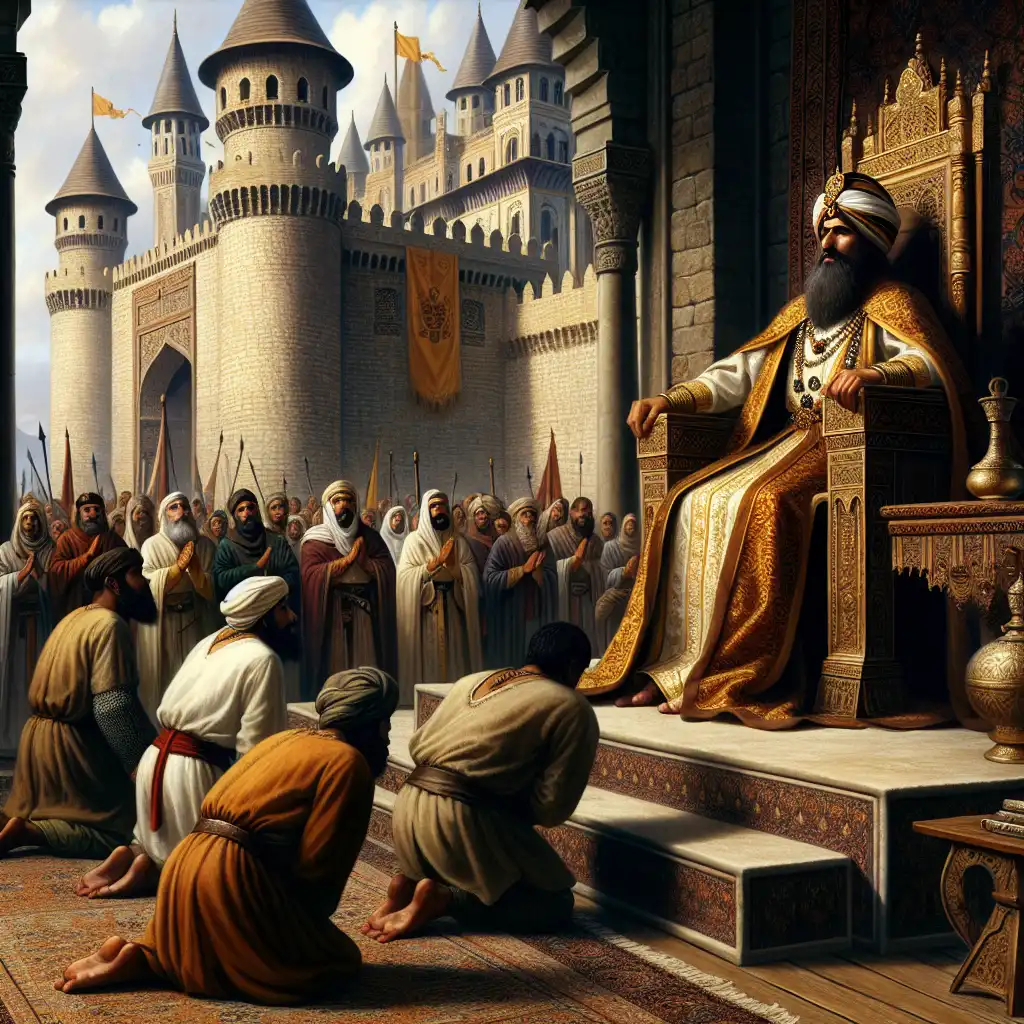
The authority of a lord
He exercised his lordship over the land and its people.
lordship
ˈlɔːrdʃɪp
Loading…
ˈlɔːrdʃɪp
The authority of a lord
He exercised his lordship over the land and its people.

ˈlɔːrdʃɪp
A title used to address or refer to a lord
My lordship, I have important news to share.

ˈlɔːrdʃɪp
The state or period of being a lord
He assumed his lordship upon the death of his father.
Audio could not be loaded. Please try again later.
The word 'lordship' is often used to show respect or honor to someone who holds an important position, such as a nobleman or a religious figure. It is a formal way of addressing or referring to someone, similar to "your majesty" or "your honor". In everyday conversation, it is not commonly used and may sound old-fashioned. It may also refer to the authority or power of a lord or ruler over a certain area or territory.
Authority refers to the power or right to give orders, make decisions, or enforce obedience.
Lordship refers to the position or status of a lord, who is a nobleman or a person in a position of power or authority.
It can also refer to the power and authority that comes with this position. Lordship is mostly used in feudal or historical contexts.
In simpler terms, authority is the power to make decisions and give orders, while lordship refers to a position of power or authority.
Authority is applicable in modern formal settings, while lordship is mostly used in historical or feudal contexts.
Open word: Authority →Control refers to the power or ability to manage or direct something. It is applicable when someone has authority over a person, thing, or situation and can make decisions and take actions to influence its outcome.
For example, a teacher has control over a classroom, a CEO has control over a company, and a person has control over their own actions.
Lordship refers to a higher level of control and authority. It is applicable in a religious or feudal context, where a lord is someone who has power and dominion over a group of people or land.
The term is often associated with medieval times, where a lord would own a castle and its surrounding lands and have control over the lives of the people living on those lands.
Control refers to the ability to manage or direct something, while lordship denotes a higher level of authority and power over a group of people or land.
Open word: Control →Dominance refers to the act of being in control, power or authority over something or someone. It is applicable in situations where one entity asserts its influence over another.
In simpler terms, dominance is about having control or power, while lordship is about being the ultimate authority or master.
The term dominance is typically used in a more general sense, while lordship is more specific to certain historical or cultural contexts.
Open word: Dominance →Leadership refers to the ability to guide and direct others towards a common goal or objective. It is commonly used in the context of business, politics, or any situation where one person is in charge of a group and is responsible for its success.
Leadership refers to the act of guiding and directing people, while lordship refers to a position of authority and control over a specific territory or group of people.
Open word: Leadership →Mastery refers to the state or quality of having complete control or skill over something.
To summarize, lordship refers to a position of power and authority while mastery refers to a level of skill and expertise.
Open word: Mastery →Power refers to the ability to do something or to control something or someone. It is applicable in situations where a person has physical or mental strength or influence over others.
Power can be acquired through wealth, physical strength, or intelligence.
Lordship is about being a respected leader, while power is about having control over others. A person can have lordship without necessarily having power, and vice versa.
Understanding the difference between the two is important because having lordship and power can come with different levels of responsibility and ethical considerations.
Open word: Power →Sovereignty refers to the ultimate power and authority of a nation or state. Sovereignty means that a country has the right to govern itself without interference from other countries.
Lordship is applicable in a smaller context, such as a feudal system, and refers to a person's authority over others. Sovereignty is applicable in a larger context, such as a nation or state, and refers to the ultimate power and authority of that entity.
Open word: Sovereignty →Supremacy means the state of being superior or having the highest level of authority or power over everything else.
While lordship may refer to a specific domain or area, supremacy implies universal control or dominion.
Lordship refers to a localized authority, whereas supremacy implies a higher level of control or dominance that extends beyond a particular domain.
Open word: Supremacy →fair what means your lordship I do love you once indeed my lord you made me believe believe me I loved you not I was the more to see ya they to a nunnery why was that be a breeder of sinners will help him you sweet heaven
Watch on YouTube ↗Dread lord and cousin, may the almighty preserve your reverence and lordship in long life and good fortune.
My illustrious lordship, I'll show you what a woman can do.
His lordship may compel us to be equal upstairs, but there will never be equality in the servants hall.
Constitutionally, a revising chamber is useful and important. The first occasion I know of in history when the Lords fulfilled this role was in 1539 when Henry VIII's act of proclamations was neutered by their lordships so effectively that the Act was repealed in 1547.
The history of our country has been driven by a Judeo-Christian worldview, and so that has dominated the landscape. So it's important that we recognize the lordship of Jesus Christ without apology in our emphasis on prayer.