belongings
noun belongings
bɪˈlɔːŋɪŋz
Things that you own or have with you at a particular time.
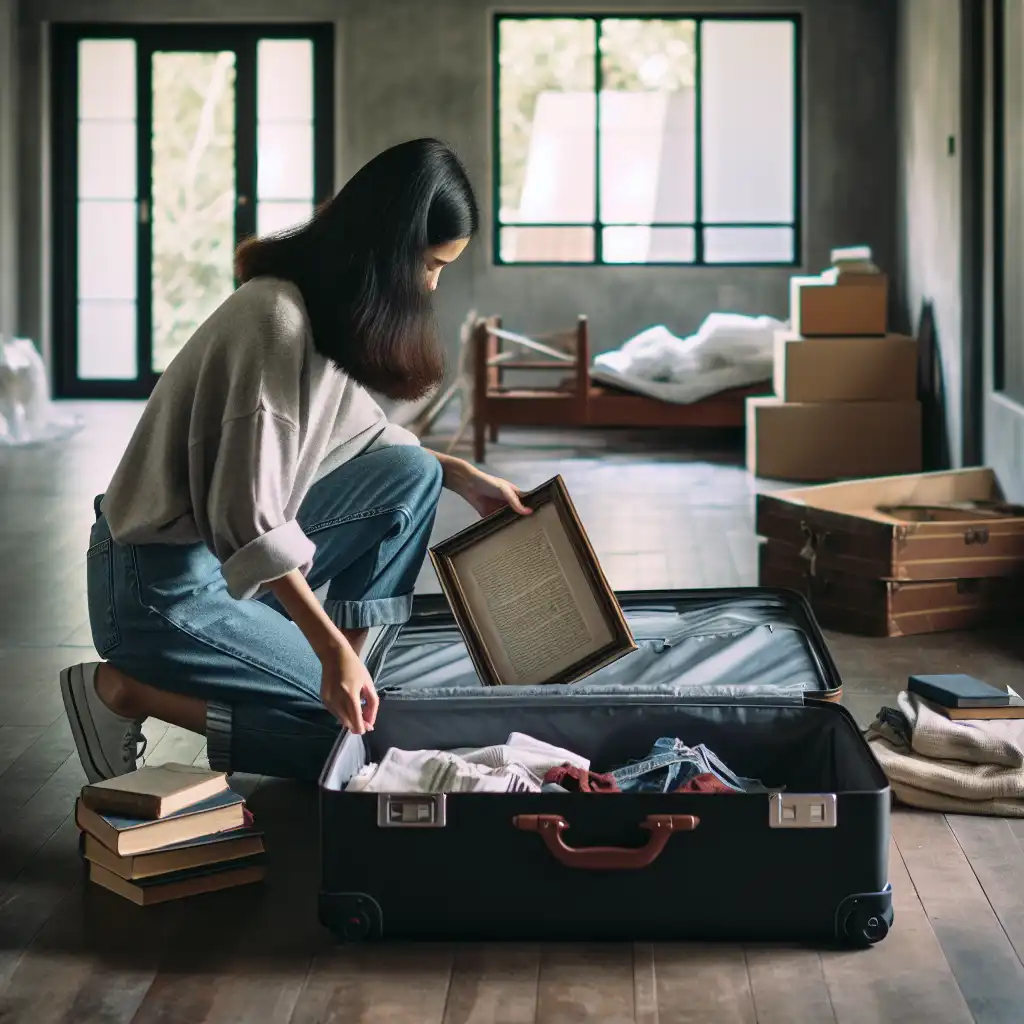
She packed up all her belongings and moved to a new city.
belongings
bɪˈlɔːŋɪŋz
読み込み中…
bɪˈlɔːŋɪŋz
Things that you own or have with you at a particular time.
She packed up all her belongings and moved to a new city.

bɪˈlɔːŋɪŋz
In law, property owned by a person or collective.
The court ruled that the belongings found at the crime scene were admissible as evidence.
音声を読み込めませんでした。しばらくしてからもう一度お試しください。
Belongings are things that you own and you can call them belongings if they are important to you. For example, your clothes, toys, books, phone, and even your bed can be your belongings. It's important to use the word 'belongings' when you want to talk about things that belong to someone, especially when you're referring to something specific, like "Have you seen my belongings?" or "I need to pack my belongings and move to a new house."
Asset refers to anything that has monetary value, such as property, investments, or vehicles. It is commonly used in finance and business contexts, where companies will list their assets on their balance sheets.
In simpler terms, an asset is something that can be sold or used to generate income, whereas belongings are personal items that hold sentimental or practical value.
単語を開く: Asset →Belongings refer to the personal possessions of a person. Chattel refers to any movable property or assets that are not attached to land or buildings.
Chattel are tangible personal property that have value, such as furniture, vehicles, and livestock. Chattel are particularly applicable in legal contexts, such as in property law, where they are often classified as either personal or real property.
単語を開く: Chattel →Effect on the other hand, refers to the result or outcome of an action, event, or decision.
Belongings are physical possessions while effect refers to the outcome or impact of something. For example, if someone were to go on a shopping spree and buy new clothes, those clothes would become their belongings.
If the same person were to get a new haircut, the effect would be a new look.
単語を開く: Effect →Belongings generally refers to personal items that someone owns, such as clothes, books, and electronics. Gear typically refers to tools or equipment that are necessary for a particular activity or profession, such as sports gear, camping gear, or photography gear.
Belongings can be applicable in everyday life, when talking about personal possessions or when packing for a trip. Gear is more commonly used when talking about specific tools or equipment needed for a certain activity or job.
For example, someone might say, "I need to pack my belongings for my trip," while another person might say, "I need to grab my camping gear."
単語を開く: Gear →Belongings and possession are both words used to describe items that someone owns, but they have slightly different meanings.
Belongings usually refers to personal items that someone owns and considers important to them, such as clothing, books, or sentimental possessions.
Possessions is a more general term that can refer to any item that someone owns, whether it’s personal or not.
It can include items like a house or car, as well as personal items like clothing. For example: "He has many possessions, including a house and several cars.".
Belongings refers to personal, important items, while possessions is a more general term that can include both personal and non-personal items.
単語を開く: Possession →Belongings and property are both related to things that a person owns, but there is a subtle difference between them.
Property is more formal and legal. It usually refers to real estate, houses, land or any valuable asset that can be owned, managed and sold.
Property is also subject to legal regulations and taxes.
In simple words, belongings relate to things you own that don't have much monetary value and are of personal use, while property refers to assets that have a value, can be bought or sold, and are regulated by the law.
単語を開く: Property →Stuff is a more general term that refers to objects or possessions that a person has, but that may not necessarily have any sentimental value or importance.
Stuff can refer to things like household items, random objects or things that are cluttering up a space. For example, a person's stuff might include old magazines, unused electronics, or random trinkets.
Essentially, belongings are items that are meaningful to a person, while stuff is just an assortment of things someone may have.
単語を開く: Stuff →Treasure typically denotes something valuable or precious, often with sentimental or historical significance.
For instance, a family heirloom, an ancient artifact, or a rare coin or gem can be considered as a treasure.
While belongings are applicable in daily life, treasure is often associated with certain historical or cultural contexts or special occasions, such as treasure hunts or commemorations.
単語を開く: Treasure →Why are we so attached...
YouTube で見る ↗People inspire me. Every day, I meet amazing individuals in the field. When I see a mother who has walked for three weeks to come to a MSF clinic, with two kids on her back and her belongings on her head, facing intimidation and physical abuse on her way, I am inspired by her resilience - her desire for life.
Michael McDaniel: Cheap,...
YouTube で見る ↗You have to go out there and win battles before you can raid the dead of all their belongings.
Pearl Harbor Hero...
YouTube で見る ↗I had a great childhood. Even though I never had my own room - I shared the porch with my grandfather and kept my belongings in one drawer of a dresser that was jammed next to the piano - I never went hungry and was always supported by my family.
An inside look at...
YouTube で見る ↗On vacations: We hit the sunny beaches where we occupy ourselves keeping the sun off our skin, the saltwater off our bodies, and the sand out of our belongings.
How to speed up chemical...
YouTube で見る ↗We ought not to treat living creatures like shoes or household belongings, which when worn with use we throw away.
Carol Beckwith & Angela...
YouTube で見る ↗Being robbed is a really great way of editing your belongings.
The power to think ahead...
YouTube で見る ↗Political dictatorships take possession not just of money and belongings but of narrative.
Suspect Identified %\PIPE% The...
YouTube で見る ↗My parents always threw everything out, gave everything away. I'm surprised they never threw me away. That's why I've always kept my children's things. My parents had no feelings for belongings.
Digging up Paperwork %\PIPE%...
YouTube で見る ↗As a child, I grew up in fear. When I was four, all my other relatives were deported to the countryside, having to leave most of their personal belongings behind.
The Housing First...
YouTube で見る ↗For kids, it's best to teach them how to fold their clothes first. Kids will be able to fold their clothes at about three years old. You don't want to teach them how to put away toys first because it's difficult. Clothes are something kids wear every day, so it's easy for them to have a sense about their belongings.