howdah
noun howdah
ˈhaʊdə
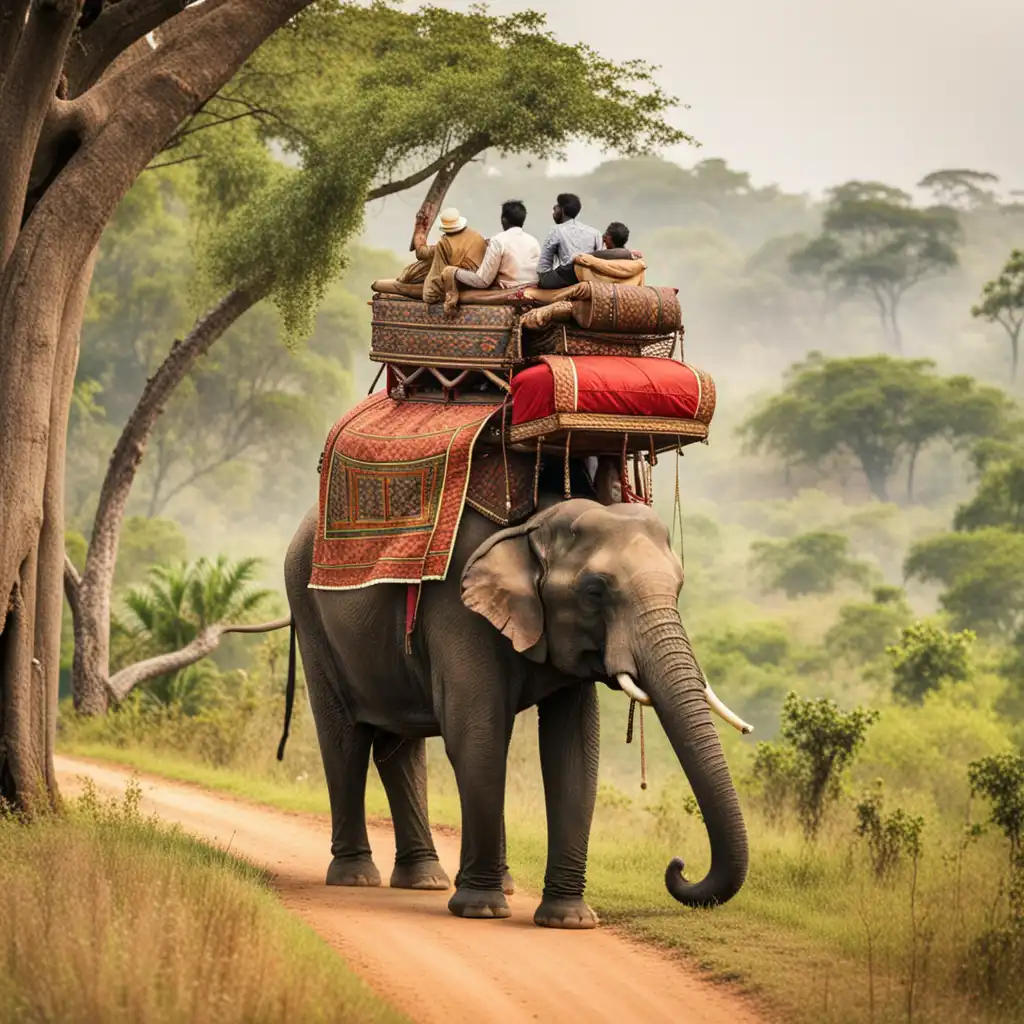
A seat or platform used on the back of an elephant or camel for passengers
The mahout skillfully manoeuvred the elephant, as the tourists enjoyed the ride from the howdah.
howdah
ˈhaʊdə
Chargement…
ˈhaʊdə
A seat or platform used on the back of an elephant or camel for passengers
The mahout skillfully manoeuvred the elephant, as the tourists enjoyed the ride from the howdah.
Impossible de charger l’audio. Réessayez plus tard.
A howdah is a type of seat or carriage that can be attached to the back of an elephant, camel or other large animal for people to ride on. It is often seen in some countries where people use animals as a form of transportation, such as in India, Africa, and the Middle East. The howdah is usually made of wood or metal and can have a canopy or a railing for safety. The word howdah might not be commonly used in everyday English conversations, but it is good to know its meaning if you plan to visit or learn more about the aforementioned cultures.
A canopy is a covering that is placed above something like a bed, throne, or altar.
It is usually made of cloth or other materials and is hung or suspended from a support. Canopies are often used for decorative or ceremonial purposes, such as in weddings or other formal occasions.
The main difference between canopies and howdahs is that canopies are used as coverings for stationary objects, while howdahs are used as seats or saddles for animals that are used for transportation.
Ouvrir le mot: Canopy →Carriage refers to a vehicle with four wheels pulled by horses and used for transporting people or goods. The term carriage can also refer to the part of a train that carries passengers.
Carriage is a transportation vehicle that is pulled by horses, while howdah is a seat or platform for carrying people or goods on an elephant or other animal.
Ouvrir le mot: Carriage →A chair is a piece of furniture with a seat, backrest, and sometimes armrests that is designed for one person to sit on.
A chair is a common piece of furniture used for seating purposes, while a howdah is a specialized seat or saddle used for transportation or riding on the back of an animal.
Ouvrir le mot: Chair →A litter is a portable chair or bed that is carried by people on their shoulders or on poles.
It is used to transport a person who is unable to walk, such as a sick or injured person, or a person of high status. The litter is commonly used during ceremonies or for medical transportation.
A howdah is a seat on an elephant for transportation and sightseeing, while a litter is a portable chair or bed for transporting people who are sick, injured, or of high status.
Ouvrir le mot: Litter →A pavilion is a large tent or structure that is used for outdoor events or gatherings. They can range in size from small pop-up tents to large, elaborate structures that can accommodate hundreds of people.
Pavilions are often used for weddings, festivals, and other public events.
A howdah is for transporting people on the backs of animals, while a pavilion is for providing shelter and a gathering space at outdoor events.
Ouvrir le mot: Pavilion →A howdah is a type of seat that is usually placed on the back of an elephant, camel or bullock for people to sit on. It has sides and a roof for protection, and it is used specifically for riding animals.
A seat is a general term used to describe any kind of furniture that people sit on. It could be a chair, a bench, a stool or a sofa, and it can be used in a variety of settings like homes, offices or public spaces.
A howdah is a type of seat that is specifically used for riding animals while a seat is a general term used to describe any kind of furniture used for sitting.
Ouvrir le mot: Seat →A throne is a ceremonial seat of a monarch, bishop, or other high-ranking person often found in palaces or government buildings.
A howdah is applicable on the back of elephants or other large animals for transportation, while a throne is applicable for a ceremonial or official setting such as in palaces, government buildings, or for the use of high-ranking individuals.
Ouvrir le mot: Throne →