
belligerence
noun belligerence
bəˈlɪdʒərəns
A desire to fight or be aggressive.
His belligerence towards his opponent was clear from his harsh words.
belligerence
bəˈlɪdʒərəns
불러오는 중…
bəˈlɪdʒərəns
A desire to fight or be aggressive.
His belligerence towards his opponent was clear from his harsh words.
bəˈlɪdʒərəns
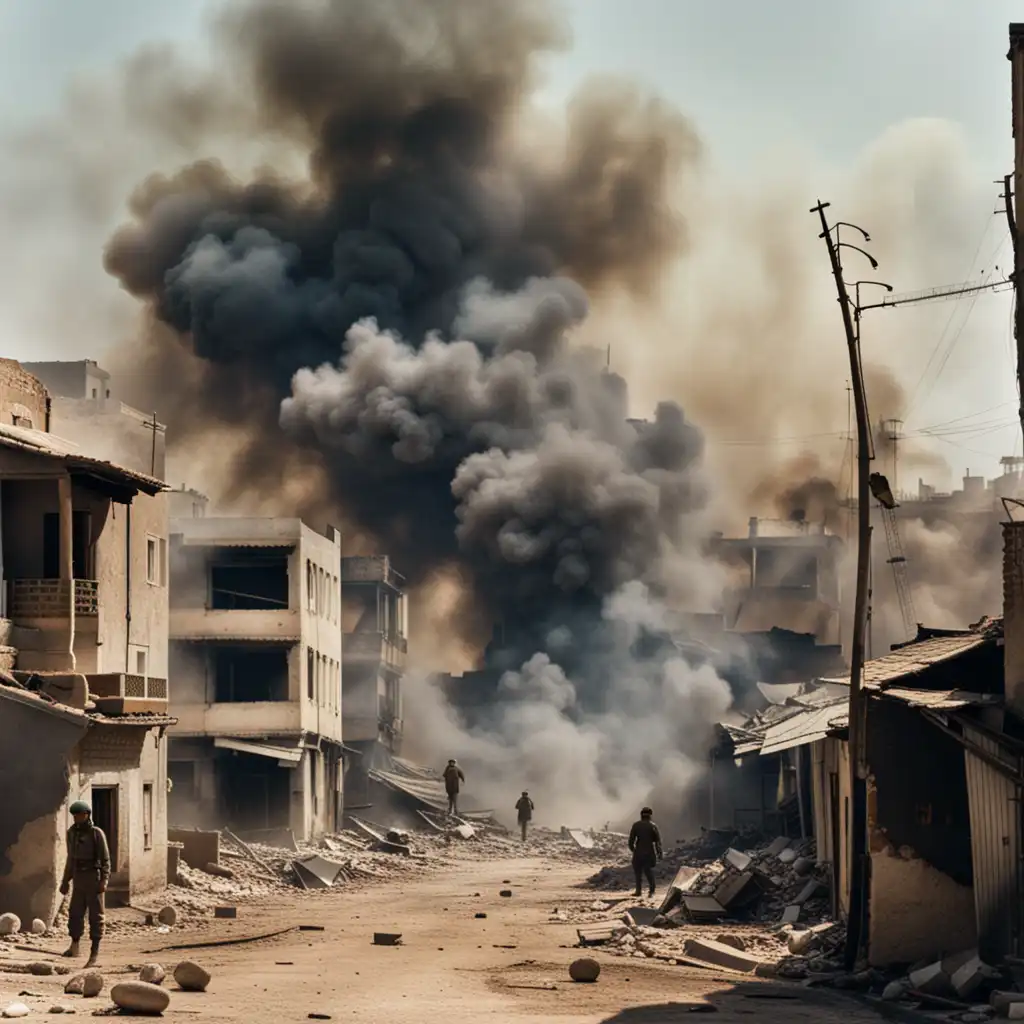
The condition of being at war or in a conflict.
The country's belligerence led to a long and bloody war.
오디오를 불러오지 못했어요. 잠시 후 다시 시도해 주세요.
The word 'belligerence' is used to describe someone who is aggressive and always ready to fight or argue. It is often used to describe a person's behavior or attitude. For example, if someone is constantly yelling and starting arguments, they could be described as showing belligerence. It is important to use this word appropriately as it can have negative connotations and could offend someone if used inappropriately.
Aggressive refers to someone who is assertive, forceful or hostile in a situation. It means someone who is ready to attack or confront.
Belligerence means displaying an aggressive or combative behavior, often when someone is provoked or threatened. While aggression refers to a tendency to attack, belligerence suggests an overall hostile attitude or state of mind.
Both words are applicable in situations where a person is showing hostility, but aggressive tends to be used more generally, while belligerence often implies a willingness to fight or go to war.
단어 열기: Aggressive →Antagonism refers to a feeling of dislike or opposition towards someone or something, while belligerence refers to a hostile, aggressive attitude or behavior.
Antagonism is typically used to describe a situation where there is a conflict of interests or opinions, and one party feels like they are being opposed or obstructed by another.
For example, if two people have different political views and argue about it, they may feel a sense of antagonism towards each other.
Overall, both terms refer to negative or hostile feelings towards others, but antagonism is more passive and intellectual, while belligerence is more direct and physical.
단어 열기: Antagonism →Hostility refers to a feeling of ill will or animosity towards others.
It can be expressed through words, actions, or behaviors. Hostility is applicable in situations where someone has negative feelings towards others, such as in a conflict or disagreement.
Belligerence is an aggressive action while hostility is an aggressive feeling. Both words describe negative and potentially dangerous behavior towards others.
단어 열기: Hostility →Militancy refers to a willingness to fight for a particular cause or belief.
So, while belligerence describes an individual's attitude towards others, militancy describes the approach taken by a larger group or organization towards achieving their objectives.
단어 열기: Militancy →Belligerence and pugnacity are both words used to describe aggression or hostility, but they have slightly different meanings.
Pugnacity specifically refers to a natural inclination or tendency towards fighting or aggression.
Belligerence is more commonly used to describe a specific behavior or attitude, while pugnacity is more often used to describe a character trait or innate quality.
단어 열기: Pugnacity →Both words refer to a aggressive and hostile behavior, but belligerence is typically associated with countries or groups engaged in a war or conflict, while truculence is generally used to describe an individual's behavior or attitude.
Truculence refers to more personal behavior, and might be used to describe a person who is habitually aggressive, argumentative, or confrontational towards others.
So, in short, belligerence is more focused on large groups or countries, whereas truculence is more related to individual behavior.
단어 열기: Truculence →I'd go to meetings with record companies - CBS, Decca, EMI. They'd tell me to wear a pair of jeans and grow my hair and look normal. And I'd say, 'Sod that,' and storm out. And I do think that belligerence is important when you're young.
What I like least about myself is my belligerence.
Neutrality is at times a graver sin than belligerence.
We've gone through rounds of tax cutting and rounds of tax increases in modern U.S. history. We haven't really had a big igniting of a trade war belligerence since the Depression era, and that's not an era that we want to repeat.
China's propaganda approach with the West is different than the one used by the Soviet Union, which used Western belligerence to maintain its control over its domestic audience. China's strategy is one of influence and inertia.
I have always loved a hard-faced girl. I get that Alison Goldfrapp isn't easy, and I like her belligerence. She's deeply sexy and controlled, like a Strict Machine, and it seems to wind the b'jesus out of the women I know. On the outside, I watch and smile and will her on like a twisted silent maiden aunt in the dark corner.
Given the genocidal belligerence of Iranian threats against Israel, it is hard to take issue with Israel's right to preemptive self-defense.
The emphasis on the birth of Christ tends to polarize our pluralistic society and create legal and ethnic belligerence.