forebear
noun forebear
ˈfɔːrber
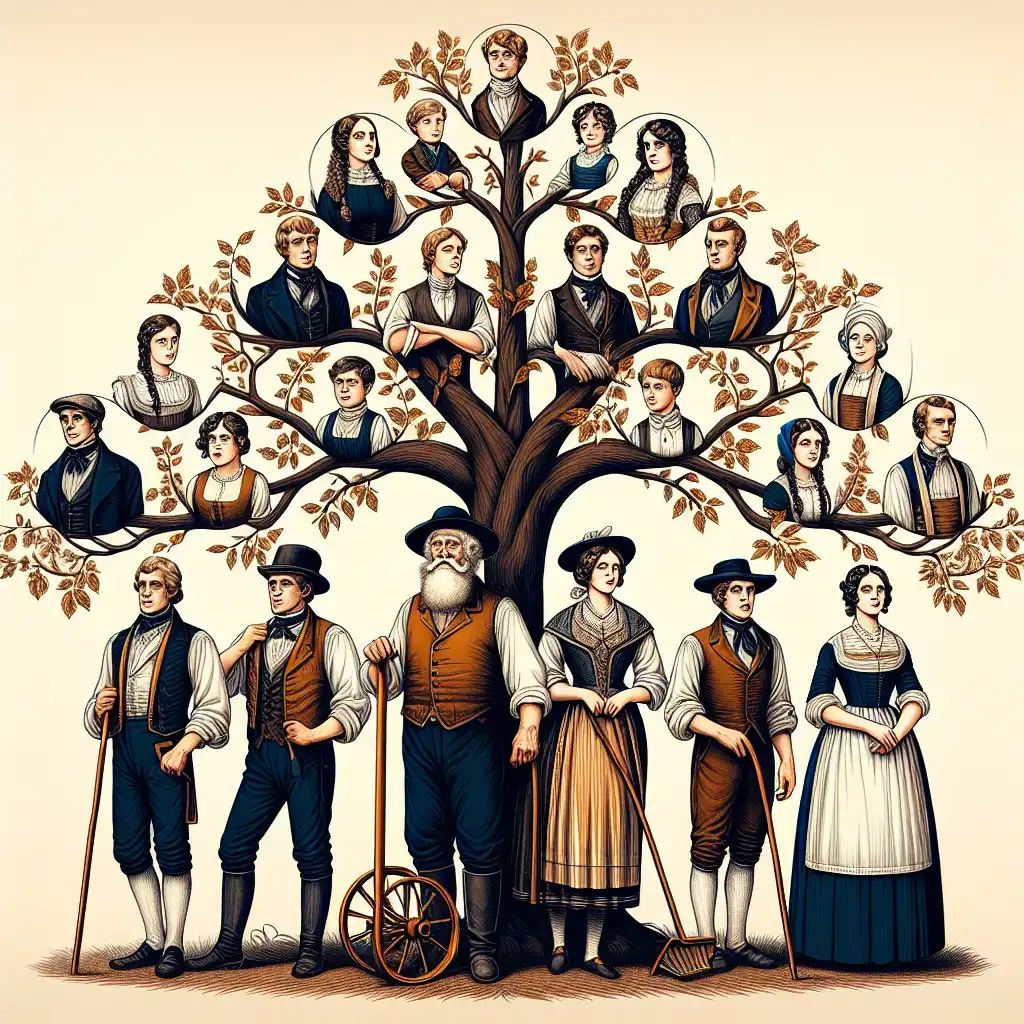
A person from whom another is directly descended; an ancestor.
His forebears were farmers for generations.
forebear
ˈfɔːrber
Loading…
ˈfɔːrber
A person from whom another is directly descended; an ancestor.
His forebears were farmers for generations.
Audio could not be loaded. Please try again later.
The word 'forebear' is used to refer to someone in your family who lived a long time ago, like your great-great-grandparent or even older. It can also refer to ancestors of a community or a country. We use it in a sentence like "My forebears came from Germany" or "I am proud of my forebears who fought for independence". It is a formal word and is not used in everyday conversation, but it is useful when writing about or discussing a person's history or ancestry.
Both ancestor and forebear mean a person or people who came before you in your family tree.
However, ancestor refers to someone who is related to you from a long time ago, while forebear refers to someone who is related to you from a more recent time.
For example, your great-great-grandparents would be considered your ancestors, while your grandparents or great-grandparents would be considered your forebears.
Open word: Ancestor →Antecedent refers to something that comes before or precedes another event or thing.
It is often used in relation to cause and effect or to refer to previous actions or occurrences. For example, "The antecedent of the storm was the change in air pressure.".
Antecedent is applicable when talking about events or things that come before another, while forebear is applicable when talking about lineage and family history.
Open word: Antecedent →The words forebear and forefather both refer to ancestors, but forefather specifically refers to male ancestors, while forebear can refer to both male and female ancestors.
For example, a person's great-great-grandfather would be considered their forefather, while their great-great-grandmother would be considered their forebear.
Open word: Forefather →A parent refers specifically to an individual who has given birth or has legal responsibility for a child.
While a parent is a more specific term applicable to the relationship between an adult and their child, a forebear is a broader term that can apply to any family member from previous generations.
Open word: Parent →Predecessor refers to someone who held a position or job before the current person. It is applicable when talking about someone who previously held a leadership role, such as a president or CEO.
Open word: Predecessor →Progenitor refers to the person or thing that someone or something else comes from or is derived from. For example, all humans are said to have come from a single progenitor or ancestor.
While both words refer to a person or thing that came before you, forebear is used specifically in reference to your family history and ancestry, while progenitor is used more broadly to refer to any sort of origin or source.
Open word: Progenitor →What Sort of Man Are...
Watch on YouTube ↗A great Chicano forebear of mine in writing is Rolando Hinojosa-Smith. He was writing good border mysteries for Chicano readers back in the '80s and '90s.