pliancy
noun pliancy
ˈplaɪənsi
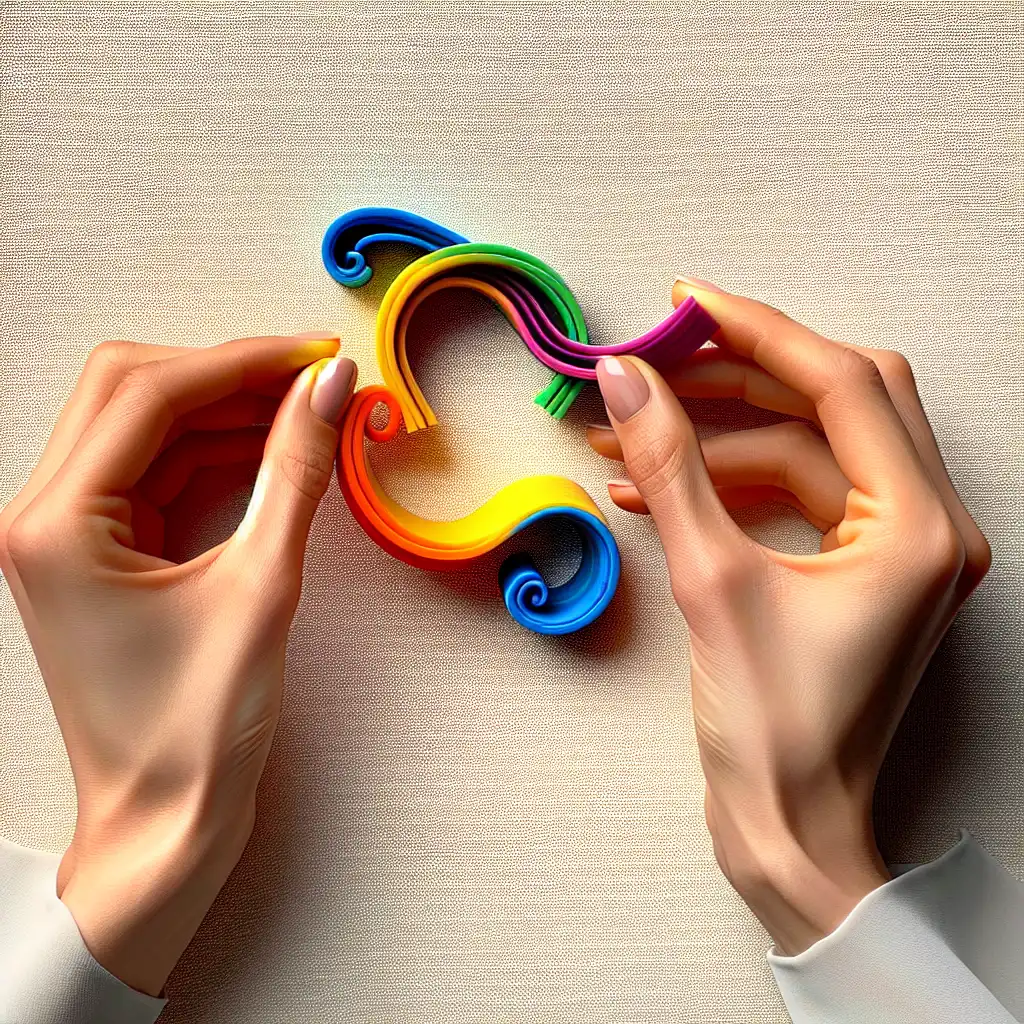
The ability to be easily bent or shaped.
Plastic is known for its pliancy, making it perfect for making a variety of items.
pliancy
ˈplaɪənsi
Chargement…
ˈplaɪənsi
The ability to be easily bent or shaped.
Plastic is known for its pliancy, making it perfect for making a variety of items.

ˈplaɪənsi
The quality of being easily influenced or controlled
The teacher took advantage of the pliancy of young minds to instill positive values.
Impossible de charger l’audio. Réessayez plus tard.
Pliancy is a word that describes how easily something can bend or adapt. You can use it to describe materials like clay or rubber that are easy to shape, or to talk about people who are open to change or willing to try new things. For example, you might say that a dancer has great pliancy in her movements, or that a company has shown a lot of pliancy in adapting to changes in the market. It's a useful word for describing flexibility or adaptability.
Adaptability refers to the ability to adjust or change in response to different situations or circumstances. It is applicable in situations where flexibility and creativity are required to navigate challenges or changes.
In simpler terms, adaptability is about being able to adjust to changes while pliancy is about being easily molded or shaped.
Ouvrir le mot: Adaptability →Docility and pliancy both refer to a person or animal's ability to be easily trained or led.
However, docility typically implies a willingness to obey, while pliancy suggests a more flexible or adaptable nature.
Docility may be more applicable to situations where strict obedience is necessary, such as with law enforcement animals or in certain religious or educational contexts.
In simpler terms, docility means being willing to follow orders, while pliancy means being able to adapt to different situations.
Ouvrir le mot: Docility →Elasticity and pliancy both relate to the ability of a material to bend or stretch without breaking, but they differ in terms of their specific meaning and application.
Elasticity refers to the ability of a material to return to its original shape after being stretched or compressed. For example, a rubber band is elastic because it can stretch and then bounce back to its original shape.
Elasticity is typically measured in terms of the amount of force required to stretch or compress a material, and it is important in areas like engineering, where materials need to retain their shape and properties under stress.
Pliancy refers to the ability of a material to bend or deform without breaking. Unlike elasticity, pliancy does not necessarily involve a material returning to its original shape.
Elasticity is applicable in fields where materials need to retain shape and properties under stress, while pliancy is applicable in fields where materials need to be flexible and easy to work with.
Ouvrir le mot: Elasticity →Both flexibility and pliancy refer to the ability to bend or adapt easily without breaking, but the distinction lies in how they are applied.
Flexibility is generally used to describe physical ability, particularly in terms of range of motion. For example, a gymnast might be described as flexible because they are able to stretch and contort their body in a variety of ways.
Flexibility is mainly used to describe physical or mental adaptability, while pliancy describes the ease with which materials can be reshaped or molded without losing strength.
Ouvrir le mot: Flexibility →Malleability and pliancy are both related to how easily something can be formed or shaped, but they are used in slightly different contexts.
Malleability typically refers to a material's ability to be bent or shaped without breaking, such as with metals like gold or silver.
In this context, malleability is often associated with physical strength and durability.
So while both malleability and pliancy imply a certain flexibility, malleability tends to be more specific to the physical properties of materials, while pliancy is a more general concept that can be applied to a variety of contexts.
Ouvrir le mot: Malleability →Pliancy refers to the ability to bend, adjust, or adapt to different situations. Resilience refers to the ability to recover or bounce back from difficult or stressful situations.
Resilience is applicable in situations where there may be setbacks, failures, or challenges that require persistence, perseverance, and the ability to maintain a positive mindset.
In essence, pliancy is about being able to adjust to changing circumstances, while resilience is about being able to recover from adversity.
Ouvrir le mot: Resilience →Pliancy and supple both refer to the ability of a material or body to bend easily without breaking.
However, pliancy usually refers to a material's ability to be molded or shaped into different forms, while supple generally refers to a body's flexibility and agility in movement.
For example, a piece of clay may have pliancy because it can be easily shaped, while a gymnast may have supple muscles that allow them to perform acrobatic movements.
Ouvrir le mot: Supple →