filmic
adjective filmic
ˈfɪlmɪk
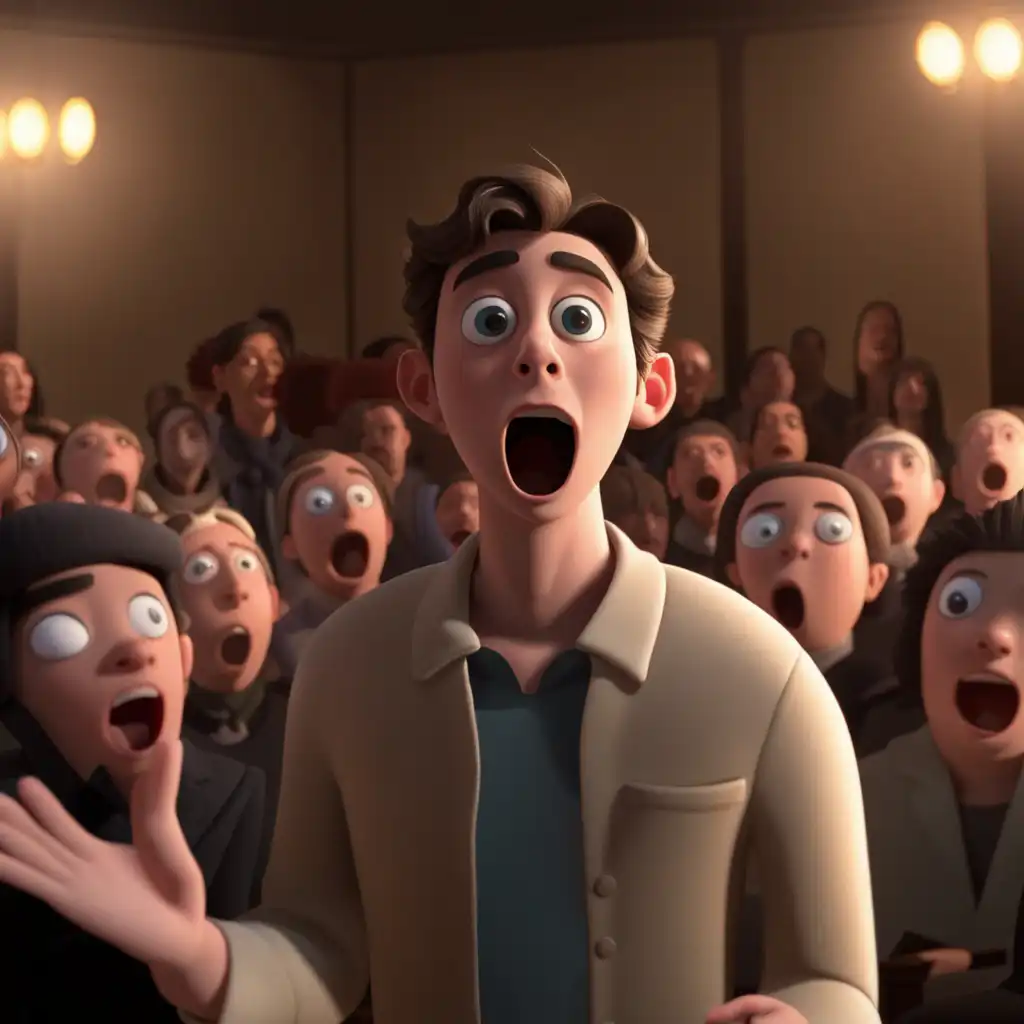
Relating to, resembling, or what seems suitable for a film
His description of the event has a filmic quality to it.
filmic
ˈfɪlmɪk
लोड हो रहा है…
ˈfɪlmɪk
Relating to, resembling, or what seems suitable for a film
His description of the event has a filmic quality to it.

ˈfɪlmɪk
Representing something in a manner visually appealing as in a motion picture
The photo has a dramatic, filmic look that catches the eye.
ऑडियो लोड नहीं हो सका। कृपया बाद में फिर कोशिश करें।
The word 'filmic' is used to describe something that resembles a scene or atmosphere from a movie. For example, if someone creates a video or photograph that looks like it could have come from a movie, it can be described as having a 'filmic' quality. It is also used to describe the characteristic features and techniques used in filmmaking. If you are trying to create a dramatic or suspenseful effect in a project, you might specifically aim for a 'filmic' texture. Overall, the word 'filmic' is used to bring out the essence of film production in a non-movie context.
Celluloid refers to a type of plastic material that was commonly used in early film-making to create the base of the film strip.
This material is no longer used, but the term celluloid is still used to refer to films created during that time period.
Filmic is a more general term used to describe anything related to the film industry or film-making. This can include modern digital films as well as those created on celluloid.
Celluloid specifically refers to an outdated material used in early film-making, while filmic is a more general term used to encompass all aspects of film and film-making.
शब्द खोलें: Celluloid →The words cinematic and filmic are often used interchangeably, and have very similar meanings.
Cinematic describes something that is visually evocative of a motion picture, while filmic describes something that has the characteristics of a film.
Cinematic might be used to describe the sweeping camera movements and dramatic lighting in a particular film, while filmic might suggest a more artful or experimental approach to filmmaking.
Cinematic is a more popular and widely-used term, while filmic is more technical and may be used more often by scholars or people in related fields.
शब्द खोलें: Cinematic →Filmic refers to anything related to the making or qualities of a film, as in a movie. Photographic describes anything related to taking or using photographs.
Filmic would be applicable when discussing the visual style, techniques, or storytelling of a movie, whereas photographic would be applicable when talking about the composition, lighting, and capturing of a still image.
Alternatively, you might describe a photograph as photographic if it was particularly well-framed, had good lighting, and captured a specific moment or emotion.
शब्द खोलें: Photographic →Visual is a more general term that can refer to anything related to sight or visual media, such as photographs, paintings, or videos.
Filmic is more specific to the medium of film, while visual can be used in a wider variety of contexts. Filmic might be used to describe a movie's artistic style and technical components, while visual might describe the overall look or aesthetic of something.
शब्द खोलें: Visual →Photographer Danny Lyon...
YouTube पर देखें ↗Since I was from the theater, that's how I learned how to go through the process of being a character. That's how I learned, and that's what I was comfortable doing. And then, the first feature films, I'm sure I was no fun because I did not want to be spontaneous in that filmic way that really can work for you.
How dance triumphs over...
YouTube पर देखें ↗I've always tried to do shows in a filmic way. I like it when forms smack up against each other.
Television has changed. Some feels like good old-fashioned TV, and some of it feels more filmic and more natural and more nuanced. I don't think there's any clear line any longer between film and TV.
Working on 'Jekyll' required a lot of concentration and energy. The script is written in a very filmic way most of the time; unusually for television there are a lot of descriptive pages, tiny little fragmented scenes with no dialogue but huge energy.
I always thought that as much as I love 'White Jazz,' it became almost unfilmable at some point, because there are so many strands, so much, and it became so psychotic... that's what made it such a great book, but those things would not carry over into the filmic realm, I thought, with ease.
The Blue Dragon' uses very filmic language and involves a lot of technology. It is more cinematic than theatrical and was inspired by comic strips and graphic novels.
On the one hand, we had great filmic spectacles that brought in big audiences, adults as well as primary and secondary school students. On the other hand, there were attempts to create contemporary Polish film.