tsar
noun tsar
zɑːr
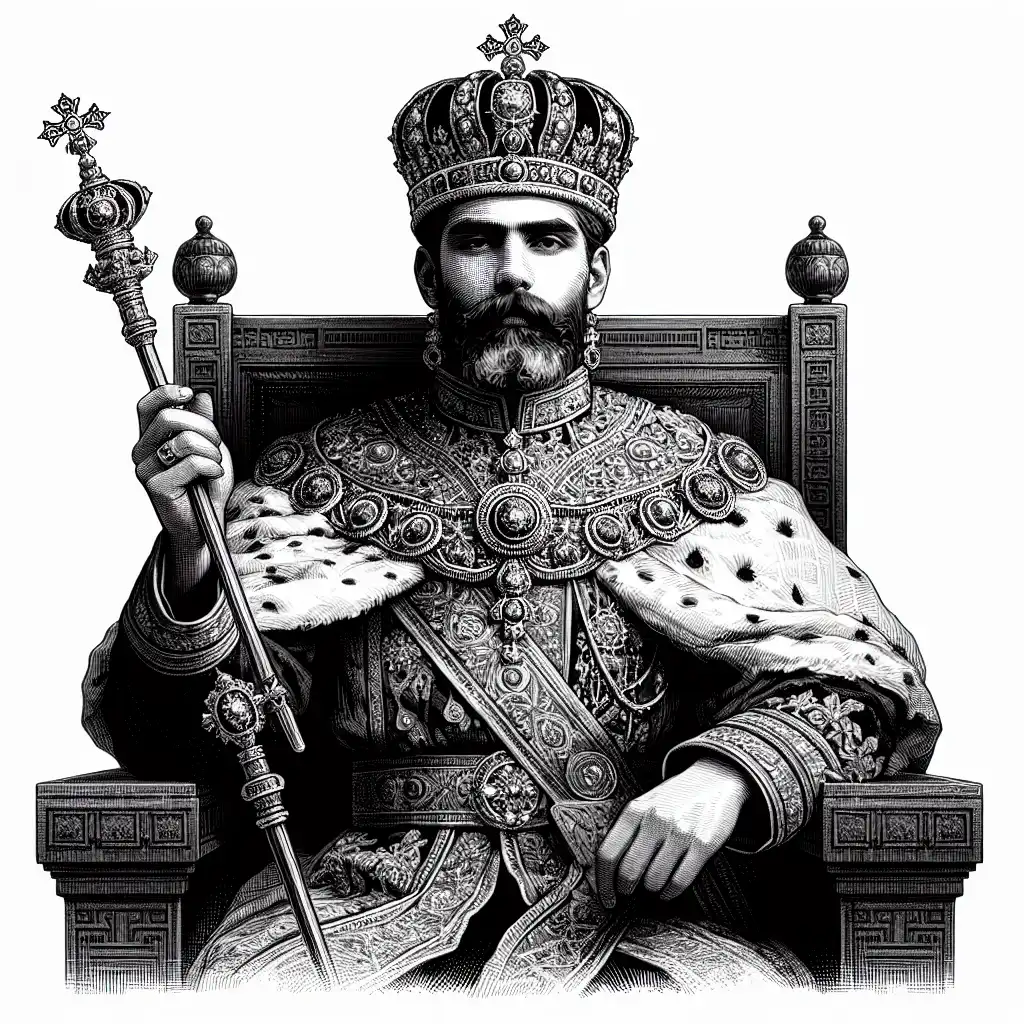
The title for the monarch of Russia before 1917.
The last tsar of Russia was Nicholas II.
tsar
zɑːr
読み込み中…
zɑːr
The title for the monarch of Russia before 1917.
The last tsar of Russia was Nicholas II.

zɑːr
A person who has been given full power to make changes in a particular area of a company or in the government.
He was appointed as the new drug tsar, responsible for overseeing the government's drug policy.
音声を読み込めませんでした。しばらくしてからもう一度お試しください。
The word "tsar" (also spelled "czar") refers to a monarch or ruler in Russia, similar to a king or queen. It is a historical term that was used in Russia before the country became a republic. The word can also be used in a more general sense to refer to someone who has a lot of power or control over others. However, it is not commonly used in modern English and is usually only used when talking about Russian history or culture.
An autocrat is someone who holds absolute power and makes all the decisions without any democratic processes in place. This term can be applied to leaders of any country or organization.
Overall, while both words refer to leaders with significant power, autocrat can describe leaders from any country or organization, while tsar specifically refers to the ruler of Russia during a particular time period.
単語を開く: Autocrat →Despot refers to a ruler who has complete and absolute power over their subjects, typically exercising that power in a cruel and oppressive manner.
Tsar is a term used to describe the ruler of Russia, particularly during the era of the Russian Empire. The tsars held significant power and authority over their subjects, but were not necessarily considered to be despots in the same way that rulers in other parts of the world might have been.
The term despot refers to a particular style of authoritarian rule, whereas tsar specifically refers to the rulers of Russia.
単語を開く: Despot →Both words refer to a monarch (a king or queen), but emperor describes the ruler of an empire, while tsar (or czar) describes the ruler of Russia specifically.
An emperor would be a ruler of any empire (like China or Rome), while a tsar would only be a ruler of Russia.
単語を開く: Emperor →King usually refers to a male monarch or ruler of a country, while the word tsar (also spelled 'czar') refers specifically to a ruler of the Russian Empire.
King is a more general term, while tsar is more specific to Russian history and culture. The term ‘tsar’ is not applicable outside of Russian Empire, while the term ‘king’ has been used in many cultures and countries throughout history.
単語を開く: King →Monarch and tsar are both words used to describe a ruler of a country.
However, monarchs are typically associated with countries that have a constitutional monarchy, where the monarch's power is limited by a constitution or laws.
In contrast, tsars are associated with countries that have an absolute monarchy, where the ruler has complete authority and little or no limitations on their power.
Monarch can be applicable to countries such as the United Kingdom, Canada, Australia, and other Commonwealth realms, where the monarch serves as a ceremonial figurehead with limited political power.
In summary, while both terms refer to a ruler of a country, monarch is usually associated with constitutional monarchies, while tsar is associated with absolute monarchies.
単語を開く: Monarch →Ruler is a general term that can refer to anyone who has authority over a group of people or a territory.
Tsar or "czar" specifically refers to an emperor or monarch in Russia or some other Eastern European countries. It was used to describe the rulers of the Russian Empire before it was dissolved in 1917.
So, while ruler is a general term that can apply to any type of leader, tsar specifically refers to a monarch in Eastern Europe, especially Russia.
単語を開く: Ruler →The terms sovereign and tsar both refer to rulers with supreme power, but they have different origins and connotations.
Sovereign generally refers to a monarch or leader who exercises authority over a specified territory, often as a head of state or government.
Sovereign is a wider term that can refer to any supreme ruler, while tsar is a specific term used historically in Russia to refer to the monarch who held supreme power.
単語を開く: Sovereign →History vs. Vladimir...
YouTube で見る ↗No, the czar did not want us in the schools.
Mystery of the Romanovs...
YouTube で見る ↗The mentality of the Russian demands a lord, a czar, a president.
The quest for the...
YouTube で見る ↗With my team I am an absolute czar. My men know it. I order plays and they obey. If the don't, I fine them.
Creating a Bio-Industrial...
YouTube で見る ↗Mr. Putin presents himself as a czar - and like any czar, he fears revolution above all else.
Why are These Capuchin's...
YouTube で見る ↗If you want government to take everything, if you want government to take more and more over with the banks, more of the industries, all of a sudden you're going to have a government auto czar, right there, right down the line, that's socialism.
Ben Katchor's comics of...
YouTube で見る ↗Any president we choose becomes a czar in Russia. I don't want czars anymore. I don't want to be a czar myself. I want to be a democratic leader.
Safari Live - Day 210 %\PIPE%...
YouTube で見る ↗I was raised by maternal grandparents who were born in 1890 and 1899, respectively. They were British subjects; George V was the cousin of the tsar. The Romanovs were very real in their household.
Encoding culture %\PIPE%...
YouTube で見る ↗The czar always got his dues, no matter if it ruined a family.
The Last Days of the...
YouTube で見る ↗The czar was always sending us commands - you shall not do this and you shall not do that - till there was very little left that we might do, except pay tribute and die.
Going Solar in NYC %\PIPE%...
YouTube で見る ↗The tsar of War and Peace, especially in the BBC version, is a complete popinjay and a useless character. The real tsar, Alexander I, had an amazing career.