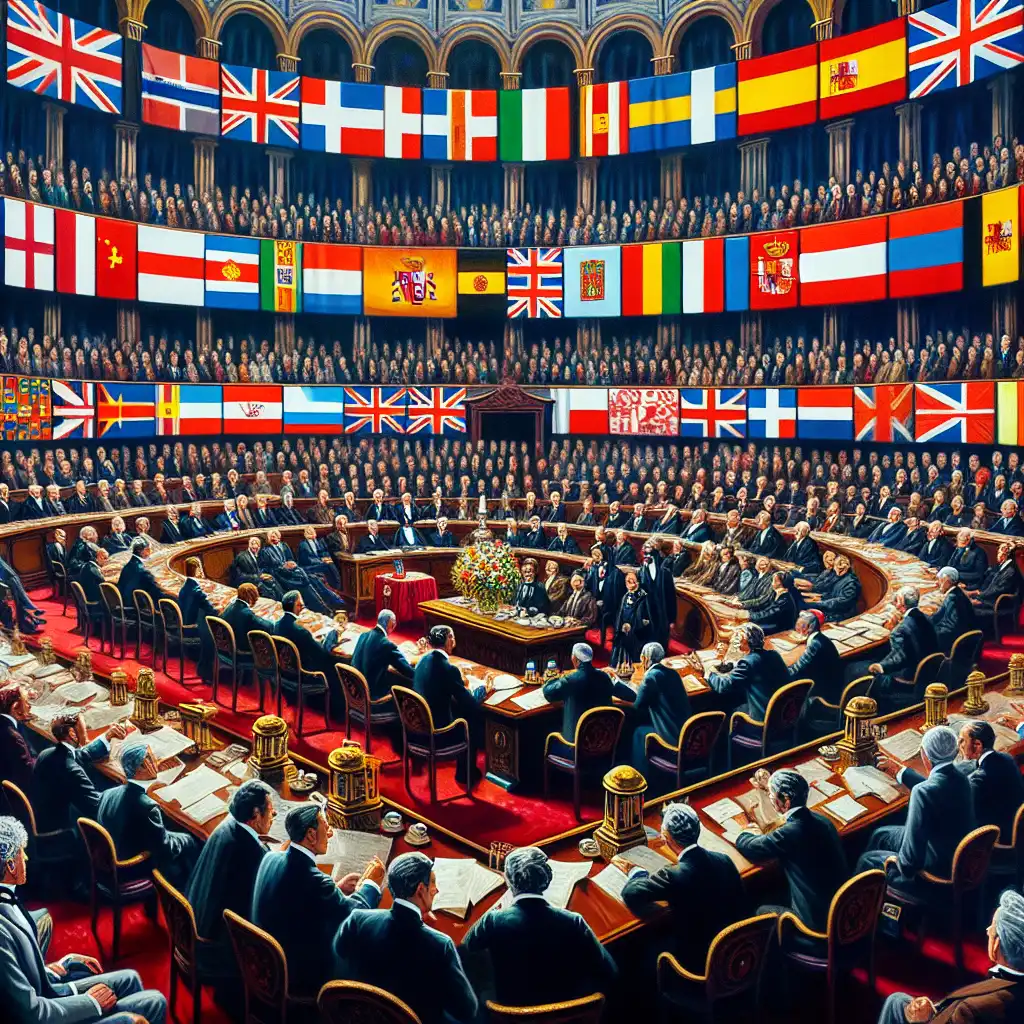
The word 'convocation' is often used to refer to a large group of people who have gathered together for a specific purpose or event, such as a graduation ceremony or a meeting of a professional organization. For example, when a university holds a graduation ceremony, they may refer to it as a convocation. The word can also be used more broadly to refer to any large gathering of people, such as a political rally or religious gathering. Overall, 'convocation' is a way to describe a formal or official gathering of people for a particular reason.
Caucus and convocation are two different words with different meanings.
A caucus is a private meeting or gathering of members of a political party or group for discussing and deciding on policy, electing candidates, or choosing delegates to a higher assembly.
A caucus is a closed meeting for specific members, often political in nature.
A conclave refers to a private meeting of a group of people, especially in the context of discussing or electing a leader, such as a pope or a monarch.
The main difference between the words conclave and convocation is that the former refers to a private meeting of a select group of people, while the latter refers to a formal assembly of a larger group of people for a specific purpose.
A conference is a meeting of people who gather to discuss or exchange ideas on a specific topic or subject. It usually involves presentations, discussions, and debates to share knowledge and expertise.
A conference is a meeting where people exchange ideas and information, and a convocation is a formal ceremony to celebrate an occasion or achievement.
Congress and convocation are two different words used to describe gatherings of people for a specific purpose. Congress usually refers to a formal meeting of government officials, while convocation refers to a formal gathering of people for a specific religious or educational purpose.
Congress is typically associated with legislative bodies, such as the United States Congress, which is made up of elected representatives who meet to discuss and pass laws.
The term can also refer to any formal meeting of representatives from different groups, such as a business or trade congress.
Congress is a formal meeting of government officials or representatives from different groups, while convocation is a formal gathering of people for a specific religious or educational purpose.
A council is a group of people who come together to discuss and make decisions on specific issues or topics.
Convocation describes a formal gathering of people for a specific event or ceremony, while a council is a group of people who come together to discuss and make decisions on specific issues or topics.
Convocation refers to a formal assembly of people for a specific purpose or ceremony, such as a graduation ceremony or a religious gathering.
It is usually used in formal settings and implies a more structured and organized gathering.
Gather simply means to come together, collect or assemble people or things in one place for a specific purpose.
Convocation is used to refer to a formal gathering with a specific purpose and gather is a more general term for any type of assembly or collection of people or things.
Convocation typically refers to a formal ceremony or assembly, especially one that marks the beginning or end of something important like graduation.
Meet is a more general term that can refer to any kind of gathering or encounter, whether formal or informal. Convocation is a formal ceremony or assembly, while meet can refer to any gathering.
Summit refers to a meeting between leaders or representatives of different groups or countries to discuss and resolve important issues.
Convocation relates to a formal gathering of people, while a summit relates to a meeting between leaders or representatives to discuss important matters.
A symposium is a conference or meeting where experts in a particular field come together to discuss and exchange ideas on a specific topic.
In summary, convocations are typically associated with formal events and gatherings, while symposiums are more focused on specific topics and may involve experts in that field.
People use us for their weddings, their university convocations - you become a part of culture. That's a big part of people's lives, and it's actually a really big honor for us. All their memories around that process are stored in Paperless Post.
Within a few weeks the organization for the maintenance of international peace and security, established by the San Francisco Charter, will be formally launched through the convocation of the first General Assembly of the United Nations.